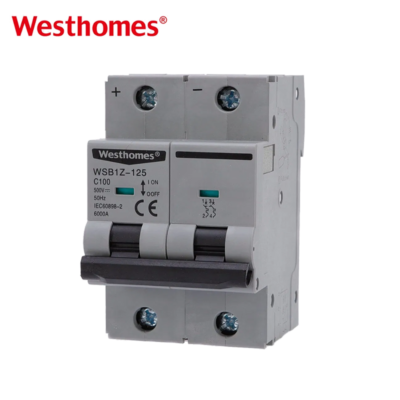
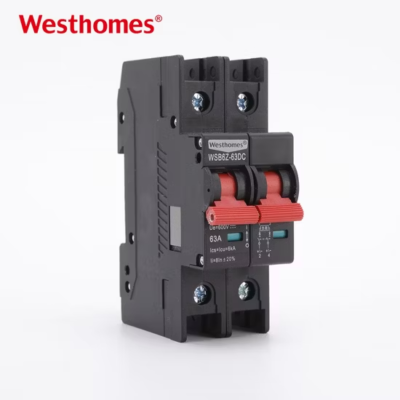
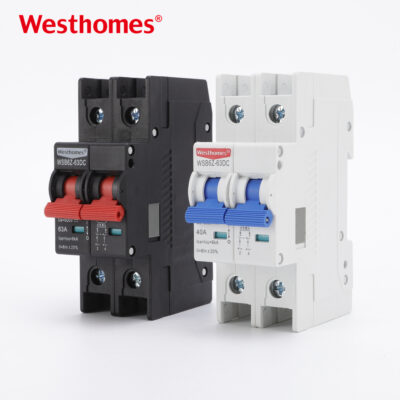
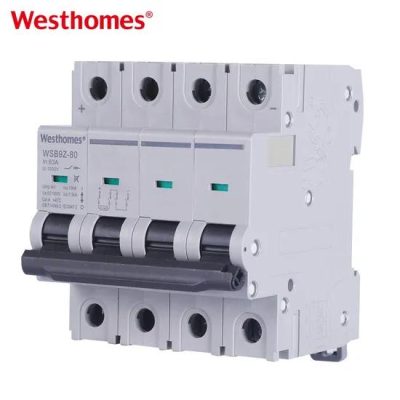
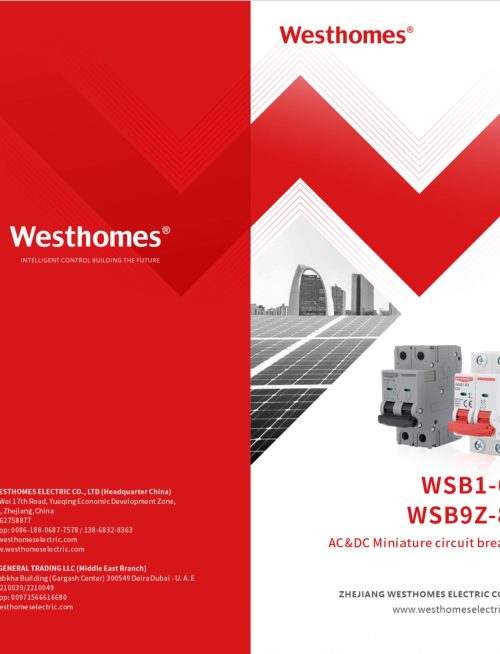
WSB9Z-80 Moulded case circuit breaker
WSB9Z-80 is one of updated type MCCBs researched and developed by the company by using advanced design and manufacture technology internationally.
Get quick appointment for technical support!

WSB9Z-80 series MCB is one of updated type MCCBs researched and developed by the company by using advanced design and manufacture technology internationally.

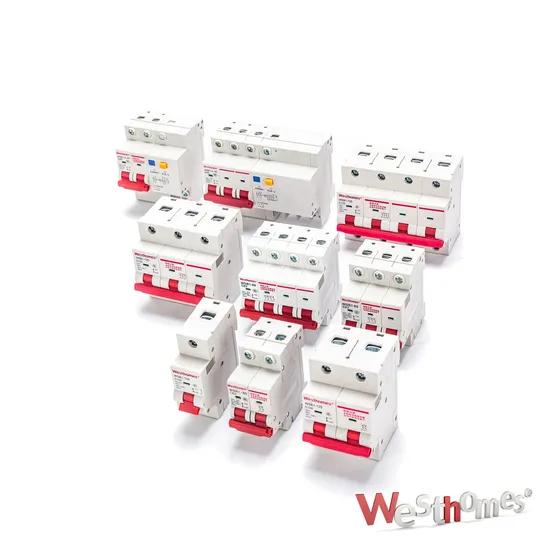
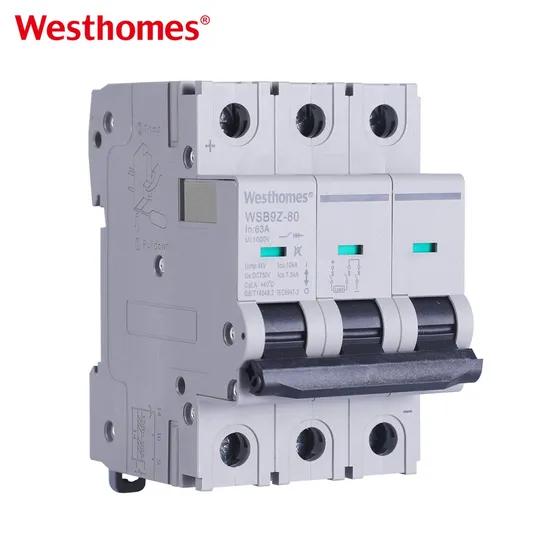
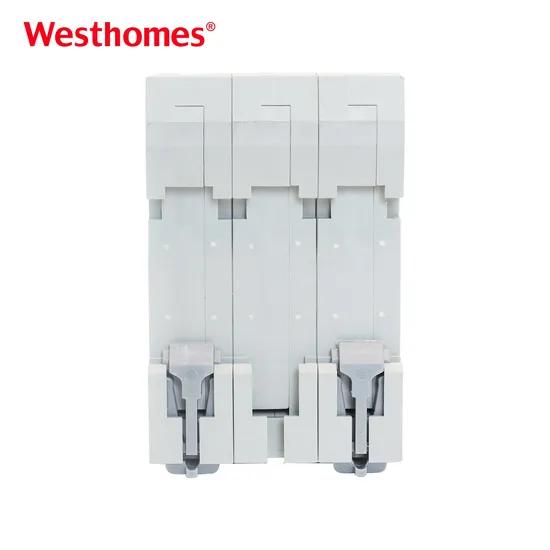
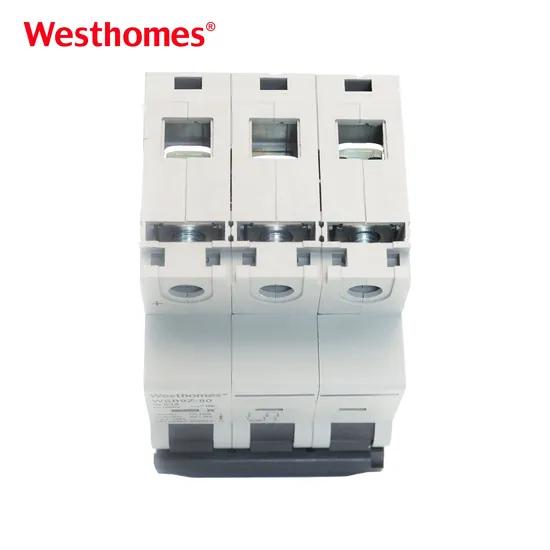
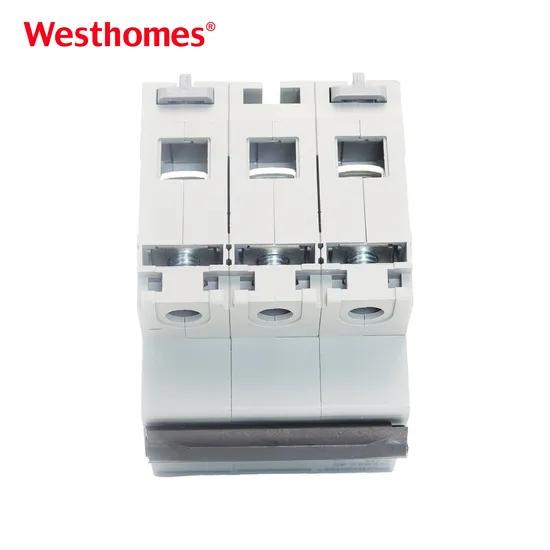
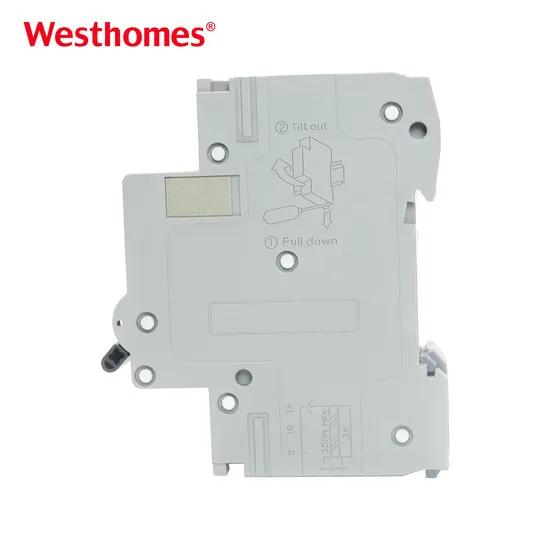
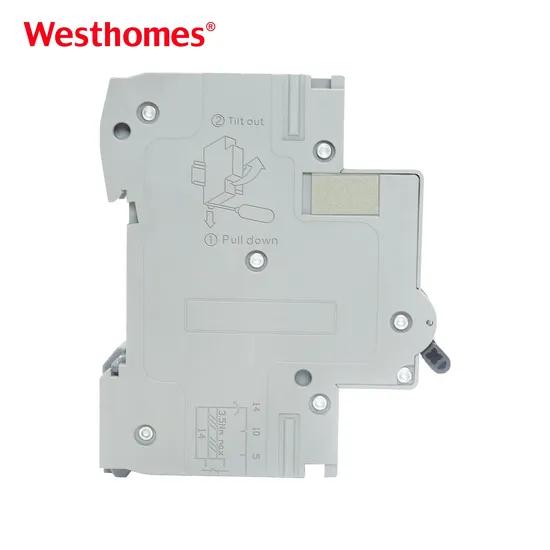
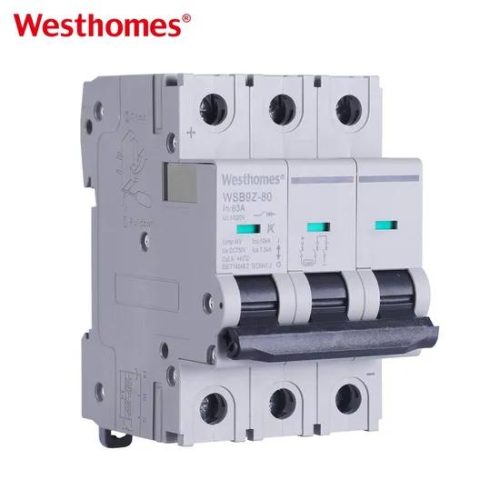
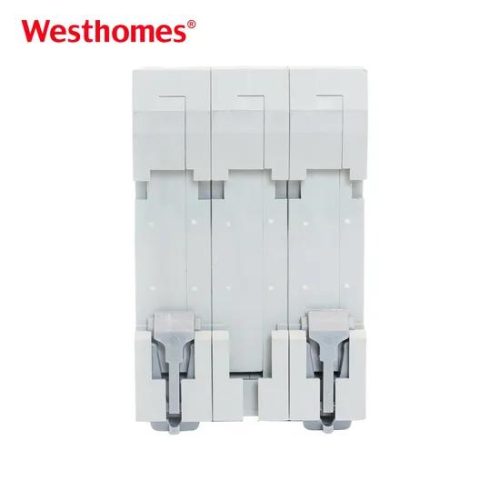
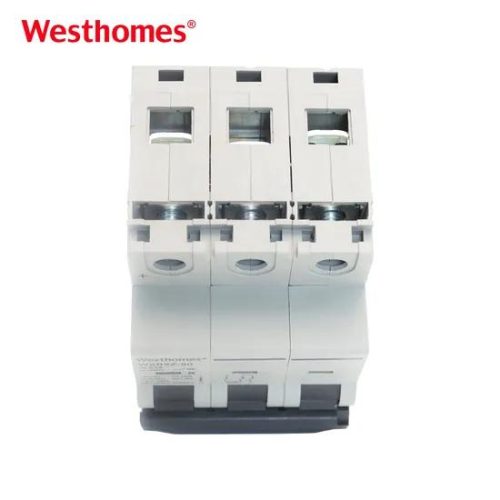
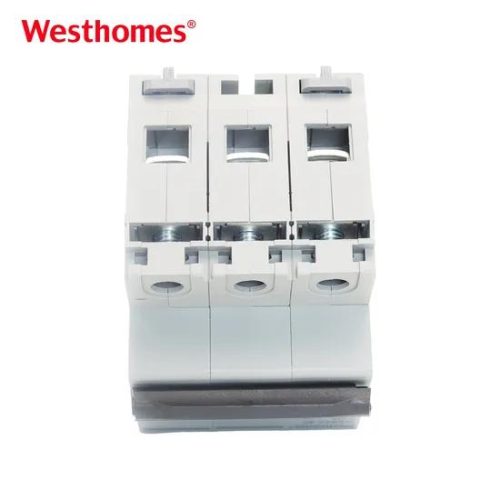
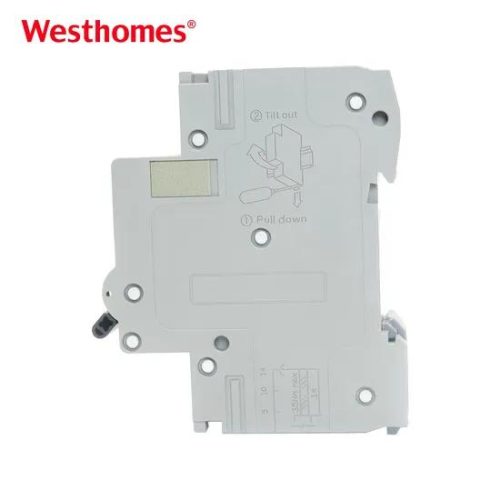
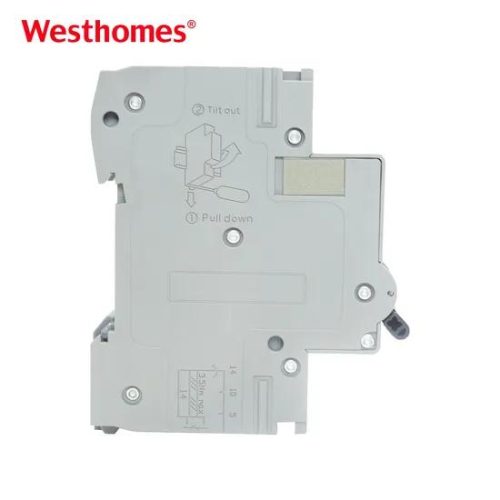
WSB9Z-80 is one of updated type MCCBs researched and developed by the company by using advanced design and manufacture technology internationally.
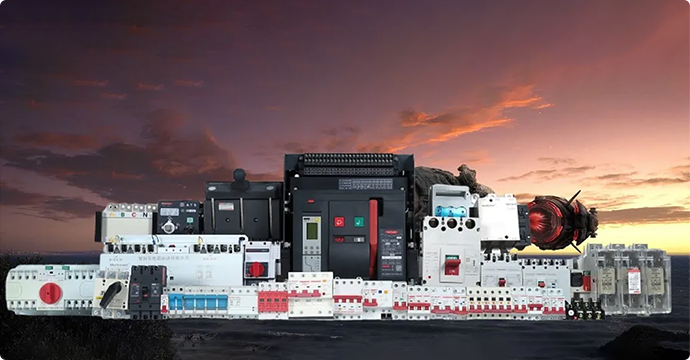
WSB9Z-80 circuit breaker is used for DC rated voltage to 1000V, rated current to 80A line, for overload and short circuit protection, and can also be used as an infrequent operation of the line.Circuit breakers are used in DC applications such as communications and photovoltaic system.
The product meets standards of GB/T14048.2 and IEC6947-2, at international advanced level.
| Frequency | 50Hz/60Hz |
| Pole | 1, 2, 3, 4 |
| Voltage | DC250V/500V/750V/1000V |
| kA | 10kA |
| Amps | 6-80A |
| Width | 18, 36, 54, 72mm |
| Mounting | Din rail |
| Item No. | WSB9Z-80 |
| Rated current In(A) | 6, 10, 16, 20, 25, 32, 40, 50, 63, 80 |
| Pole number | 1P, 2P, 3P, 4P |
| Trip characteristics | C type |
| Rated insulating voltage Ui(V) | 1000 |
| Rated operating voltage Ue(V) | DC 250V/500V/750V/1000V |
| Rated impulse voltage Uimp(kV) | 4 |
| Breaking capacity Icu/Ics(kA) | 10/7.5 |
| Mechanical life(times) | 20000 |
| Electrical life(times) | 4000 |
This is a compact, DIN-rail DC MCB rated for a 750 V DC system and 80 A continuous current, designed to protect direct-current circuits — especially photovoltaic solar strings and combiner outputs. It provides thermal protection for long-duration overloads and magnetic protection for instant short-circuit interruption. Its rated 80 A current capacity makes it suitable for higher-current commercial or larger residential PV inputs.
Direct current has no natural zero-crossing, so the arc drawn when contacts open does not self-extinguish as it does in AC. This 750 V DC breaker uses a magnetic blowout system and a dedicated arc chute to force the arc into cooling splitter plates until it collapses. Using an AC-only MCB on a 750 V DC circuit risks the arc re-igniting, contact welding and fire, so only a device certified for the DC voltage and current should be used.
The 750V DC rating is the maximum direct-current system voltage the breaker is tested to withstand and safely break. It is well matched to older and mid-sized PV arrays whose maximum string voltage, including cold-temperature Voc, stays at or below 750 V. Installers must still calculate the array's worst-case open-circuit voltage at the design low temperature and ensure it does not exceed 750 V, derating the breaker's voltage if necessary.
The 3P designation means three poles open simultaneously through one operating mechanism. In DC solar use this is applied to specialized three-conductor PV configurations or as part of a combiner arrangement where multiple conductors must be isolated together. The key safety principle is that all poles carrying DC potential relative to earth must be opened together so that no live conductor remains exposed after the breaker trips.
The 80 A rating is the maximum continuous current the breaker is designed to carry without thermal tripping under reference ambient conditions. It should be chosen above the expected maximum operating current of the PV strings or inverter input but low enough to protect the downstream cables, and derated for the actual temperature inside the enclosure. If the combined short-circuit current from parallel strings exceeds the breaker's interrupting rating, the next-higher rated device or additional fault protection is required.
The breaker is installed in the DC combiner box or at the inverter DC input to protect and isolate the solar array side, interrupting overloads and short circuits from damaged cables or faults in the strings. It also gives a visible means of disconnecting the array for maintenance, which is essential because PV modules keep producing voltage whenever illuminated. Proper coordination requires that the breaker's breaking capacity be greater than the fault current the array can deliver at its location.
It snaps onto a standard 35 mm DIN rail inside a DC-rated enclosure, with the conductors connected to the marked line (array) and load (inverter) terminals and polarity observed exactly. PV-rated cable with correctly sized cross-section and appropriate lugs should be used, and terminals torqued to the specified value to avoid heating at high DC current. All exposed live parts must be enclosed per local wiring rules before energizing.
The breaker sits on the DC input between the array and the inverter, protecting the inverter's DC-side wiring from faults while carrying the inverter's operating current. Because a PV array continues to feed fault current in daylight, the breaker must be able to clear that current faster than the inverter or upstream protection is stressed, maintaining selectivity. It is an added safety device and does not replace the inverter's built-in protection or a required DC isolator/rapid-shutdown means.
Frequent or unexplained trips often stem from inverter start-up inrush at high irradiance, a trip curve that is too sensitive for the load, heat build-up in a sealed combiner that derates the breaker, or loose/undersized DC cables. Diagnosis means comparing measured current to the 80 A rating and the calculated fault current, checking the enclosure temperature, verifying the trip curve, and inspecting connections for heat marks. Trips at true fault levels must be investigated as a short circuit or ground fault before the system is re-energized.
This breaker carries CE and CB certification, reflecting testing to IEC 60947-2 for circuit breakers, and is applied in PV systems designed per IEC 60364-7-712. Westhomes offers OEM/ODM customization of ratings, branding and packaging for distributors and EPC contractors. Applications include residential, commercial and smaller ground-mount solar plants up to the 750 V class. Maintenance consists of periodic visual inspection, torque checks, verifying operation after major faults, and replacement if contacts show erosion or the breaker fails to hold its rated current.
* indicates a required field

 2 MB
2 MB