Get quick appointment for technical support!

Get in Touch

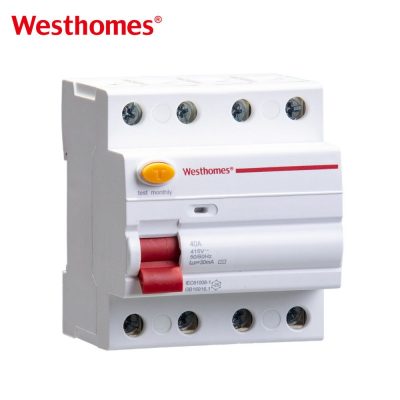
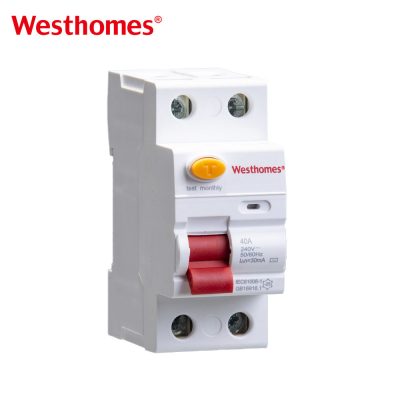
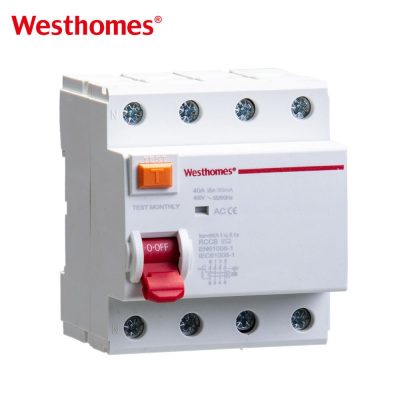
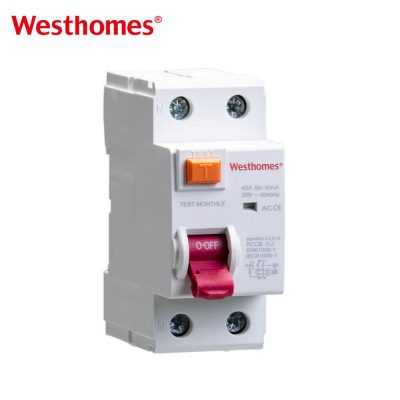
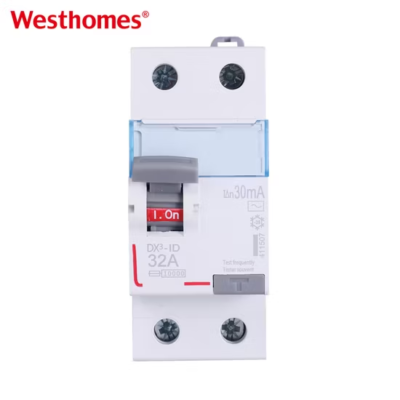
HNB1L-63 1P+N Residual Current Circuit Breaker

The HNB1L-63 1P+N Residual Current Circuit Breaker (RCCB) is an electronic-type protective device specifically engineered for single-phase two-wire systems (1P+N) operating at AC 230V/400V, 50Hz.

Social focus:

HNB1L-63 RCCB 1P+N | 63A 6kA Electronic Type Breaker

It supports rated currents up to 63A, and delivers a short-circuit breaking capacity of 6kA, ensuring reliable residual current, overload, and short-circuit protection for both residential and commercial applications.

HNB1L-63 1p+n description

The HNB1L-63 1P+N RCCB is an ideal component for modern electrical safety infrastructure. This RCCB delivers a reliable safety solution with high-precision electronic detection and robust design.

This RCCB is designed to quickly disconnect the power supply when a leakage current or electric shock risk is detected, thereby protecting human life and connected equipment. Its electronic sensing technology ensures precise and timely response to ground faults and overcurrent events.

The 1P+N configuration ensures optimal protection for line and neutral conductors in low-voltage installations, making this circuit breaker a preferred solution for small office buildings, apartments, homes, and light industrial environments.

Key Features:

Model Number: HNB1L-63
Configuration: 1P+N (Single Pole + Neutral)
Rated Voltage: AC 230V / 400V
Rated Frequency: 50Hz
Rated Current: Up to 63A
Breaking Capacity: 6kA
Trip Mechanism: Electronic type

Protection Functions:

Earth leakage (residual current)
Overload protection
Short-circuit protection
Material: Flame-retardant, high-impact-resistant enclosure
Compact Size: Ideal for confined distribution boards

Applications:

Office buildings
Residential homes
Distribution boxes
Distillery facilities
Other Features: Supports infrequent switching under normal operation
Compliance: IEC/EN61009-1 international standards

KEY INFORMATION

Rated current 10, 16, 20, 25, 32, 40, 50, 63A
Rated voltage Ue AC240V (1P+N, 2P); AC400V (3P+N, 4P)
Rated insulation voltage Ui AC415
Rated impulse withstand voltage Uimp 4kV
Rated frequency 50/60Hz
Number of poles 1P+N, 3P+N
Module size 36mm, 72mm
Circuit type AC type, A type, B type
Breaking capacity 6000A, 10000A
Rated residual current I△n 10mA, 30mA, 100mA, 300mA
Rated residual operation current 10, 30, 100, 300mA
Optimum operation temperature -5ºC to 40ºC
Terminal tightening torque 2.5-4N/m
Terminal capacity (top) 25mm²
Terminal capacity (bottom) 25mm²
Electro-mechanical endurance 4000 cycles
Mounting 35mm DIN rail
The very new tripping structure makes more in safety
Suitable busbar PIN busbar
Standard IEC61008-1

Basic Info.

Model NO. HNB1L-63
Arc-extinguishing Medium Air
Structure MCB
Type Circuit Breaker
Certification ISO9001-2000, CE, CB, CCC
Ka 6ka, 10ka
Voltage AC240V/AC400V
Specification 10A-63A
Origin China
Production Capacity 365000
Speed Normal Type Circuit Breaker
Installation Fixed
Poles Number 1p+N
Function Conventional Circuit Breaker,
Circuit-Breaker Failure Protection,
Overcurrent Protection,
OVP(Overvoltage Protection)
Production Line 100% Automic
Cooperation Type OEM ODM
Transport Package Standard
Trademark Westhomes
HS Code 8536300000

See CE CB Approved 4p Breaker-Protector RCCB Residual Current Operated Circuit Break for a deeper dive into residual current.

FREQUENTLY ASKED QUESTION (FAQ)

What is the HNB1L-63 1P+N RCCB used for? plus-square Created with Sketch Beta. minus-square Created with Sketch Beta.

It is a single-phase DIN-rail RCCB that provides earth-leakage protection for 230 V domestic and light-commercial final circuits. Its 1P+N pole configuration switches phase and neutral together, and it is typically used as a group RCD feeding multiple MCB-protected circuits such as sockets, lighting and kitchen/utility circuits.

How does it work to protect against electric shock? plus-square Created with Sketch Beta. minus-square Created with Sketch Beta.

A toroidal zero-sequence current transformer monitors the vector sum of current in L and N. When no fault exists, the sum is zero. If a person touches a live part or insulation degrades, some current flows to earth, producing a small residual current. When this exceeds the rated sensitivity (commonly 30 mA), the internal release opens the contacts in milliseconds, interrupting the shock path before ventricular fibrillation can occur.

Does it include overload and short-circuit protection? plus-square Created with Sketch Beta. minus-square Created with Sketch Beta.

No — this is a pure RCCB. It will not trip on overload or short circuit, so it must be installed upstream of, or in combination with, MCBs that protect the wiring against overcurrent. For a self-contained single-circuit solution, use an RCBO variant instead.

What voltage and current ratings apply? plus-square Created with Sketch Beta. minus-square Created with Sketch Beta.

The 1P+N configuration is rated for single-phase 230 V (50/60 Hz) systems. The HNB1L-63 family is built around a 63 A frame size, so continuous current capability is typically up to 63 A; the exact In, sensitivity (IΔn) and type (AC/A) must be read from the product nameplate. Size the upstream cables and MCBs to the actual load.

What sensitivity should I choose for a household installation? plus-square Created with Sketch Beta. minus-square Created with Sketch Beta.

30 mA is the standard for personal protection on socket outlets and accessible circuits. 10 mA is used in special locations such as bathrooms and saunas, while 100–300 mA may be used upstream for fire protection. Do not select a higher sensitivity just to stop nuisance tripping without diagnosing the cause.

Type AC vs Type A — which do I need today? plus-square Created with Sketch Beta. minus-square Created with Sketch Beta.

Type AC trips on pure sinusoidal AC leakage only. Type A also detects pulsating DC leakage produced by washing machines, dishwashers, induction hobs, inverter air conditioners, LED drivers and TVs. Because most modern homes contain such electronics, Type A is generally recommended; Type AC is increasingly unsuitable.

How do I install and wire the 1P+N RCCB? plus-square Created with Sketch Beta. minus-square Created with Sketch Beta.

Mount on a 35 mm DIN rail. Connect the supply L and N to the line-side (top) terminals and the protected load to the load-side (bottom) terminals, observing L and N markings. The neutral must pass through the device; never bypass it, and keep neutrals of different RCCB groups separate. Tighten to the manufacturer's torque and verify before re-energizing.

The RCCB trips randomly or after rain — what should I check? plus-square Created with Sketch Beta. minus-square Created with Sketch Beta.

Random or moisture-related tripping usually indicates degraded insulation somewhere downstream, often in damp junction boxes, outdoor sockets, garden circuits or aging cabling. Isolate circuits and appliances one by one, and measure insulation resistance with a tester. If you cannot locate the fault, call a qualified electrician; do not reset and ignore repeated trips.

Can I install this RCCB myself? plus-square Created with Sketch Beta. minus-square Created with Sketch Beta.

In most countries, installation and commissioning of permanent wiring must be carried out by a qualified electrician who can verify correct polarity, earthing, cable sizing and test results (loop impedance, RCD trip time, insulation resistance). Even where DIY is permitted, the commissioning tests are essential to ensure the device will actually protect people.

How do I maintain and test it over its lifetime? plus-square Created with Sketch Beta. minus-square Created with Sketch Beta.

Press the front-panel "T" button once a month; the unit must trip immediately. Periodic inspection by an electrician should include a functional RCD test at 1× and 5× IΔn to confirm tripping current and time. If the test button does not trip the device, or if the unit has visible damage or corrosion, replace it promptly rather than continuing to rely on it.

RELATED PROJECTS

REQUEST
YOUR FREE QUOTE

* indicates a required field