Get quick appointment for technical support!

Get in Touch

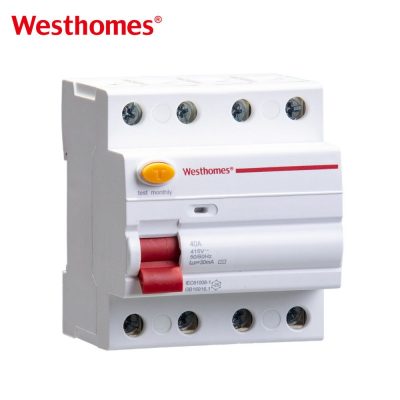
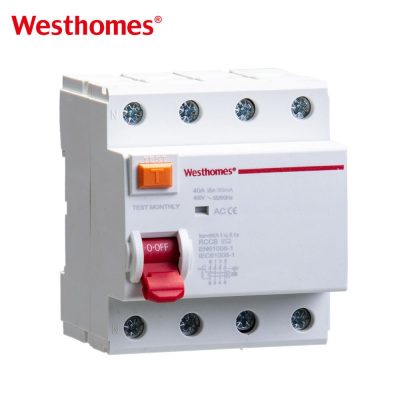
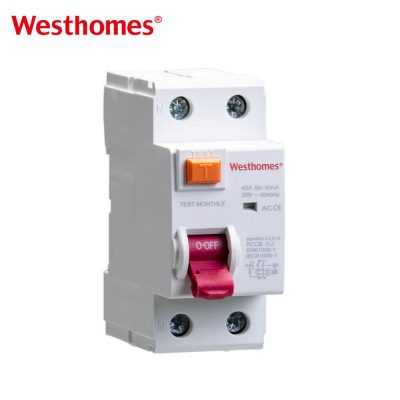
HNB2L-63 3P+N RCCB | 63A Residual Current Circuit Breaker

Featuring a 6kA breaking capacity, this 3P+N RCCB offers comprehensive protection against residual current (leakage), overload, and short circuit events.

Social focus:

HNB2L-63 3P+N RCCB | 63A 6kA Residual Circuit Breaker

The HNB2L-63 3P+N Residual Current Circuit Breaker (RCCB) is a high-performance protective device designed for AC 50Hz three-phase four-wire power distribution systems, with a rated voltage of AC 230/400V and current capacity up to 63A.

HNB2L-63 3p+n description

Engineered for durability and safety, the HNB2L-63 3P+N RCCB is an essential component for modern three-phase electrical protection systems, offering dependable performance in a compact footprint.

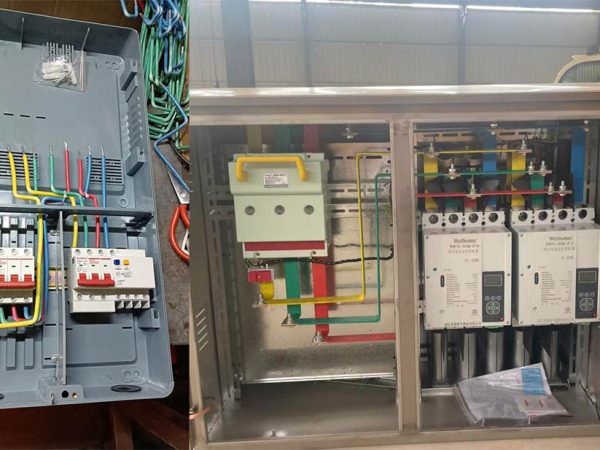
When electrical leakage or personal electric shock occurs, the breaker is triggered to rapidly disconnect the faulty circuit, minimizing harm to personnel and equipment. The 3P+N configuration ensures full protection across three-phase lines and the neutral, making it ideal for commercial, residential, and light industrial applications requiring high reliability and safety.

Key Features:

Model: HNB2L-63
Configuration: 3P+N (Three Pole + Neutral)
Rated Voltage: AC 230V/400V
Rated Frequency: 50Hz
Rated Current: Up to 63A
Breaking Capacity: 6kA

Protection Functions:

Residual current (leakage protection)
Overload protection
Short-circuit protection
Material: Flame-retardant, high-impact resistant housing
Design: Compact, durable structure for easy installation

Applications:

Office buildings
Residential complexes
Industrial distribution lines
Electrical panels in commercial facilities

Usage:

Suitable for infrequent switching of lines under normal operating conditions
Standard Compliance: IEC/EN61009-1 international standard

KEY INFORMATION

Rated current 10, 16, 20, 25, 32, 40, 50, 63A
Rated voltage Ue AC240V (1P+N, 2P); AC400V (3P+N, 4P)
Rated insulation voltage Ui AC415
Rated impulse withstand voltage Uimp 4kV
Rated frequency 50/60Hz
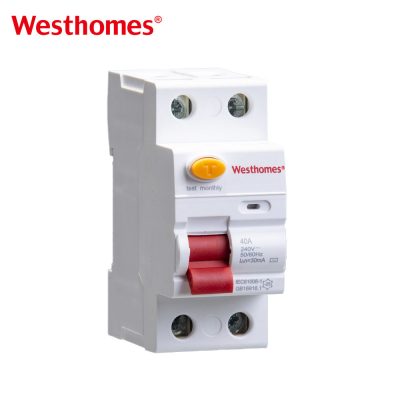
Number of poles 1P+N, 3P+N
Module size 36mm, 72mm
Circuit type AC type, A type, B type
Breaking capacity 6000A, 10000A
Rated residual current I△n 10mA, 30mA, 100mA, 300mA
Rated residual operation current 10, 30, 100, 300mA
Optimum operation temperature -5ºC to 40ºC
Terminal tightening torque 2.5-4N/m
Terminal capacity (top) 25mm²
Terminal capacity (bottom) 25mm²
Electro-mechanical endurance 4000 cycles
Mounting 35mm DIN rail
The very new tripping structure makes more in safety
Suitable busbar PIN busbar
Standard IEC61008-1

Basic Info.

Model NO. HNB2L-63
Arc-extinguishing Medium Air
Structure MCB
Type Circuit Breaker
Certification ISO9001-2000, CE, CB, CCC
Ka 6ka, 10ka
Voltage AC240V/AC400V
Specification 10A-63A
Origin China
Production Capacity 365000
Speed Normal Type Circuit Breaker
Installation Fixed
Poles Number 3p+N
Function Conventional Circuit Breaker,
Circuit-Breaker Failure Protection,
Overcurrent Protection,
OVP(Overvoltage Protection)
Production Line 100% Automic
Cooperation Type OEM ODM
Transport Package Standard
Trademark Westhomes
HS Code 8536300000

FREQUENTLY ASKED QUESTION (FAQ)

What is the HNB2L-63 3P+N RCCB designed to protect? plus-square Created with Sketch Beta. minus-square Created with Sketch Beta.

This is a three-phase, four-pole RCCB rated 63 A, used to protect three-phase installations against earth leakage. It is typically the main residual-current protection device in commercial panels, small workshops, machinery supply, pumps, elevators and three-phase residential services. It cuts L1, L2, L3 and N together on detecting an imbalance.

What voltage does the 3P+N version operate at? plus-square Created with Sketch Beta. minus-square Created with Sketch Beta.

A 3P+N RCCB is intended for three-phase four-wire systems, nominally 400 V between phases and 230 V phase-to-neutral at 50/60 Hz. This lets it protect a mixture of three-phase loads (motors, compressors) and single-phase 230 V circuits fed from the same distribution board. Check the nameplate rated voltage (Ue) for the specific variant.

How does it differ from the 1P+N version in the same HNB2L-63 series? plus-square Created with Sketch Beta. minus-square Created with Sketch Beta.

The 1P+N version covers one phase plus neutral for single-phase circuits, while the 3P+N version covers three phases plus neutral for three-phase systems. They share the same 63 A rated current and residual-current sensing principle, but the 3P+N is wider on the DIN rail and must be sized to the three-phase load balance of the installation.

Does a 3P+N RCCB need overcurrent protection upstream? plus-square Created with Sketch Beta. minus-square Created with Sketch Beta.

Yes. Like all RCCBs, it provides only residual-current protection and cannot interrupt overloads or short circuits. An upstream MCB or MCCB (or a group of downstream MCBs) must provide overcurrent and short-circuit protection, coordinated so the upstream device discriminates in time during a fault.

What residual sensitivity options are common for three-phase use? plus-square Created with Sketch Beta. minus-square Created with Sketch Beta.

Three-phase RCCBs are commonly offered in 30 mA (personal protection for socket circuits), 100 mA and 300 mA (fire protection / upstream discrimination). For three-phase industrial loads with inherently higher leakage (motors, VFDs, long cable runs), a higher sensitivity or a selective type may be chosen to avoid nuisance tripping.

Can this device protect three-phase motors and VFD-driven equipment? plus-square Created with Sketch Beta. minus-square Created with Sketch Beta.

It depends on the type. Standard Type AC is not suitable for variable-frequency drives, which can inject pulsating or smooth DC leakage; choose Type A for pulsating DC, or Type F/Type B for VFD, inverter and EV-charging loads. Always match the RCCB type to the load electronics, otherwise nuisance tripping or, worse, failure to trip can occur.

How do I wire a 3P+N RCCB correctly? plus-square Created with Sketch Beta. minus-square Created with Sketch Beta.

Mount on a 35 mm DIN rail. Connect supply L1, L2, L3 and N to the upper line terminals in the marked positions, and the corresponding load conductors to the lower terminals. All four conductors must pass through the device's sensing window; do not bypass the neutral, and keep downstream neutral bars separate per RCCB group. Use cable lugs where required and torque to the manufacturer's specification.

Why does the RCCB trip only when a certain three-phase load starts? plus-square Created with Sketch Beta. minus-square Created with Sketch Beta.

This is often due to high capacitance leakage in long motor cables, EMC filters in variable-speed drives, or inrush-related DC component. Verify whether the RCCB type matches the load (Type A/F/B) and consider a higher sensitivity rating or time-delayed (Type S) unit upstream. Never simply short-circuit or bypass the test function to stop nuisance trips.

How do I select sensitivity and poles for a new panel? plus-square Created with Sketch Beta. minus-square Created with Sketch Beta.

Choose poles by the supply type (3P+N for three-phase four-wire). Choose 63 A if the total downstream load fits within that current. Choose 30 mA where people can touch sockets or equipment, and 100–300 mA upstream for fire protection. For discrimination between multiple RCCBs, use a time-delayed (Type S) upstream unit and instant downstream units.

How should I test this three-phase RCCB? plus-square Created with Sketch Beta. minus-square Created with Sketch Beta.

Press the local "T" test button monthly; it should trip instantly with power applied. A qualified electrician should periodically use a calibrated RCD tester to verify the operating residual current and trip time on all combinations. Because three-phase systems are more sensitive to neutral cross-connections, also verify neutral isolation between groups during periodic inspection.

RELATED PROJECTS

REQUEST
YOUR FREE QUOTE

* indicates a required field