Get quick appointment for technical support!

Get in Touch

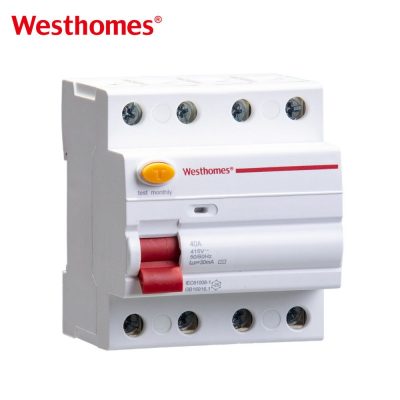
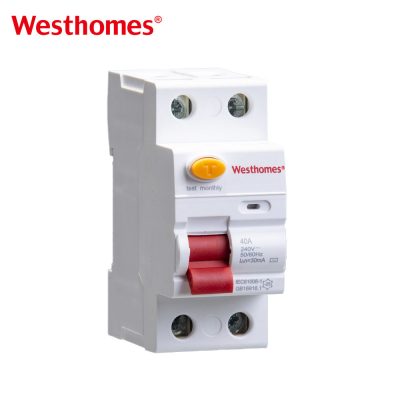
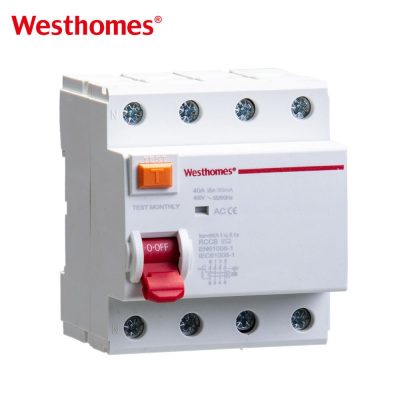
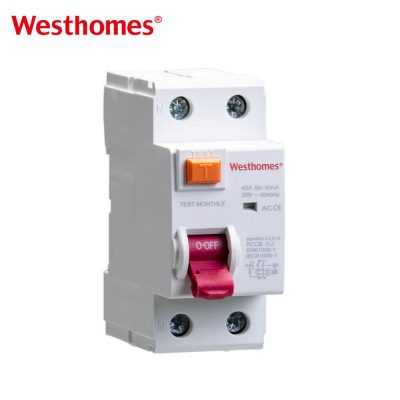
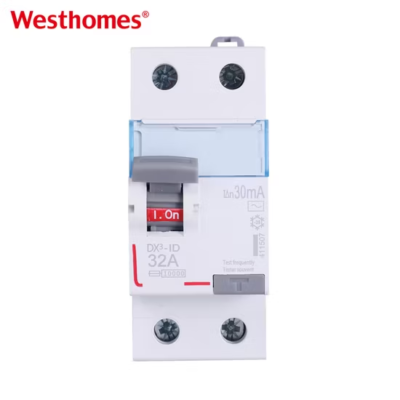
HNB9L-63 1P+N RCCB | 230V 63A Electronic RCBO Breaker

The HNB9L-63 Series Residual Current Circuit Breaker (RCCB) is a high-performance protective device engineered for AC 50Hz power distribution systems, offering reliable leakage, overload, and short-circuit protection.

Social focus:

HNB9L-63 RCCB Residual Current Circuit Breaker | 1P+N

The HNB9L-63 1P+N Residual Current Operated Circuit Breaker (RCCB) is a high-precision electronic-type RCBO designed to provide dual protection against residual current (leakage) and overcurrent (overload and short circuit) in AC 50Hz electrical distribution systems.

HNB9L-63 1p+n description

The HNB9L-63 1P+N RCCB offers cost-effective protection for modern power networks—ideal for distribution systems where safety, performance, and compact size are essential.

With a rated voltage of AC 230V and current rating up to 63A, it offers reliable safety for a wide range of residential, commercial, and industrial applications.

This RCCB features a 1P+N configuration, ideal for single-phase two-wire systems, ensuring the live and neutral lines are simultaneously disconnected in the event of a fault. When a leakage current exceeds the set threshold or a person encounters an electric shock, the circuit breaker will instantly disconnect power to prevent serious injury or damage.

The HNB9L-63 series stands out for its compact design, advanced internal structure, and casing made from flame-retardant, high-impact-resistant materials, offering long-term durability and stable operation even in demanding environments.

Key Features:

Model Number: HNB9L-63
Configuration: 1P+N (Single Pole + Neutral)
Rated Voltage: AC 230V
Rated Frequency: 50Hz
Rated Current: Up to 63A
Breaking Type: Electronic RCCB / RCBO
Protection Functions: Leakage, Overload, and Short-Circuit
Trip Sensitivity: Rapid disconnection upon fault detection
Material: Flame-retardant and impact-resistant housing

Applications:

Residential electrical systems
Office building distributions
Light industrial facilities
Distillery electrical protection
General-purpose distribution lines
Operation: Suitable for infrequent manual switching under normal load conditions
Standard Compliance: Manufactured in accordance with IEC/EN61009-1

KEY INFORMATION

Rated current 10, 16, 20, 25, 32, 40, 50, 63A
Rated voltage Ue AC240V (1P+N, 2P); AC400V (3P+N, 4P)
Rated insulation voltage Ui AC415
Rated impulse withstand voltage Uimp 4kV
Rated frequency 50/60Hz
Number of poles 1P+N, 3P+N
Module size 36mm, 72mm
Circuit type AC type, A type, B type
Breaking capacity 6000A, 10000A
Rated residual current I△n 10mA, 30mA, 100mA, 300mA
Rated residual operation current 10, 30, 100, 300mA
Optimum operation temperature -5ºC to 40ºC
Terminal tightening torque 2.5-4N/m
Terminal capacity (top) 25mm²
Terminal capacity (bottom) 25mm²
Electro-mechanical endurance 4000 cycles
Mounting 35mm DIN rail
The very new tripping structure makes more in safety
Suitable busbar PIN busbar
Standard IEC61008-1

Basic Info.

Model NO. HNB9L-63
Arc-extinguishing Medium Air
Structure MCB
Type Circuit Breaker
Certification ISO9001-2000, CE, CB, CCC
Ka 6ka, 10ka
Voltage AC240V/AC400V
Specification 10A-63A
Origin China
Production Capacity 365000
Speed Normal Type Circuit Breaker
Installation Fixed
Poles Number 1p+N
Function Conventional Circuit Breaker,
Circuit-Breaker Failure Protection,
Overcurrent Protection,
OVP(Overvoltage Protection)
Production Line 100% Automic
Cooperation Type OEM ODM
Transport Package Standard
Trademark Westhomes
HS Code 8536300000

FREQUENTLY ASKED QUESTION (FAQ)

What is the HNB9L-63 1P+N Electronic RCBO Breaker used for? plus-square Created with Sketch Beta. minus-square Created with Sketch Beta.

The HNB9L-63 1P+N is a single-module (or compact 2-module) residual current operated circuit breaker with overcurrent protection (RCBO) designed for 230V single-phase household and light-commercial circuits. It combines earth-leakage protection, overload protection and short-circuit protection in one device, replacing the traditional MCB + RCD combination in consumer units. It is typically rated up to 63A with a 30mA residual current sensitivity.

How does an electronic RCBO differ from an electromagnetic RCCB? plus-square Created with Sketch Beta. minus-square Created with Sketch Beta.

An electronic RCBO uses an electronic amplifier (powered by the line voltage) to boost the residual current signal before triggering the trip mechanism, allowing a smaller toroidal core and more compact housing. The trade-off is that it requires a minimum operating voltage to function — if the live or neutral supply is lost, the device may not trip on a residual current fault. Electromagnetic types are fully self-powered and immune to supply loss.

What are the main electrical specifications of this RCBO? plus-square Created with Sketch Beta. minus-square Created with Sketch Beta.

The HNB9L-63 1P+N is rated for AC 230V, 50/60Hz, with a nominal current up to 63A. It offers a residual current sensitivity of typically 30mA (Type AC or Type A), a breaking capacity usually of 6kA (10kA on select versions), and operates on a DIN rail in a 1P+N (2-pole) configuration that switches both line and neutral simultaneously. The tripping curve is typically B or C for standard residential and mixed loads.

What does "1P+N" mean on this RCBO? plus-square Created with Sketch Beta. minus-square Created with Sketch Beta.

"1P+N" means the device has one pole that actively switches and provides overcurrent/short-circuit protection on the line (L) conductor, plus an additional pole that switches the neutral (N) conductor but does not include an overcurrent trip. Both contacts open together during tripping or manual operation, providing complete isolation of the branch circuit. This is the standard configuration for single-phase domestic branch circuits in European and Asian consumer units.

Can this RCBO replace both an MCB and an RCD? plus-square Created with Sketch Beta. minus-square Created with Sketch Beta.

Yes — that is the core advantage of an RCBO. The HNB9L-63 integrates a current-sensing transformer (for residual current detection), an electronic trip unit (for residual current), and a thermal-magnetic trip (for overload and short-circuit) inside one housing. This saves DIN rail space, simplifies wiring, and ensures that earth-fault and overcurrent protection share the same tripping mechanism. Use it where individual branch-circuit RCD protection is required.

How should this 1P+N RCBO be wired in a consumer unit? plus-square Created with Sketch Beta. minus-square Created with Sketch Beta.

Connect the supply L and N to the marked IN terminals (usually top), and the load L and N to the OUT terminals (bottom). Never swap line and neutral or reverse supply/load, as the electronics and test circuit expect a specific polarity. Ensure the neutral conductor is connected only through the RCBO and not bonded to earth downstream. Torque the terminals per the nameplate (commonly 1.2–2.0 N·m for 6mm², up to 3.5 N·m for 25–35mm²) and route neutral wires neatly to avoid inducing leakage.

Why does my electronic RCBO trip more often than expected? plus-square Created with Sketch Beta. minus-square Created with Sketch Beta.

Electronic RCBOs can be more sensitive to nuisance tripping from high-frequency leakage (e.g., from LED drivers, dimmer switches, variable-speed motors, solar inverters, and EV chargers), surge events, or voltage dips that temporarily disable the electronics. If tripping occurs under normal load, first identify whether it is an earth-fault trip (residual) or overcurrent trip (look at the indicator window or trip cause label on the device), then isolate loads to find the source. Switching to a Type A or Type F RCBO or a time-delayed (S-type) model often resolves high-frequency nuisance trips.

Which IEC standard governs this RCBO? plus-square Created with Sketch Beta. minus-square Created with Sketch Beta.

The HNB9L-63 RCBO is designed and tested to IEC 61009-1 (Residual current operated circuit-breakers with integral overcurrent protection for household and similar uses — RCBOs). It also references IEC 60898-1 for the overcurrent/short-circuit characteristics. Depending on the destination market, additional national certifications (CE, CB, UKCA, etc.) may be marked on the rating label.

Where is this 1P+N RCBO typically applied? plus-square Created with Sketch Beta. minus-square Created with Sketch Beta.

This single-phase RCBO is ideal for final circuits in residential consumer units — protecting socket outlets, lighting circuits, kitchen circuits, bathroom circuits, and outdoor circuits. It is also widely used in apartments, villas, hotels, offices, retail shops and light-commercial distribution boards where individual branch-circuit earth-leakage protection is required without tripping the whole installation on a single fault.

How do I test and maintain this electronic RCBO? plus-square Created with Sketch Beta. minus-square Created with Sketch Beta.

Press the T (test) button at least every six months — the device should trip immediately and reset after a short pause. Annual maintenance includes checking that terminals are tight, verifying no discoloration or burning around the housing, and confirming the supply voltage is within the rated range (too-low voltage can prevent the electronics from operating). If the test button fails to trip, or if the unit feels warm under normal load, replace it immediately. Electronic RCBOs have a typical design life of 10–20 years depending on environmental conditions.

RELATED PROJECTS

REQUEST
YOUR FREE QUOTE

* indicates a required field