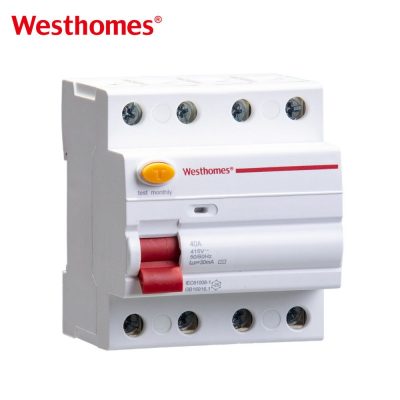
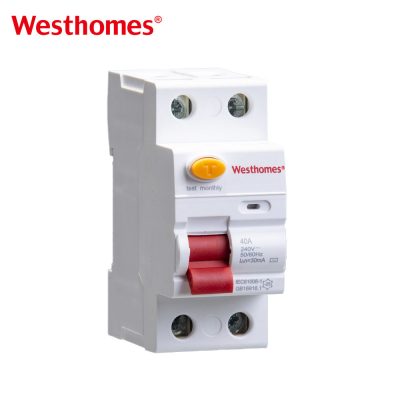
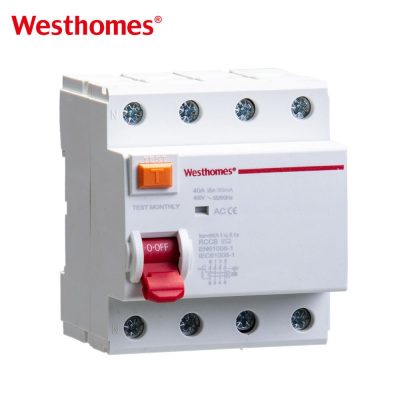
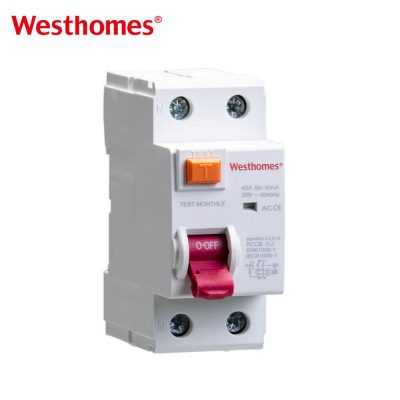
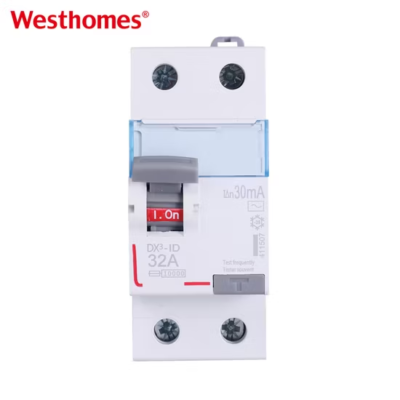
HNB9L-63 RCCB 3P+N MCB | Residual Current Circuit Breaker 63A
Built with a compact design, the HNB9L-63 RCCB features an advanced structure, stable performance, and a durable housing made from high-impact resistant and flame-retardant materials.
Get quick appointment for technical support!

The HNB9L-63 Series Residual Current Circuit Breaker (RCCB) is a high-performance protective device engineered for AC 50Hz power distribution systems, offering reliable leakage, overload, and short-circuit protection.


Built with a compact design, the HNB9L-63 RCCB features an advanced structure, stable performance, and a durable housing made from high-impact resistant and flame-retardant materials.

The HNB9L-63 Residual Current Circuit Breaker (RCCB) provides reliable protection, compact size and cost-effective installation for any low-voltage power distribution system.
Designed in 3P+N configuration, with a rated working voltage of 240/400V AC and a rated current of up to 63A, it is ideal for protecting modern power infrastructure.
When electric shock occurs or leakage current exceeds the safety limit, this RCCB can quickly disconnect the fault circuit within milliseconds to protect human life and connected electrical equipment. It ensures optimal safety for residential and commercial power systems.
This circuit breaker is ideal for applications where space, performance and reliability are critical.
Main features:
Model: HNB9L-63
Configuration: 3P+N miniature circuit breaker
Rated voltage: AC 240V / 400V
Rated frequency: 50Hz
Rated current: up to 63A
Protection function: leakage, overload and short circuit
Material: impact-resistant flame-retardant shell
Application:
Office building
Residential area
Industrial plant
Brewery
General power distribution lines and equipment
Switch use: Suitable for infrequent line switching under normal conditions
Compliance: Designed in accordance with international quality and safety standards
| Rated current | 10, 16, 20, 25, 32, 40, 50, 63A |
| Rated voltage Ue | AC240V (1P+N, 2P); AC400V (3P+N, 4P) |
| Rated insulation voltage Ui | AC415 |
| Rated impulse withstand voltage Uimp | 4kV |
| Rated frequency | 50/60Hz |
| Number of poles | 1P+N, 3P+N |
| Module size | 36mm, 72mm |
| Circuit type | AC type, A type, B type |
| Breaking capacity | 6000A, 10000A |
| Rated residual current I△n | 10mA, 30mA, 100mA, 300mA |
| Rated residual operation current | 10, 30, 100, 300mA |
| Optimum operation temperature | -5ºC to 40ºC |
| Terminal tightening torque | 2.5-4N/m |
| Terminal capacity (top) | 25mm² |
| Terminal capacity (bottom) | 25mm² |
| Electro-mechanical endurance | 4000 cycles |
| Mounting | 35mm DIN rail |
| The very new tripping structure makes more in safety | |
| Suitable busbar | PIN busbar |
| Standard | IEC61008-1 |
| Model NO. | HNB9L-63 |
| Arc-extinguishing Medium | Air |
| Structure | MCB |
| Type | Circuit Breaker |
| Certification | ISO9001-2000, CE, CB, CCC |
| Ka | 6ka, 10ka |
| Voltage | AC240V/AC400V |
| Specification | 10A-63A |
| Origin | China |
| Production Capacity | 365000 |
| Speed | Normal Type Circuit Breaker |
| Installation | Fixed |
| Poles Number | 3p+N |
| Function | Conventional Circuit Breaker, Circuit-Breaker Failure Protection, Overcurrent Protection, OVP(Overvoltage Protection) |
| Production Line | 100% Automic |
| Cooperation Type | OEM ODM |
| Transport Package | Standard |
| Trademark | Westhomes |
| HS Code | 8536300000 |
The HNB9L-63 3P+N is a four-pole (3-phase + neutral) residual current operated circuit breaker in the HNB9L series, rated up to 63A frame size for three-phase 400/415V systems. It protects against earth-leakage currents that can cause electric shock or fire, and (depending on the exact sub-model) may integrate overcurrent protection, making it an RCBO. It is typically used in three-phase distribution boards for commercial and light-industrial loads.
Inside the 3P+N unit, all four conductors (L1, L2, L3, N) pass through a single toroidal current transformer that sums their instantaneous currents. Under healthy conditions the sum is zero. If an earth fault occurs, the imbalance residual current is sensed, amplified (electronically) and used to trigger the trip mechanism, which opens all four contacts simultaneously. The neutral pole does not carry a thermal-magnetic overcurrent trip — protection on neutral is typically redundant because neutral current equals phase current in a balanced three-phase system.
The device is rated for AC 400/415V, 50/60Hz, with a nominal current up to 63A. Common residual current sensitivities are 30mA, 100mA, 300mA and 500mA; the trip characteristic is typically Type AC or Type A. When supplied as an RCBO, the overcurrent trip curve is usually B or C with a breaking capacity of 6kA (up to 10kA on selected variants). It mounts on a standard 35mm DIN rail in a 4-pole (≈4-module) width.
A 3P device switches only the three phase conductors and leaves neutral permanently connected, while a 3P+N device switches both phases and neutral. For safety and maintenance isolation, 3P+N is preferred when the load side must be fully isolated from both phase and neutral — for example, when working on equipment that could have back-feed from another source, or in installations where neutral-to-earth potential differences are a concern. In balanced three-phase loads where neutral is not needed, 3P is sufficient and saves one pole.
The HNB9L-63 series is an electronic (voltage-dependent) RCCB/RCBO family, meaning the residual current signal is amplified by an electronic circuit powered from the line voltage. This allows a compact design at a competitive cost, but it requires a minimum operating voltage to trip. If the application demands full self-powered operation under supply-loss conditions, the electromagnetic HNB1L-63 series should be selected instead.
Mount the device on a DIN rail in a distribution board with adequate ventilation. Connect the three phases and neutral to the IN terminals according to the labeling (L1/L2/L3/N), and the downstream load to the OUT terminals. Do not mix up supply and load, and do not route the neutral conductor outside the toroidal core — any conductor passing through the device must be carried through the core. Tighten all terminals to the rated torque and verify torque with a calibrated screwdriver, since loose connections are a leading cause of overheating.
First, identify whether the trip is due to earth leakage (residual) or overload/short-circuit. Reset the breaker; if it trips immediately even with all loads off, there is likely a wiring fault or neutral-to-earth short on the fixed installation. If it trips after some time or under specific loads, isolate loads one by one (e.g., disconnect motors, inverters, EV chargers, LED lighting) to find the source. Use a residual current clamp meter to measure the actual leakage current in the field, and confirm the total installation leakage does not approach 50% of the RCCB's rated sensitivity.
The HNB9L-63 is designed to IEC 61008-1 when supplied as a pure RCCB (without overcurrent protection), or to IEC 61009-1 when supplied as an integrated RCBO. The overcurrent trip portion also aligns with IEC 60898-1. National deviations and certifications (e.g., CE, CB scheme, local safety marks) are listed on the product label and datasheet.
Typical uses include protecting three-phase industrial sockets, machine tools, pumps, compressors, air-conditioning units, electric boilers, rooftop solar PV combiner boxes, EV charging stations, and main distribution boards in offices, shopping malls, factories and residential towers. The 30mA version is used for direct-contact personal protection, while 100–500mA versions (especially time-delayed S-type) provide backup fire-protection selectivity upstream.
Press the test button every six months to verify the trip mechanism. Annually, inspect all terminals for tightness and heat marks, and test the insulation resistance of the downstream circuits with a megohmmeter. Every 2–3 years, an authorized electrician should measure actual residual leakage in the installation and confirm the tripping current with a RCD tester. If the device fails the test button, shows signs of overheating, or has tripped under a known high short-circuit fault, replace it — internal contacts degrade after severe fault currents.
* indicates a required field


 155 MB