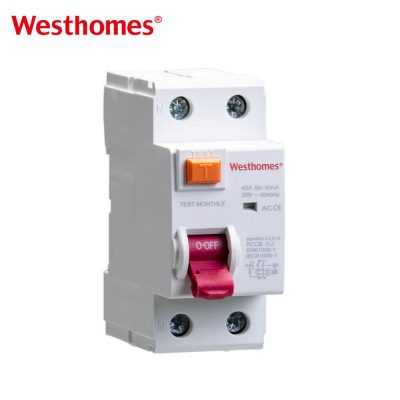
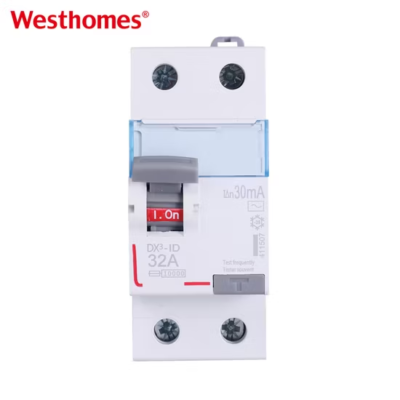
WSB2L Miniature Circuit Breaker
WSB2L Miniature Circuit Breaker (MCB for short) is one of updated type MCBs researched and developed by the company by using advanced design and manufacture technology internationally.
Get quick appointment for technical support!

WSB2L Miniature Circuit Breaker (MCB for short) is one of updated type MCBs researched and developed by the company by using advanced design and manufacture technology internationally.


WSB2L Miniature Circuit Breaker (MCB for short) is one of updated type MCBs researched and developed by the company by using advanced design and manufacture technology internationally.
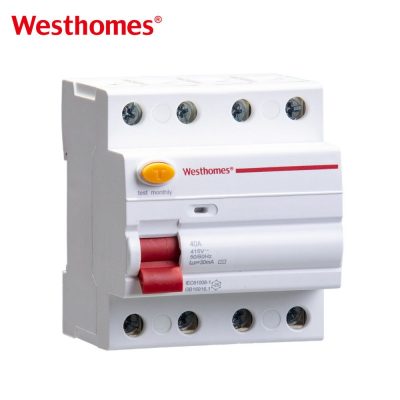
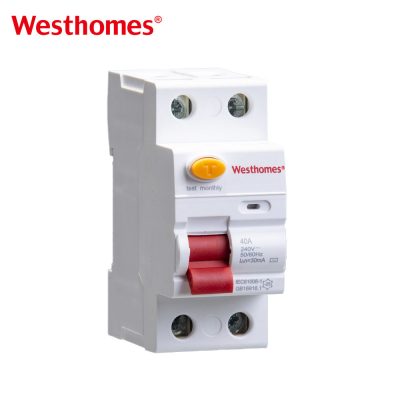
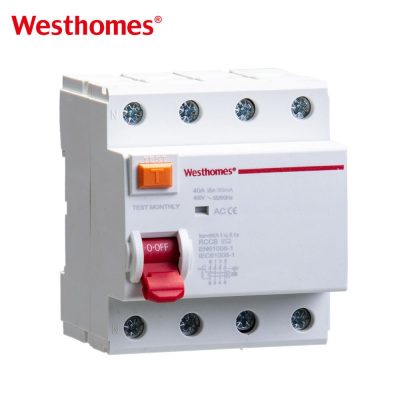
WSB2L series RCCB are suitable for distribution lines with ac 50Hz, rated working voltage of AC240/400V and rated current up to 63A and below. When the person gets electric shock or the leakage current of the network exceeds the specified value, the leakage circuit breakers can quickly cut off the fault power supply in a very short time to protect the safety of the person and the electrical equipment.
The RCCB have the advantages of advanced structure, reliable performance and compact volume.The shell is made of high impact resistance and flame retardant material. The RCCB have the functions of overload, short circuit and leakage protection. They are mainly used for overload, short circuit and leakage protection of office buildings, residential buildings and distiller buildings, distribution lines and equipment. They can also be used for infrequent conversion of lines under normal conditions.
| Pole | 1P+N, 3P+N |
| Voltage | AC240V/400V |
| kA | 6kA, 10kA |
| In(A) | 16, 20, 25, 32, 40, 50, 63A |
| Rated current | 16, 20, 25, 32, 40, 50, 63A |
| Rated voltage Ue | AC240V (1P+N, 2P); AC400V (3P+N, 4P) |
| Rated insulation voltage Ui | AC415 |
| Rated impulse withstand voltage Uimp | 4kV |
| Rated frequency | 50/60Hz |
| Number of poles | 1P+N, 3P+N |
| Module size | 36mm, 72mm |
| Circuit type | AC type, A type, B type |
| Breaking capacity | 6000A, 10000A |
| Rated residual current I△n | 10mA, 30mA, 100mA, 300mA |
| Rated residual operation current | 10, 30, 100, 300mA |
| Optimum operation temperature | -5ºC to 40ºC |
| Terminal tightening torque | 2.5-4N/m |
| Terminal capacity (top) | 25mm² |
| Terminal capacity (bottom) | 25mm² |
| Electro-mechanical endurance | 4000 cycles |
| Mounting | 35mm DIN rail |
| The very new tripping structure makes more in safety | |
| Suitable busbar | PIN busbar |
| Standard | IEC61008-1 |

An RCCB (Residual Current Operated Circuit Breaker, a residual current device without overcurrent protection) is a device that switches off a circuit when it detects an imbalance between the current going out on the live conductor and the current returning on the neutral. It protects people and property against earth-leakage (shock) faults, not against overload or short circuit. It is mounted on a DIN rail in a consumer unit alongside an MCB or fuse.
Inside is a toroidal core through which the live and neutral conductors both pass. Under normal conditions their currents are equal and opposite, so the magnetic fields cancel and no flux is detected. When current leaks to earth (e.g., through a person touching a live part), the live and neutral currents differ, creating a net flux that induces a voltage in a secondary winding. This signal is amplified and triggers a solenoid that trips the mechanism within milliseconds.
63 A is the maximum continuous current the RCCB can carry in its normal closed position, and 240 V is the rated operational voltage for single-phase (line-to-neutral) use. The 63 A rating governs how much downstream load the RCCB can feed; it is not the tripping current, which is defined by the residual-current sensitivity (e.g., 30 mA). For three-phase systems, 4-pole RCCBs are used at 230/400 V.
Sensitivity (IΔn) is the residual current at which the RCCB is designed to trip. A 30 mA device trips when the live–neutral imbalance reaches about 30 mA — the level widely regarded as protective against ventricular fibrillation in human touch. Higher sensitivities (10 mA) are used in bathrooms and locations with particularly high shock risk; 100 mA, 300 mA, or 500 mA are used for fire-protection discrimination rather than direct human protection.
As an OEM/ODM product, the RCCB can be customized in rated current (e.g., 40 A, 63 A, 100 A), pole configuration (2P single-phase, 4P three-phase), sensitivity (30 mA, 100 mA, 300 mA), trip type (AC type, A type, or B type for DC-smooth residual current), branding, color, packaging, and terminal options. Custom label printing, private mold work, and OEM test reports/certificates can be supplied to the buyer's specification.
It clips onto a standard 35 mm DIN rail inside a distribution board or consumer unit, with the live supply connected to the line side and the load to the load side. It occupies 2 modules for a 2-pole (single-phase) device and 4 modules for a 4-pole (three-phase) device. It must be installed by a qualified electrician and coordinated with downstream overcurrent protection (MCB or fuse).
The "T" or test button simulates a residual current by injecting a known current through a test resistor across the trip circuit, allowing the installer or user to verify that the trip mechanism still operates. It should be pressed at installation and periodically (e.g., quarterly) to confirm correct function. If the device does not trip when the button is pressed, it should be replaced immediately.
RCCBs without overcurrent protection are built to IEC 61008-1 (Residual current operated circuit-breakers without integral overcurrent protection for household and similar uses). If overcurrent protection is integrated, the device is an RCBO and is built to IEC 61009-1. The standard defines the trip characteristics (including the 5 IΔn fast-trip test), operating time bands, and type classification (AC, A, F, B).
Repeated nuisance tripping usually indicates a real earth-leakage fault — damp insulation, a damaged cable, or leakage from a faulty appliance — rather than a device defect. Other causes include multiple appliances sharing a circuit with leakage, incorrect wiring (neutral not returning through the RCCB), or use of an AC-type RCCB on a circuit with DC residual current (e.g., inverter/electronics) requiring an A or B type. Isolate circuits one by one to locate the leakage, and have the installation inspected.
No. A standard RCCB detects only residual (earth-leakage) current; it will not trip on an overload or short circuit between live and neutral. It must therefore be used in series with an overcurrent protective device such as an MCB, fuse, or MCCB. A combined unit with both residual-current and overcurrent protection is called an RCBO.
* indicates a required field


 155 MB