Get quick appointment for technical support!

2P MCCB Guide: Main Incoming, Generator Changeover and Solar
Oct 27, 2026
A 2P breaker opens both conductors of a single-phase circuit at the same time: line and neutral on AC, or positive and negative on DC. That sounds like a small detail, but it decides whether the circuit is fully isolated during maintenance, whether the neutral is protected against overload, and whether the device meets the destination market’s wiring rules. This guide covers the three places buyers keep asking about: the single-phase main incoming, the generator changeover position, and the solar inverter.
1P, 1P+N and full 2P are not interchangeable
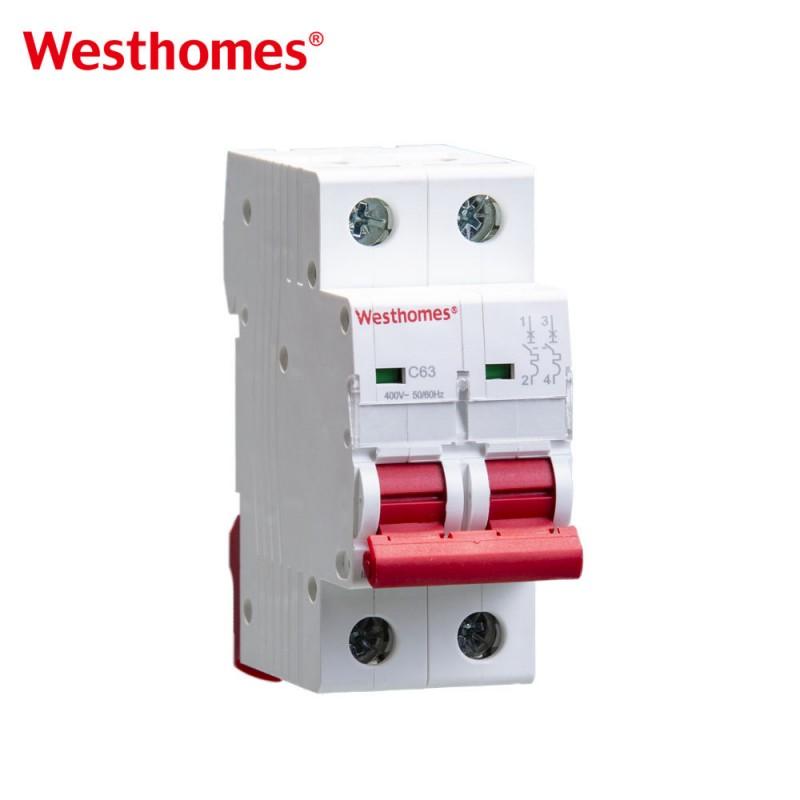
Catalogs use different trade names, so read the pole diagram rather than the marketing label. The three arrangements differ in what opens and what is protected.
| Configuration | What Opens | Neutral Protection | Typical Width | Typical Use |
|---|---|---|---|---|
| 1P | Line pole only | None; neutral stays connected | 1 module | Branch circuits where neutral isolation is not required |
| 1P+N switched neutral | Line and neutral open together | Overcurrent sensing on line pole only; neutral not rated for short circuit | 1 module (about 18 mm) | Compact branch circuits where neutral CSA equals or exceeds line |
| Full 2P | Both poles open together | Both poles carry thermal-magnetic protection; neutral withstands short circuit | 2 modules | Main incoming, high-power circuits, reduced neutral, changeover |
A 1P+N device saves DIN-rail space, but its neutral pole is a switch contact, not a protected pole. If the neutral conductor is smaller than the line, a neutral overload can heat the cable without the device ever sensing it. That is the main reason a full 2P is specified at incoming and high-power positions.
Single-phase main incoming
The main switch of a single-phase 230 V panel is the first place a full 2P is expected. It isolates line and neutral for the whole board, and both poles carry overcurrent and short-circuit protection. A 1P+N may be accepted on a branch circuit in continental Europe when the neutral cross-section is at least equal to the line, but main-switch positions and high-power circuits normally call for a full 2P.
Market rules matter here. Under BS 7671, the neutral of a single-phase final circuit is treated as a live conductor, which is why switched-neutral devices are common in the UK and Commonwealth, while solid-neutral devices that leave the neutral permanently connected are rejected on final circuits. For an incoming position, most specifications move straight to a full 2P regardless of branch-circuit practice.
Generator changeover position
A changeover switch or automatic transfer switch (ATS) moves the load between the grid and a backup generator. The breaker on this position must open line and neutral for one source before closing onto the other, because the two sources must never be paralleled. A 2P device does that for both conductors; a 1P device leaves the neutral live while the source changes, which is not acceptable at a transfer position.
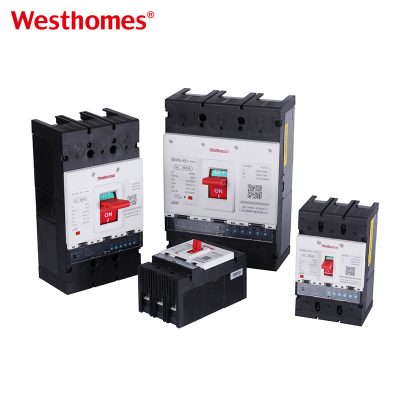
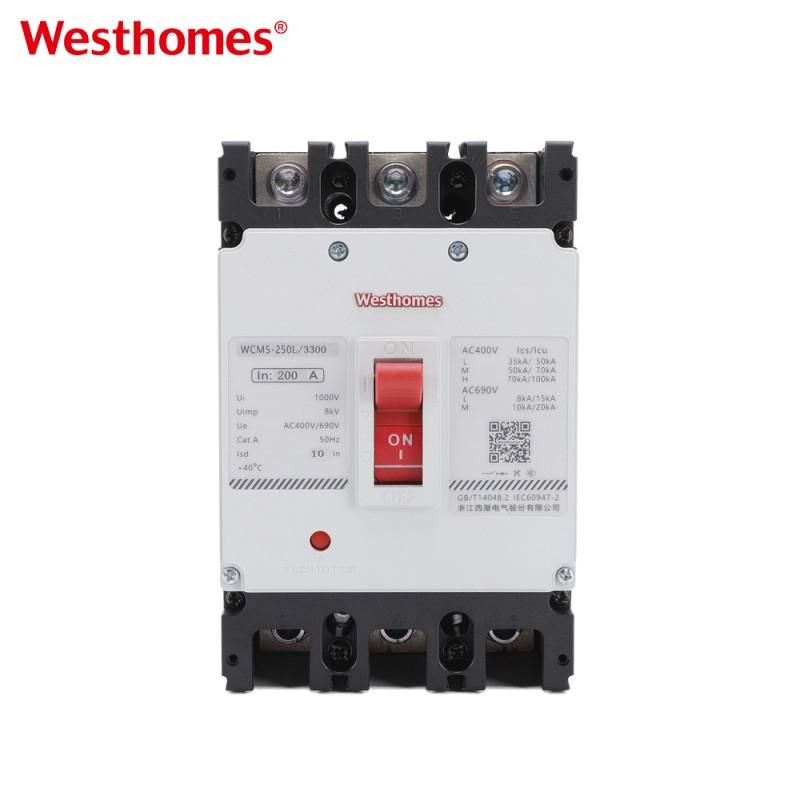
For small portable generators and light loads, a 2P MCB can handle the duty. For larger standby sets, commercial panels, and higher fault levels, the job moves to a 2P MCCB with a declared short-circuit rating and, where needed, adjustable thermal and magnetic settings. Coordinate the changeover mechanism so the sequence is break-before-make, and confirm the device can handle the generator’s inrush current on start-up.
Solar inverter: DC side and AC side
On the DC side of a PV system, a 2P breaker opens the positive and negative poles of the string or DC bus at once. DC has no zero crossing, so the device must carry a DC voltage rating, a permanent-magnet or arc-chute blow-out, and a marked polarity; an AC MCB on a PV string may weld instead of clearing.
On the AC side of a single-phase string inverter, a 2P MCB or 2P MCCB isolates line and neutral to the load. Because a PV inverter can feed power back toward the grid, ask the manufacturer for a written bidirectional declaration and check the device marking rather than assuming a standard AC unit handles reverse current.
How to size the 2P device
| Parameter | What to Check |
|---|---|
| Rated current In | Match the load or panel total with the required margin; do not size up to stop nuisance trips |
| Rated voltage Ue | 230/400 V AC for incoming; DC devices carry a separate DC voltage ceiling |
| Breaking capacity | Compare Icu/Ics against available fault current at the point, not the panel label only |
| Neutral cross-section | Reduced neutral CSA forces a full 2P; 1P+N only when neutral CSA equals or exceeds line |
| Trip curve | B for resistive domestic loads, C for general commercial and motor start-up; confirm with load |
| Market standard | IEC 60898-1 for MCB, IEC 60947-2 for MCCB, plus national wiring rules such as BS 7671 |
| Accessories | Auxiliary contacts, shunt trip, undervoltage release should come from the same family |
| Reverse flow | PV and storage need a written bidirectional declaration |
Frequently asked questions
Is a 2P breaker the same as a 1P+N?
No. A 1P+N opens the neutral but protects it only as a switch contact; a full 2P protects both poles and rates the neutral for short-circuit current. Check the pole diagram on the datasheet.
Can I use a 1P+N as the main switch?
It depends on the local code and the neutral size. Branch circuits in continental Europe may accept it when neutral CSA equals line; main incoming and reduced-neutral positions usually require a full 2P.
Why break the neutral at all?
For isolation during maintenance. The UK and Commonwealth treat the neutral as a live conductor, so leaving it connected while working on the board removes a layer of protection.
2P MCB or 2P MCCB for the incoming?
Below about 63 A on light boards a 2P MCB often suffices; higher current, larger fault levels, and adjustable settings call for a 2P MCCB.
Does a 2P DC breaker protect positive and negative?
Yes, when it carries a DC rating. A 2P AC breaker does not substitute, because DC arcs do not cross zero.
Closing
Start from the position rather than the pole number: main incoming, changeover, and DC solar usually need a full 2P; compact branch circuits may use 1P+N where the code allows. Size In and breaking capacity to the actual load and fault level, check the neutral cross-section, and confirm the device meets the destination wiring rule before you quote.
Ready to size a 2P MCB or 2P MCCB?
Send us the position (main incoming, generator changeover, or solar), rated current, system voltage, available fault level, neutral cross-section, and target market, and we will match a 2P MCB or 2P MCCB with ratings and a line-by-line quote.
Keep reading
Standards referenced (verify current editions for the project)

--- END ---