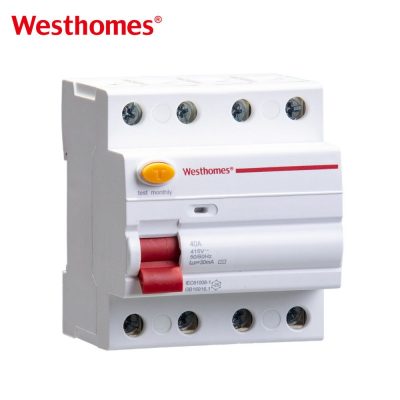
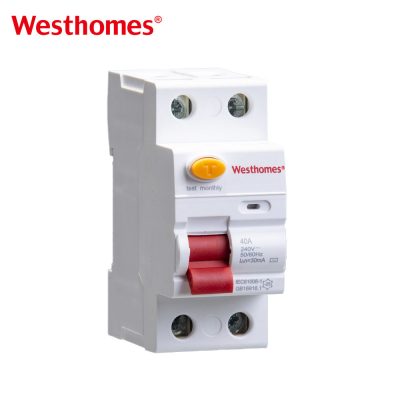
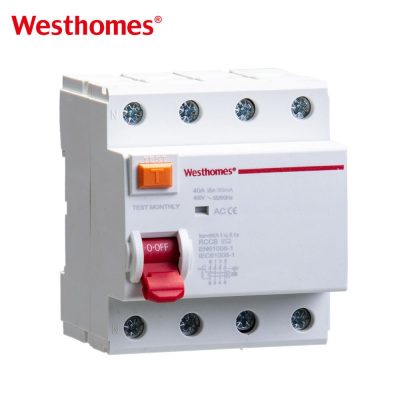
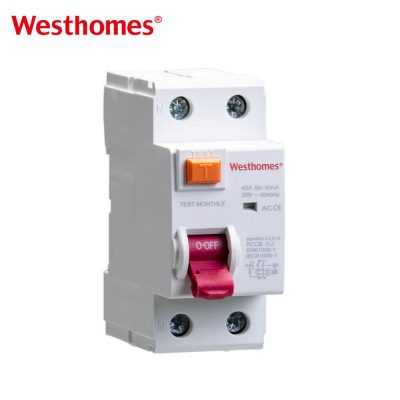
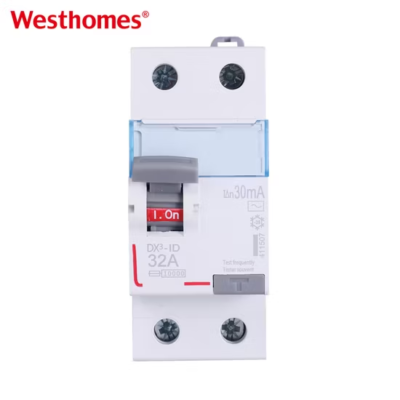
WSB132B-030 RCBO Residual Current Circuit Breaker with Wire
This RCBO is suitable for AC 50/60Hz power systems, with support for single-pole two-wire and two-pole 230V configurations.
Get quick appointment for technical support!

The WSB132B-030 Residual Current Circuit Breaker with Wire (RCBO) is an essential component for modern power distribution systems, offering dual safety functions


This RCBO is suitable for AC 50/60Hz power systems, with support for single-pole two-wire and two-pole 230V configurations.

Whether you are purchasing switchboards, residential units or machinery protection, WSB132B-030 RCBO is a cost-effective, standard-compliant and high-performance solution for modern electrical protection systems.
Leakage protection and overload/short circuit protection—Ensure your circuit performance is reliable and safe.
With a rated current of up to 40A and a maximum short-circuit breaking capacity of 6000A, it is ideal for protecting distribution lines, electrical equipment and personnel from electrical hazards.
In the event of leakage or accidental electric shock, WSB132B-030 can quickly disconnect the power supply to prevent further damage or injury. In addition, it can reliably prevent overload and short circuit, and can be used for infrequent switching operations in normal operation.
Product Features:
Model: WSB132B-030
Rated voltage: Single-pole two-wire/bipolar 230V
Rated current: Up to 40A
Interrupting capacity: ≤6000A
Function: Residual current protection + overcurrent protection
Application: Residential, commercial and light industrial power systems
Compliant standards: IEC/EN61009-1
Is wire included? Yes
Factory direct price: Competitive bulk price
| Rated current | 6, 10, 16, 20, 25, 32, 40A |
| Rated voltage Ue | AC230V (1P+N) |
| Rated insulation voltage Ui | AC400 |
| Rated impulse withstand voltage Uimp | 4kV |
| Rated frequency | 50/60Hz |
| Number of poles | 1P+N |
| Module size | 18mm |
| Trip type | B, C |
| Breaking capacity | 6000A |
| Rated residual current I△n | 30mA |
| Optimum operation temperature | 30ºC |
| Mounting | 35mm DIN rail |
| The very new tripping structure makes more in safety | |
| Suitable busbar | PIN busbar |
| Standard | IEC/EN61009-1 |
| Model NO. | WSB132B-030 |
| Arc-extinguishing Medium | Air |
| Structure | RCBO |
| Type | Circuit Breaker |
| Certification | ISO9001-2000, CE, CB, CCC |
| Ka | 6ka |
| Residual Current | 30mA |
| Specification | 6A-40A |
| Origin | China |
| Production Capacity | 365000 |
| Speed | Normal Type Circuit Breaker |
| Installation | Fixed |
| Poles Number | 1p+N |
| Function | Conventional Circuit Breaker, Circuit-Breaker Failure Protection, Overcurrent Protection, OVP(Overvoltage Protection) |
| Production Line | 100% Automic |
| Cooperation Type | OEM ODM |
| Transport Package | Standard |
| Trademark | Westhomes |
| HS Code | 8536300000 |
The WSB132B-030 is a single-module (or compact) RCBO — a Residual Current Circuit Breaker with Overload protection — combining earth-leakage, overload and short-circuit protection in one device. The "030" suffix denotes a residual current sensitivity of 30mA, the standard level for personal electric-shock protection in socket and bathroom circuits. It is designed for 230V single-phase household and light-commercial distribution boards.
Inside the WSB132B-030, a toroidal current transformer continuously compares the instantaneous current in the line (L) and neutral (N) conductors. Any imbalance (residual current) is detected and amplified, triggering an electronic trip that opens the contacts. Simultaneously, a bimetal strip provides thermal overload protection (inverse-time) and an electromagnetic solenoid provides instantaneous short-circuit protection — the same principle as a conventional MCB. The two protection functions share a common tripping mechanism.
The WSB132B-030 is rated for AC 230V, 50/60Hz, with a 30mA residual current sensitivity. It is typically offered in current ratings from 6A up to 40A (or 63A on selected versions), with tripping curves B (up to ~5×In) or C (up to ~10×In) and a breaking capacity of 6kA (some versions 10kA). It is a 1P+N device, mounts on a 35mm DIN rail, and is usually Type AC or Type A in residual current characteristic.
A pure RCCB (per IEC 61008) only detects residual (earth-leakage) current and provides no protection against overload or short-circuit — it must be paired upstream with an MCB. An RCBO (per IEC 61009) integrates both functions in one unit, so a single device protects the branch circuit from earth faults, overload and short circuit. This saves panel space, reduces wiring points, and gives each final circuit independent RCD protection without requiring a whole-board RCD.
Combining MCB and RCD in one RCBO saves DIN rail width (often just 1–2 modules per circuit), reduces wiring labor, and eliminates the compatibility risk between a separate RCD and MCB. It also allows selective RCD protection per circuit — if a fault occurs on one circuit, only that RCBO trips instead of the whole installation losing power. For new builds and retrofits, RCBO boards are now the standard in most European and Asian consumer units.
Snap the RCBO onto a 35mm DIN rail in a distribution enclosure. Connect the incoming line and neutral to the supply (IN) terminals, and the outgoing branch wiring to the load (OUT) terminals. Observe the labeling carefully — reversing supply and load, or swapping L and N, can impair residual-current detection and invalidate certification. Use appropriate conductor cross-sections (typically 1–16mm² depending on rating), tighten screws to the stated torque, and ensure all strands are captured under the terminal clamps.
Common causes include: inherent leakage from LED/electronic drivers, dimmer switches, variable-speed drives, EV chargers and solar inverters; moisture in the installation; damaged appliance insulation; surge events; or an aging RCBO with elevated trip sensitivity. Troubleshoot by: (1) pressing the test button to confirm the unit is functional; (2) disconnecting all loads and re-testing — if it still trips, the wiring is at fault; (3) reconnecting loads one at a time to identify the offending appliance; and (4) measuring total installation leakage with a residual-current clamp meter. If high-frequency leakage is the cause, upgrade to a Type A or Type F RCBO.
The WSB132B-030 is designed and manufactured to IEC 61009-1 (RCBO standard) and IEC 60898-1 (overcurrent protection standard). It is typically CE-marked and may hold CB scheme test certificates for global market access. Country-specific certifications (UKCA, SASO, INMETRO, etc.) depend on the particular order — confirm with the supplier for the exact certificate applicable to your destination.
This 30mA single-phase RCBO is used as the final-circuit protective device in residential, commercial and light-industrial installations: socket-outlet circuits in living areas and kitchens, bathroom and utility circuits, outdoor sockets, garden lighting, garage circuits, and small appliance branches. Its 30mA sensitivity meets the personal-protection requirements of most national wiring regulations (e.g., IET Wiring Regulations, NEC-style local rules, GB standards).
Press the integrated test (T) button at least every six months; the device should trip immediately. Once reset after a short pause, operation should return to normal. Annually, inspect terminals for tightness and signs of overheating, and verify that the operating ambient temperature stays within the rated range (typically −5°C to +40°C). If the test button fails to trip, if the unit trips on the test button but cannot be reset, or if it has recently interrupted a major short-circuit fault, replace it. RCBOs have a typical mechanical/electrical endurance of around 8,000–20,000 operations.
* indicates a required field


 155 MB