Get quick appointment for technical support!

Get in Touch

DC Solar MCCB 250A Moulded Case Circuit Breaker

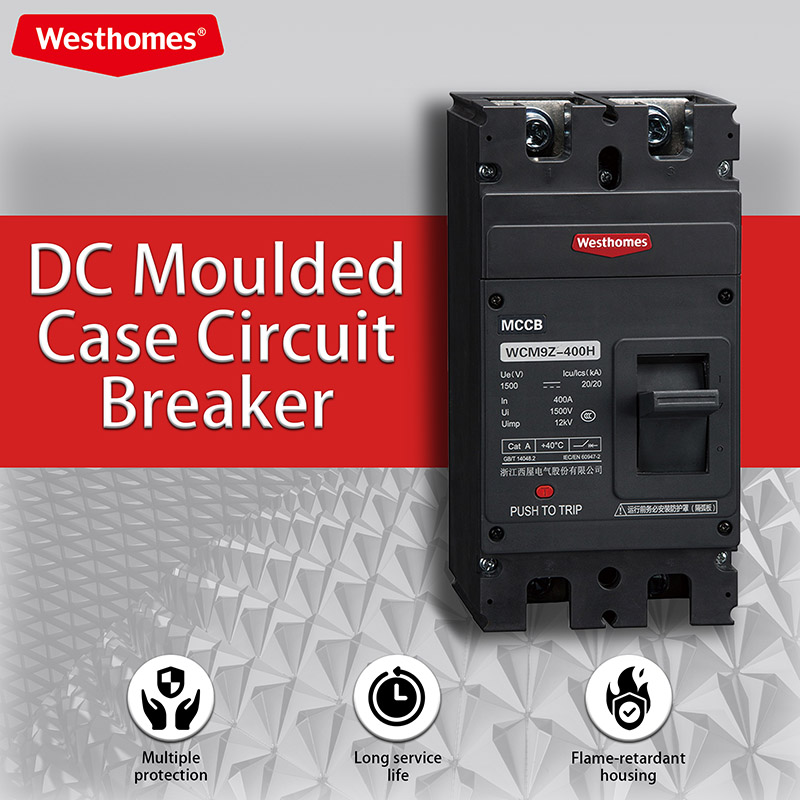
The WCM9Z is a DC molded case circuit breaker rated up to 250A at 1500V DC. Designed for photovoltaic systems, it provides overload and short-circuit protection on the DC side of solar installations, from residential combiner boxes to utility-scale PV arrays.

Social focus:

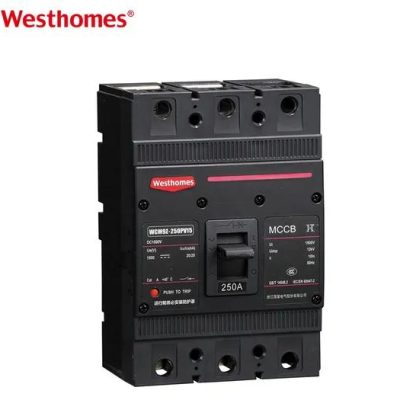
WCM9Z 250A 1500V DC Molded Case Circuit Breaker for Solar PV Systems

The WCM9Z series covers rated currents from 100A to 630A at DC voltages up to 1500V. Built for photovoltaic DC circuits, it combines overload long-delay protection with short-circuit instantaneous trip, distributing DC power while protecting lines and equipment from fault conditions. Complies with GB 14048.2 and IEC/EN 60947-2.

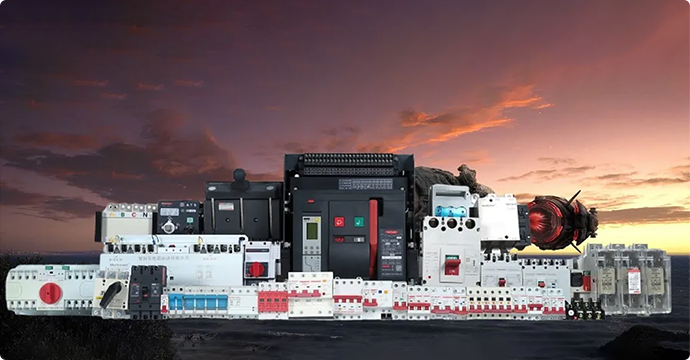
Westhomes ACB and MCCB circuit breaker product series overview

The WCM9Z operates at rated DC voltages of 1000V, 1250V, and 1500V with breaking capacities of 20kA at 1000V and 15kA at 1500V. This makes it suitable for modern high-voltage PV string circuits where 1500V system architecture reduces cabling losses and balance-of-system costs.

Available current ratings span 100A, 125A, 140A, 160A, 180A, 200A, 225A, 250A, 320A, 350A, 400A, 500A, and 630A. The wide range allows precise protection matching to individual PV string characteristics and inverter DC input ratings. Each rating shares the same frame dimensions, simplifying enclosure design and panel layout.

The DC arc extinguishing mechanism uses magnetic blowout technology to safely interrupt DC fault currents without the zero-crossing advantage of AC circuits. This is critical in PV applications where sustained DC arcs can damage equipment and pose fire risks. The breaker is non-polarized, accepting DC current flow in either direction, which supports both grounded and ungrounded PV array configurations.

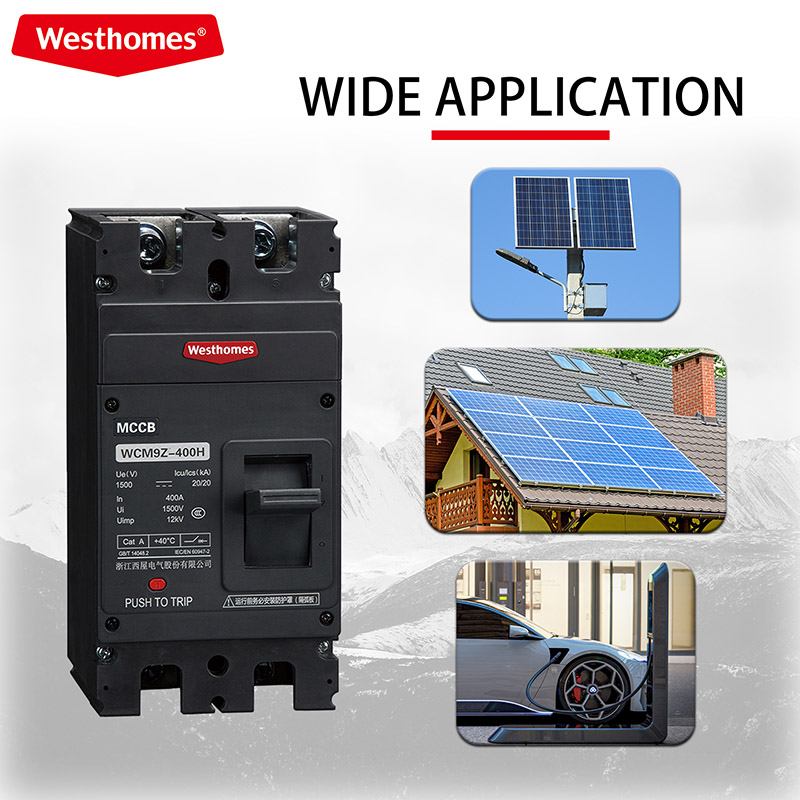
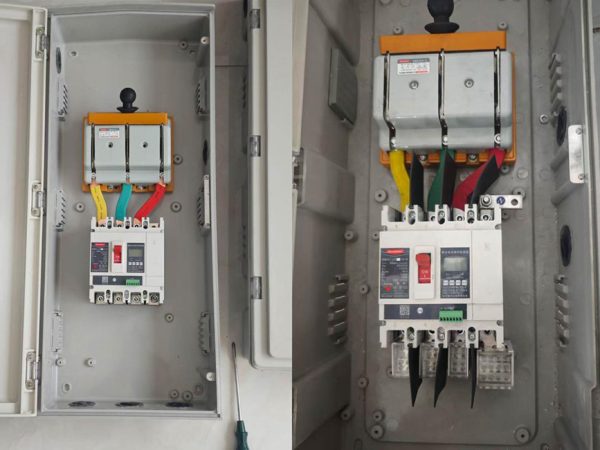
Typical applications include PV combiner boxes, DC recombiner panels, inverter DC disconnects, and battery energy storage DC circuits. The breaker supports DIN rail or panel mounting with front-connected terminals. Operating temperature range is -25°C to +70°C, covering outdoor PV installation environments.

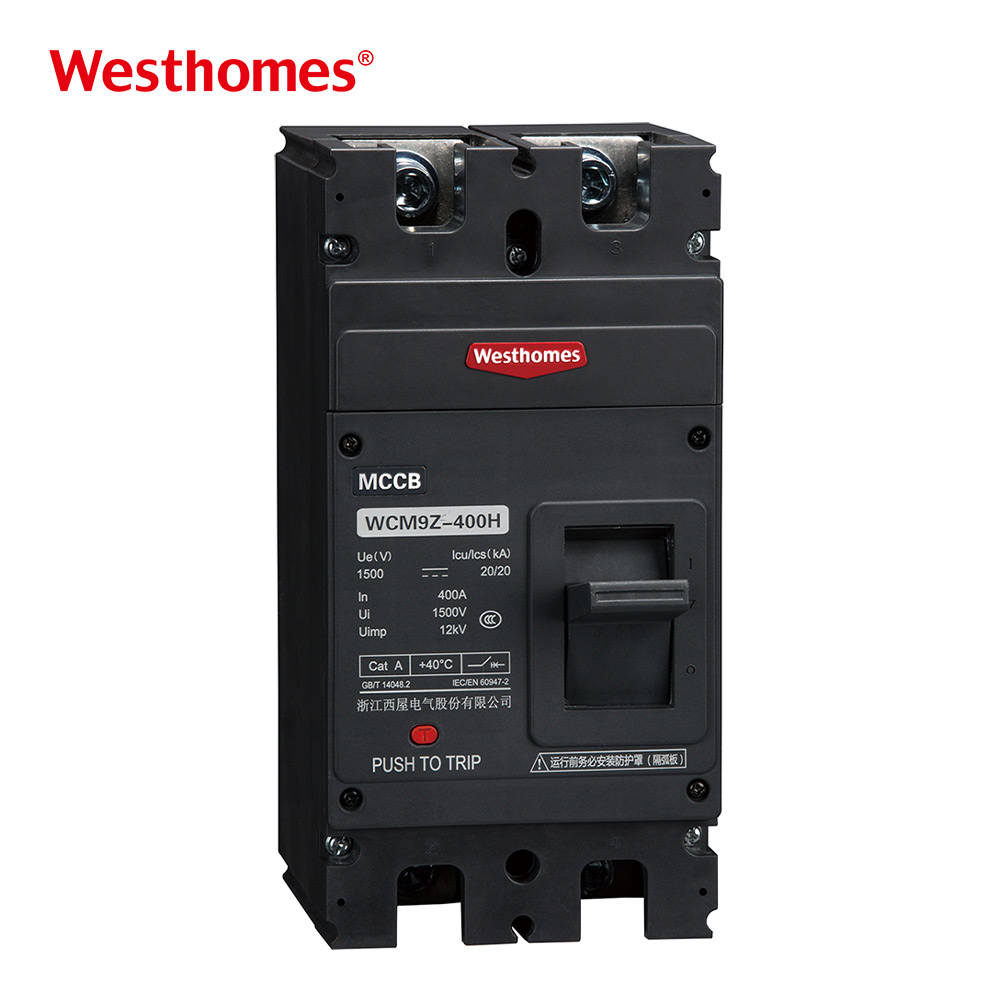
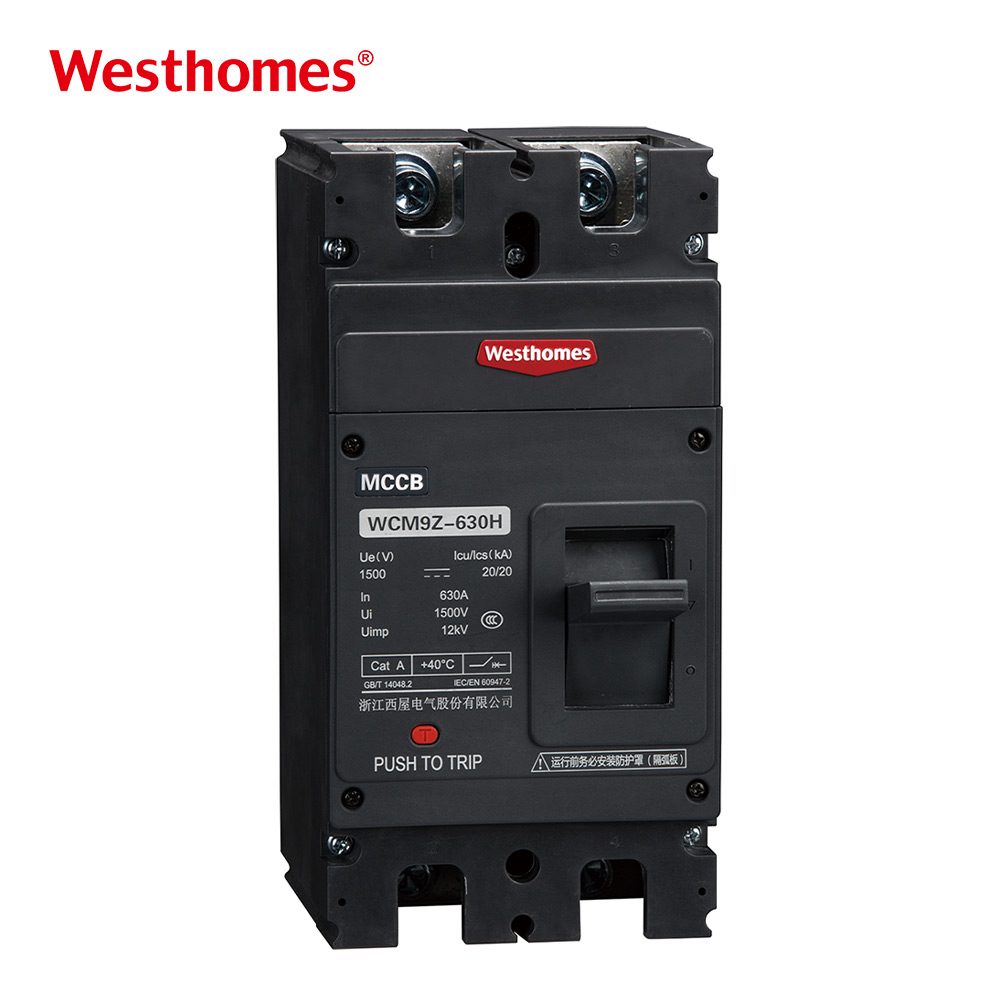
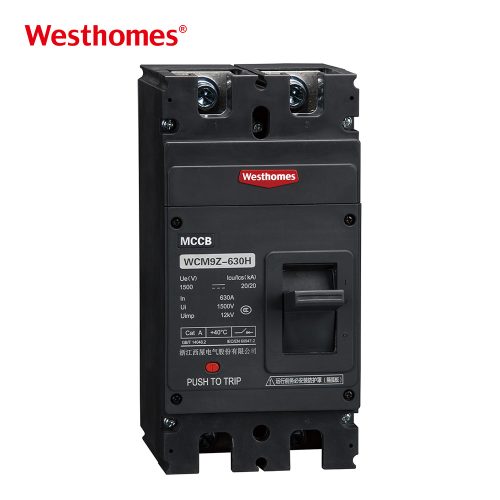
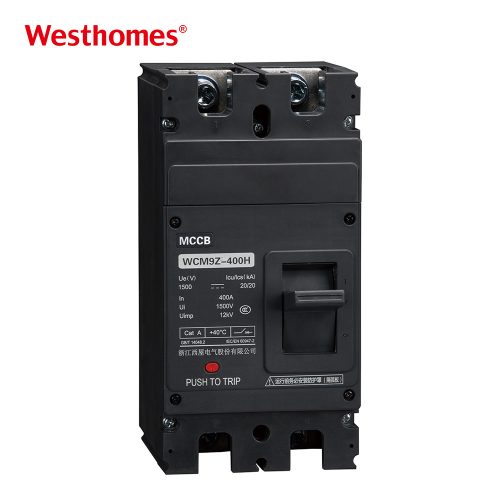
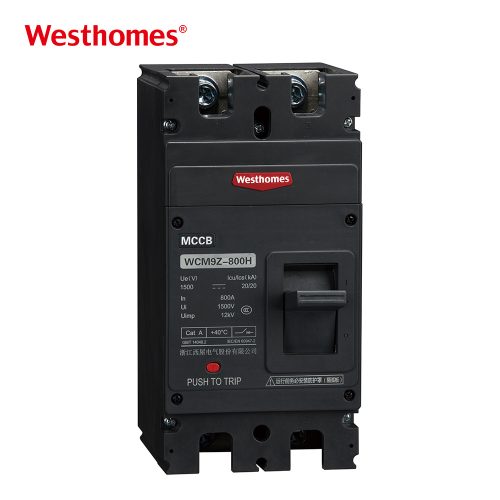
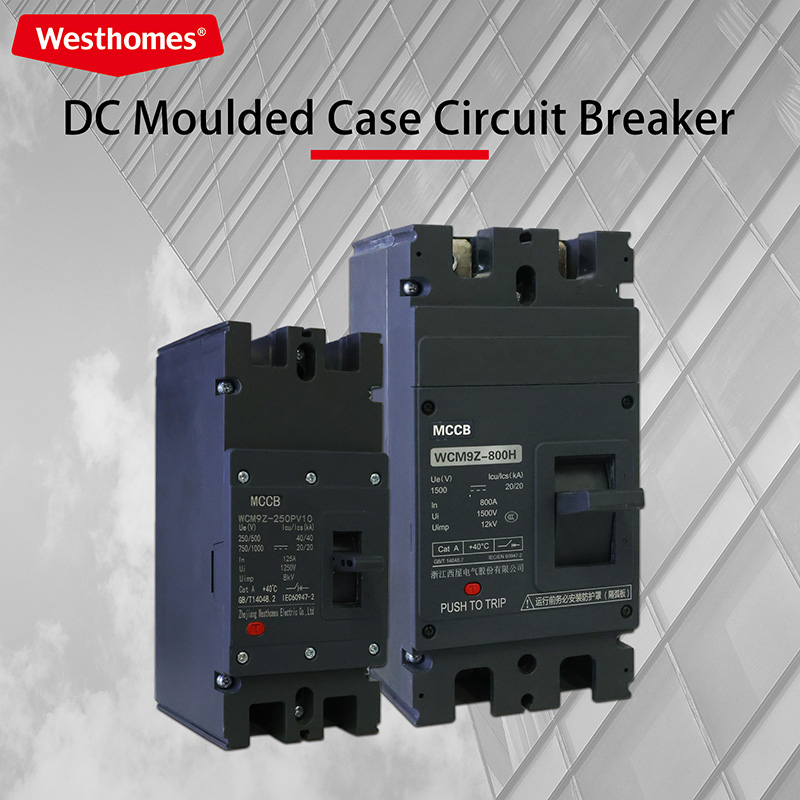
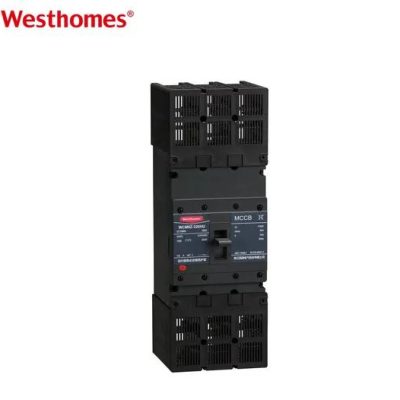
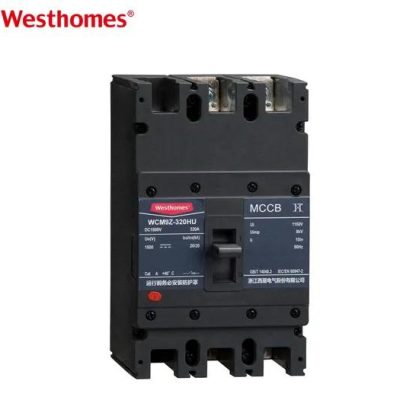
WCM9Z 250A 1500V DC MCCB product photo for solar PV systems
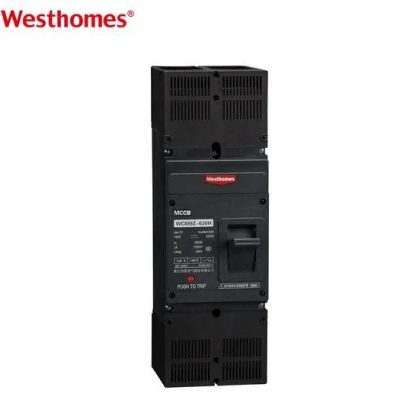
WCM9Z 250A DC molded case circuit breaker dimension and mounting diagram
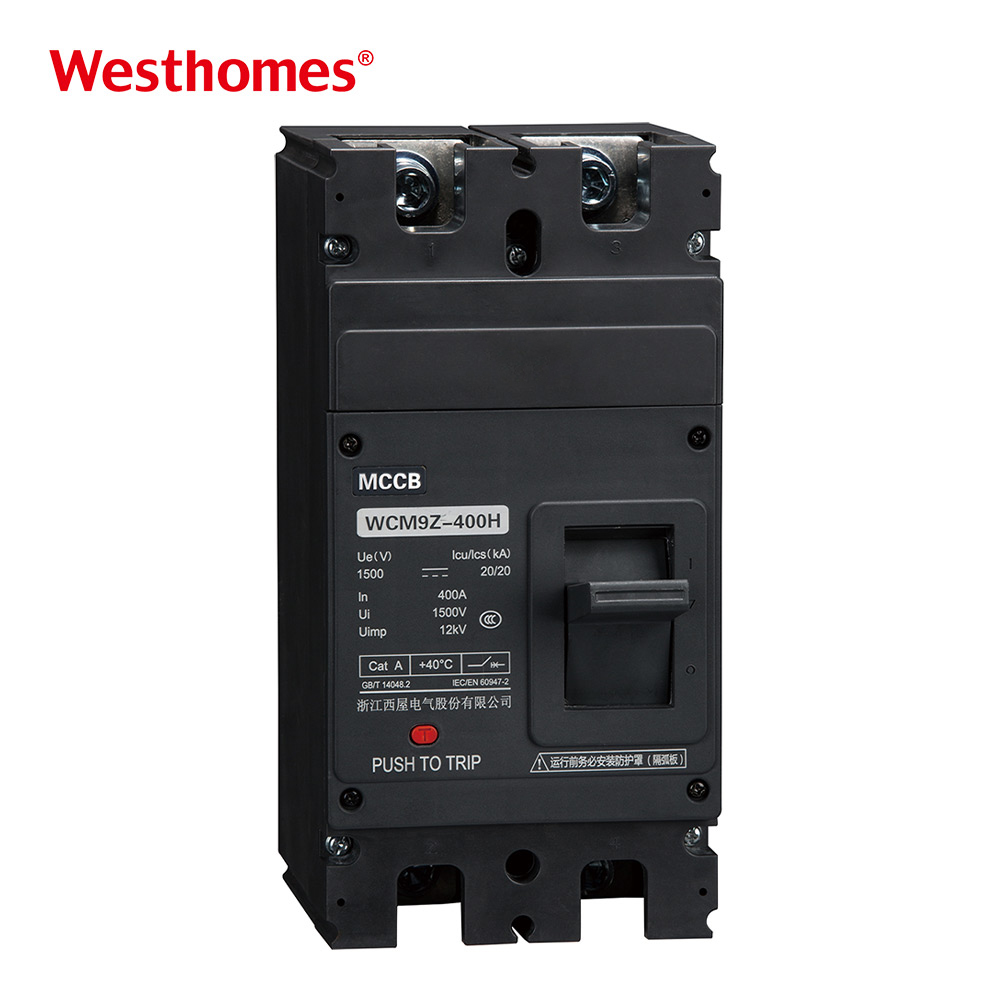
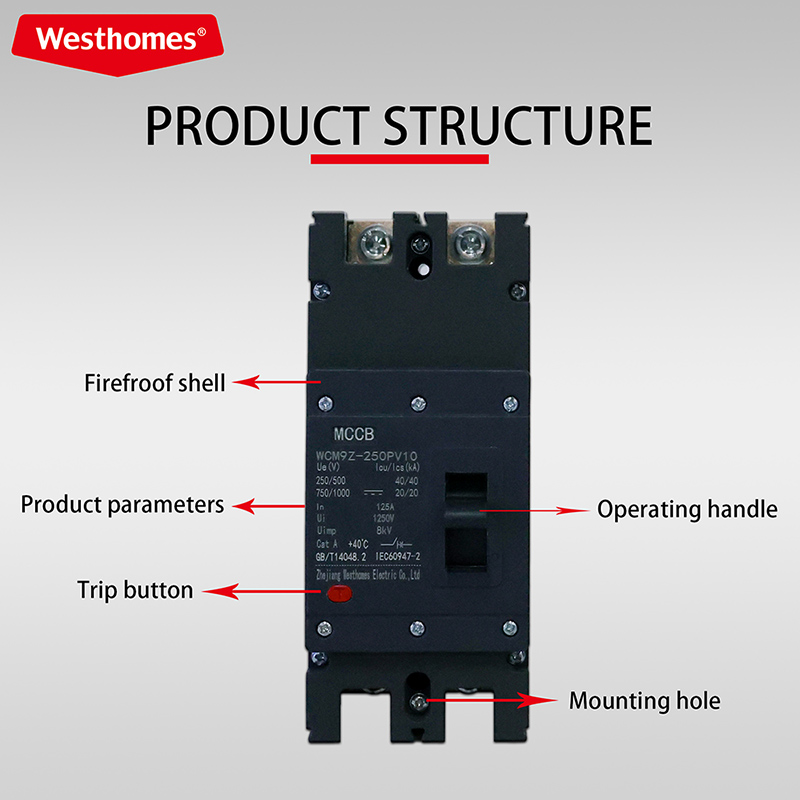
WCM9Z 250A DC MCCB terminal connection detail showing polarity and wiring ports
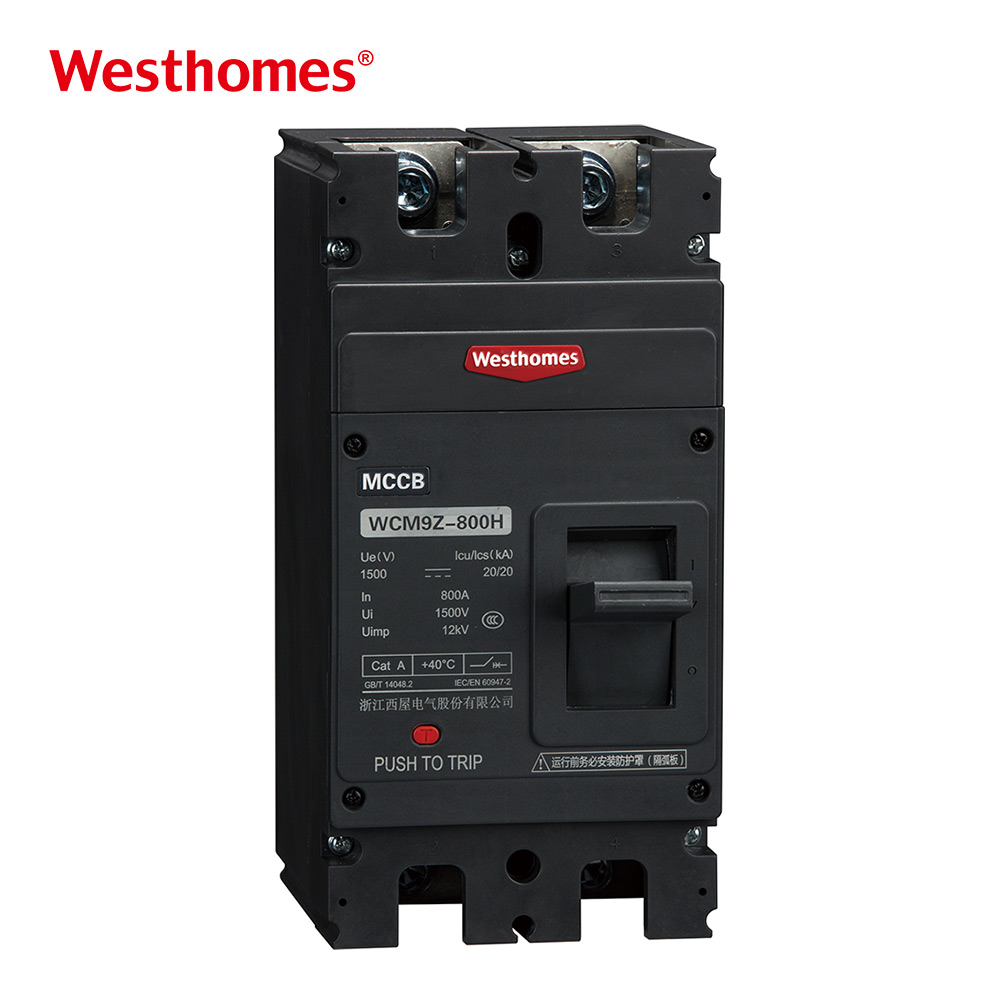
WCM9Z 250A DC solar MCCB front view with rating label and toggle switch

KEY INFORMATION

WCM9Z

Pole 2P, 3P
            Voltage DC 1000V/1250V/1500V
            kA Ue1000v 20kA, Ue1500v 15kA
          Inm(A) 250A, 630A
 In(A) 100/125/140/160/180/200/225/250/320/350/400/500/630A

MAIN TECHNICAL DATA

Model WCM9Z WCM9Z WCM9Z
Rated operating voltage(Ue) DC1000V DC1250V DC1500V DC1000V DC1250V DC1500V
Rated insulation voltage (Ui) 1500V 1500V 1500V
Rated impulse voltage (Uimp) 12kV 12kV 12kV
Number of poles 2 3 4
Trip unit type Thermomagnetic type (thermal magnet is not adjustable) TMD Fixed
Frame rated current (Inm) 250A 630A
Rated operating current (In) 100/125/140/160/180/200/225/250A 320/350/400/500/630A
Rated ultimate short circuit breaking capacity (lcu) Ue1000v 20kA Ue1500v 15kA, Ue1250v 20kA Ue1250/1500v 15kA, Ue1000v 20kA
Operational breaking capacity (Ics) 75%ICU Ue1500v 15kA, Ue1250v 20kA Ue1250/1500v 15kA, Ue1000v 20kA
Protective function Long time delay protection (Ir) 1In
Instant protection (li) 6In(Min1000A)
Service life Mechanical 10000times 5000times
Electrical 1000times 500times
Installation type Fixed Fixed Fixed
Protection level Wiring port: IP20/All sides: IP40
Operating temperature -40ºC~+75ºC
Operating Instructions ON/OFF instruction
Is the release adjustable? NO
Isolation function YES

Related: WCM5Ex Moulded Case Circuit Breaker, which covers circuit breaker step by step.

Related: WCM6 Moulded Case Circuit Breaker, which covers circuit breaker step by step.

Related: WCM9 AC Moulded Case Circuit Breaker, which covers circuit breaker step by step.

Related: China Manufacturing Cheap Wholesale Price Plastic Moulded Case Circuit Breaker, which covers circuit breaker step by step.

FREQUENTLY ASKED QUESTION (FAQ)

What is a DC solar MCCB? plus-square Created with Sketch Beta. minus-square Created with Sketch Beta.

A DC solar MCCB is a moulded case circuit breaker specifically designed to interrupt direct-current faults in photovoltaic (PV) and battery systems. Unlike a standard AC MCCB, it uses reinforced arc-quenching chamber geometry, magnetic blowout, and often polarity-marked terminals to extinguish a sustained DC arc. It protects PV strings, combiner-box outputs, inverter DC inputs, and battery DC circuits.

How does a DC MCCB differ from an AC MCCB? plus-square Created with Sketch Beta. minus-square Created with Sketch Beta.

AC current crosses zero 100–120 times per second, giving the arc a natural opportunity to extinguish; a DC MCCB has no such zero crossing, so it must actively force the arc into a splitter plate chamber and stretch it until the voltage exceeds the system voltage. DC breakers therefore have wider contact gaps, stronger arc chutes, and are often polarity-sensitive. Using a standard AC MCCB on a DC circuit risks failure to extinguish the arc, contact welding, and fire.

What does the 250 A DC rating mean? plus-square Created with Sketch Beta. minus-square Created with Sketch Beta.

The 250 A rating is the maximum continuous DC current the breaker can carry without tripping under normal conditions, selected to match the PV array short-circuit current sum or battery/inverter DC current. It is not the breaking capacity — that is the maximum fault current it can safely interrupt, quoted separately in the datasheet. The 250 A frame is commonly used as a main DC breaker in combiner boxes or on large inverter/battery DC feeds.

How does a DC MCCB extinguish the arc? plus-square Created with Sketch Beta. minus-square Created with Sketch Beta.

When the contacts open under fault current, an arc forms. A magnetic blowout coil creates a magnetic field that forces the arc into a set of splitter plates, where it is split into many short arcs and cooled, raising the extinction voltage above the system voltage until the arc cannot sustain itself. The arc chute also lengthens and de-ionizes the plasma. This active extinction is essential because DC has no natural zero crossing to help.

What DC voltage ratings are available for solar MCCBs? plus-square Created with Sketch Beta. minus-square Created with Sketch Beta.

PV-rated DC MCCBs are commonly rated for up to 1000 V DC or 1500 V DC, matching the trend toward higher-voltage string and central-inverter systems. The rated operational voltage (Ue) must be at or above the maximum system open-circuit voltage (Voc) at the lowest design temperature, because PV modules produce more voltage when cold. Series stacking of contacts can achieve the higher 1500 V rating.

Where is a DC solar MCCB installed? plus-square Created with Sketch Beta. minus-square Created with Sketch Beta.

It is typically installed inside a PV combiner box or string combiner, on the DC side between the PV array and the inverter, or in a battery storage cabinet on the DC bus. It may also serve as the DC main switch required by installation standards for isolation during maintenance. It should be located in a weatherproof enclosure rated for the outdoor/roof location.

How should a DC solar MCCB be wired? plus-square Created with Sketch Beta. minus-square Created with Sketch Beta.

Connect the positive (+) and negative (–) conductors to the correctly marked line terminals, observing polarity, and route the load conductors to the load side. Use correctly sized PV-rated DC cables (such as PV1-F), lugs crimped to the correct torque, and keep positive and negative runs routed so the loop inductance is minimized. Do not exceed the rated voltage or current; a wrong-polarity connection can defeat the magnetic blowout and prevent safe interruption.

Which standard applies to a DC solar MCCB? plus-square Created with Sketch Beta. minus-square Created with Sketch Beta.

It is type-tested to IEC 60947-2 (the general low-voltage circuit-breaker standard), with DC-specific supplementary testing — including a defined time constant (typically 1 ms or 5 ms) representing the inductive nature of PV/battery circuits. The DC rated voltage and breaking capacity are declared on the nameplate, and the datasheet should show DC test results, not AC data only.

What maintenance does a DC solar MCCB require? plus-square Created with Sketch Beta. minus-square Created with Sketch Beta.

Maintenance is limited but important: visually inspect contacts and connections annually or after a fault trip, re-torque terminals to specification, and test the manual operation to ensure smooth opening and closing. Because DC arcs are more punishing on contacts than AC arcs, a breaker that has interrupted a major fault should be inspected or replaced per the manufacturer's guidance. Keep the enclosure dry and sealed to maintain insulation performance.

Can I use a standard AC MCCB on a solar DC circuit? plus-square Created with Sketch Beta. minus-square Created with Sketch Beta.

No. A standard AC MCCB relies on current zero-crossing to extinguish the arc and is not designed for the continuous, unidirectional DC current; in a DC fault it may fail to clear, weld contacts, or catch fire. Only a DC-rated (or dual AC/DC-rated) breaker with a verified DC voltage and breaking capacity for the system should be used on the PV or battery side. Always check the DC rating on the nameplate.

RELATED PROJECTS

REQUEST
YOUR FREE QUOTE

* indicates a required field