Get quick appointment for technical support!

When to Use Electronic Trip Units vs Thermal-Magnetic
Aug 13, 2026
Every molded case circuit breaker contains a trip unit that decides when the breaker should open. The trip unit is the intelligence of the breaker, and choosing between the two available technologies, thermal magnetic and electronic, affects protection accuracy, coordination with other devices, and the long term reliability of the system.
The decision comes down to the application. Thermal magnetic trip units are simple, robust, and adequate for most standard circuits. Electronic trip units provide accuracy and adjustability that become necessary when protection margins are tight or when the system includes generators, transformers, or critical processes.
A Manufacturer Perspective on Circuit Protection
Many facility managers default to the cheapest circuit breaker available, assuming all trip units perform the same basic function. From an engineering and manufacturing standpoint, this is a costly mistake.
While the fundamental goal is always to clear a fault, the method matters. A mechanical bimetal strip reacts differently to environmental heat than a digital microprocessor does.
Specifying the wrong technology can lead to constant nuisance tripping in hot environments or dangerous protection failures when coordinating large upstream and downstream breakers. The right choice balances initial equipment cost against the long term value of system uptime.
How Thermal Magnetic Trip Units Work
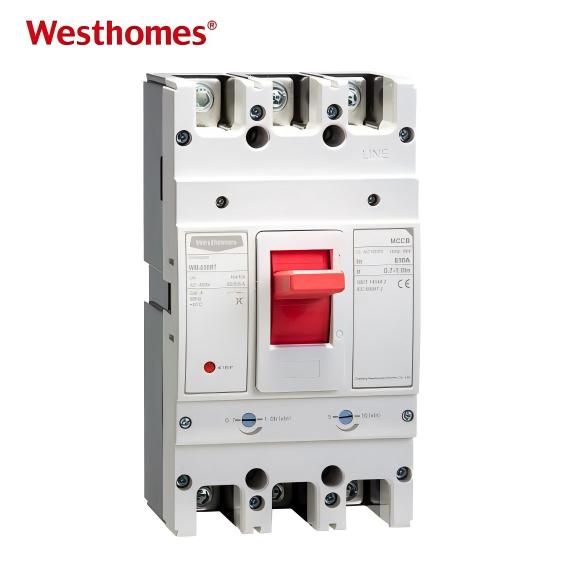
A thermal magnetic trip unit relies on two physical, mechanical mechanisms that operate completely independently of one another.
The Thermal Element for Overloads
The thermal element is a bimetal strip that carries the load current. As electrical current flows, this bimetal strip heats up and bends. This bending action is proportional to the square of the current and the duration of the flow, effectively modeling the heating behavior of the wires downstream of the breaker.
During a sustained overload, the bimetal bends far enough to physically release a latch, which trips the breaker. The trip time follows an inverse time curve. A small overload produces a very long delay, while a larger overload produces a much shorter delay.
This specific thermal characteristic is what allows an electric motor to draw massive starting current without tripping the breaker, while still opening the circuit if the motor stalls and draws locked rotor current for several seconds.
The thermal element is self compensating to a certain degree. In a hot room, the bimetal starts closer to the trip point, meaning less additional heat is needed to trip the breaker. However, this compensation is highly approximate. The actual trip point shifts by a few percent for every ten degrees of ambient temperature change.
The Magnetic Element for Short Circuits
The magnetic element is a solenoid coil that produces a strong magnetic field proportional to the instantaneous current. When the current reaches a preset threshold typically five to ten times the breaker rating the magnetic force pulls a physical plunger that releases the latch and trips the breaker.
This trip is completely instantaneous, with absolutely no intentional delay. The magnetic element is designed strictly to clear massive short circuits. It does not respond to standard overloads because normal overload currents never reach the required magnetic threshold.
The main limitation here is that the magnetic trip threshold is permanently fixed at the factory. If the starting current of a large machine is too close to this fixed threshold, the breaker will inevitably nuisance trip on startup.
How Electronic Trip Units Work
An electronic trip unit replaces the bimetal strip and the solenoid with current sensors, a microprocessor, and an actuator.
Current Sensing
Current transformers or Rogowski coils mounted inside the breaker measure the current on each phase. The sensors output a low level signal proportional to the primary current. The signal is digitized and processed by the microprocessor many times per cycle.
Because the sensors do not carry the load current, they are not affected by ambient temperature in the same way as a bimetal strip. The trip point of an electronic trip unit is stable across the full rated temperature range of the breaker.
Protection Functions
The microprocessor implements multiple protection functions simultaneously:
- Long time protection for overloads, with adjustable pickup and delay
- Short time protection for moderate fault currents, with adjustable pickup and delay
- Instantaneous protection for high fault currents, with adjustable pickup
- Ground fault protection, with adjustable pickup and delay
Each function is independently adjustable. The protection curve is programmed rather than built into the physics of a bimetal strip. This allows the trip unit to be tuned to the specific characteristics of the circuit it protects.
Additional functions that are standard on most electronic trip units:
- Phase imbalance protection that trips on excessive current difference between phases
- Phase loss protection that trips when one phase current drops to zero
- Over temperature protection based on internal temperature sensors
- Event logging that records the cause of each trip, the current at the time of trip, and the date and time
Power Requirements
An electronic trip unit requires power to operate. Power is drawn from the current sensors during normal operation. When the load current is very low, below approximately twenty percent of the breaker rating, the current sensors may not provide enough power. An auxiliary power supply, either from an external source or from an internal battery, maintains the trip unit’s operation during low load conditions.
This is a consideration for circuits that operate at very light loads for extended periods, such as a standby generator breaker that carries no current until the generator starts. The auxiliary power supply must be sized to keep the trip unit active during the standby period.
Electronic vs Thermal Magnetic
| Feature | Thermal Magnetic | Electronic |
| Accuracy at Pickup | Varies by 10 to 20 percent based on ambient temperature. | Highly precise within 5 percent across all temperatures. |
| Field Adjustability | Permanently fixed at the factory. | Fully adjustable pickup and delay for all functions. |
| System Coordination | Severely limited by fixed mechanical curves. | Independent adjustments allow incredibly tight coordination. |
| Temperature Sensitivity | Trip point actively shifts with ambient room heat. | Completely stable across the rated temperature range. |
| Additional Protection | None standard. | Ground fault, phase imbalance, and phase loss detection. |
| Power Requirement | Draws power directly from the physical load heat. | Requires minimum current flow or an auxiliary power supply. |
Making the Right Choice for Your Application
When Thermal Magnetic Is the Best Choice
Thermal magnetic breakers remain the absolutely correct choice for standard branch circuits where protection requirements are straightforward and the high cost of an electronic trip unit is simply not justified.
For example, a twenty ampere breaker feeding a basic lighting panel only needs to clear standard overloads and short circuits. The fixed thermal and magnetic settings provide excellent protection. The simplicity of the mechanical mechanism is a massive advantage here. There is no software to maintain, no battery to replace, and no setting that an untrained worker can accidentally misconfigure.
When Electronic Is the Essential Choice
Electronic trip units become the mandatory choice when your circuit characteristics require tight adjustments or precise coordination that a fixed thermal magnetic curve simply cannot provide.
A generator breaker is a perfect example. A generator can only supply a limited fault current typically three to five times its rated capacity.
A standard thermal magnetic breaker with a fixed magnetic pickup set at ten times the rating would never trip on a generator fault because the generator physically cannot produce enough current. An electronic trip unit allows you to adjust the short time pickup to exactly match the capability of the generator.
Critical industrial process circuits also benefit massively from the data that an electronic trip unit provides. When an electronic breaker trips, the internal event log explicitly identifies whether the cause was an overload, a short circuit, or a ground fault. This data radically reduces troubleshooting time and gets the facility back online much faster.
The True Cost of Electronic Trip Units
While the initial purchase price of an electronic trip unit is higher than a thermal magnetic unit of the exact same frame size, the total cost of ownership is frequently lower.
The extreme accuracy of an electronic trip unit allows engineers to size expensive copper conductors much closer to the actual load, drastically reducing installation costs. Furthermore, because the trip settings are fully adjustable, a single breaker model can cover a massive range of different applications, heavily reducing the amount of spare inventory a facility must keep on hand.
Frequently Asked Questions
Q Can I upgrade a thermal magnetic breaker to an electronic one?
In most cases, you cannot simply swap the internal trip unit on a small molded case circuit breaker. You will need to replace the entire breaker unit with an electronic model designed for that specific electrical panel.
Q What happens to an electronic circuit breaker if the power completely fails?
During a total blackout, an electronic breaker safely remains in its current mechanical state. When power is restored, the trip unit instantly powers back up and resumes its protective monitoring in milliseconds.
Q Why do I need short time delay on a main breaker?
A short time delay allows a main breaker to wait a fraction of a second during a fault. This brief pause gives the smaller downstream breaker closest to the fault enough time to trip first. This prevents a minor fault on a single branch circuit from shutting down the entire building.
Secure Your Power Infrastructure with Westhomes
When facility safety and maximum uptime are on the line, choosing the correct circuit protection technology is everything. Relying on outdated or poorly matched breakers puts your valuable equipment and personnel at serious risk.
As a professional manufacturer of premium electrical components, Westhomes designs robust circuit protection solutions tailored to the exact demands of modern infrastructure.
Whether you need the rugged simplicity of thermal magnetic breakers for standard distribution or the supreme precision of electronic trip units for critical automation and generator protection, our factory direct components deliver unmatched reliability.
Explore our complete range of advanced electrical protection equipment to find the exact engineering specifications your next project demands. Contact our technical manufacturing team today to discuss how we can secure and optimize your facility.

--- END ---
In this blog
Featured Articles
Get A Free Quote
Related Products