Get quick appointment for technical support!

Why Standard MCBs Miss DC Arcs in Solar and Storage Systems
Oct 21, 2026
Rooftop PV strings, battery racks, and DC fast chargers run on direct current, but most panels were protected with the AC playbook. That leaves two separate gaps: an AC breaker may not put out the arc once it opens, and it may never see the arc at all because the current stays below the trip threshold. Both gaps start with how DC behaves differently from AC.
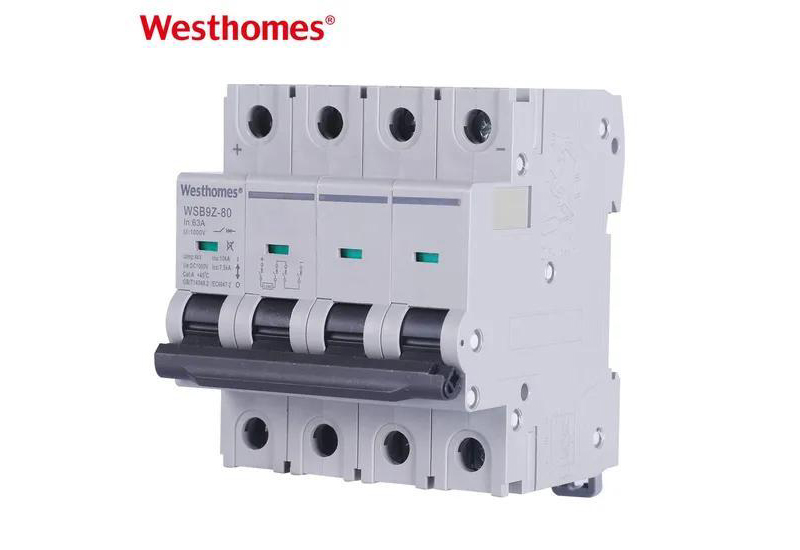
An AC MCB cannot extinguish a steady DC arc
AC current crosses zero 100 or 120 times per second. At each zero the arc goes quiet, the gap cools, and a simple arc chute can finish it off. DC current never crosses zero. Once contacts open and an arc forms, the current keeps flowing at the same level, so the arc keeps feeding itself and the contacts keep burning.
A DC-rated breaker solves this with tools an AC MCB does not carry: permanent magnets that blow the arc sideways into the chute, a larger contact gap, and arc runners sized for continuous energy. Fitting an AC MCB on a PV string or battery bus invites the worst case: contacts open, the arc does not die, and the breaker welds or burns instead of clearing the fault. The DC voltage rating matters too; a 1000 VAC rating says nothing about 1000 VDC.
The MCB does not see a series arc at all
Even a correct DC MCB trips on overload or short-circuit current. A series arc behaves differently. It starts at a loose terminal, a cracked conductor, or an aged connector, and the panel or inverter limits the current, so the arc sits below the magnetic trip level. The breaker stays closed while the arc heats the terminal, carbonizes the insulation, and can ignite the surrounding cable.
This is the fire path that overcurrent protection alone cannot cover. The current is not high enough to trip, but the arc energy is high enough to start a fire. Detecting it requires a device that reads the arc’s high-frequency pattern and waveform distortion, not just the current level.
Standard RCD types miss DC leakage
On the AC side of an inverter or charger, residual-current devices add earth-leakage protection, but the common types do not all see smooth DC. A transformerless inverter, battery PCS, or EV onboard charger can leak smooth DC or high-frequency current that saturates the sensing core of a simpler RCD.
| RCD Type | AC Sine | Pulsating DC | Smooth DC | High-Frequency | Typical Use |
|---|---|---|---|---|---|
| Type AC | Yes | No | No | No | Legacy resistive loads |
| Type A | Yes | Yes | Limited, about 6 mA | No | General sockets and lighting |
| Type F | Yes | Yes | Limited, about 10 mA | No | Single-phase VFD and heat pumps |
| Type B | Yes | Yes | Yes | Partial, up to about 1 kHz | PV AC side, EV, VFD, UPS |
| Type B+ | Yes | Yes | Yes | Extended, up to about 20 kHz by model | PV plus high-frequency converters, EV hubs, SMPS |
A Type A device on a PV or EV branch can go blind to smooth DC leakage, and Type B covers smooth DC but may stop short on high-frequency residual current. The choice follows the connected power electronics, not habit.
How the protection layers fit together
No single device covers every gap. The DC side needs a layered chain, and each layer watches a different signal:
DC-rated MCB or MCCB
Interrupts overload and short-circuit current with active DC arc control; sized to the string or bus voltage and polarity.
DC Arc Detection
Reads high-frequency arc patterns at loose terminals where current stays below the trip level; verify the device’s DC scope and the applicable regional rule.
Type B or B+ RCD (AC side)
Catches smooth-DC and high-frequency leakage that standard Type A sensing cores miss.
DC SPD
Clamps switching and lightning surges on the string or bus before they reach the inverter or battery.
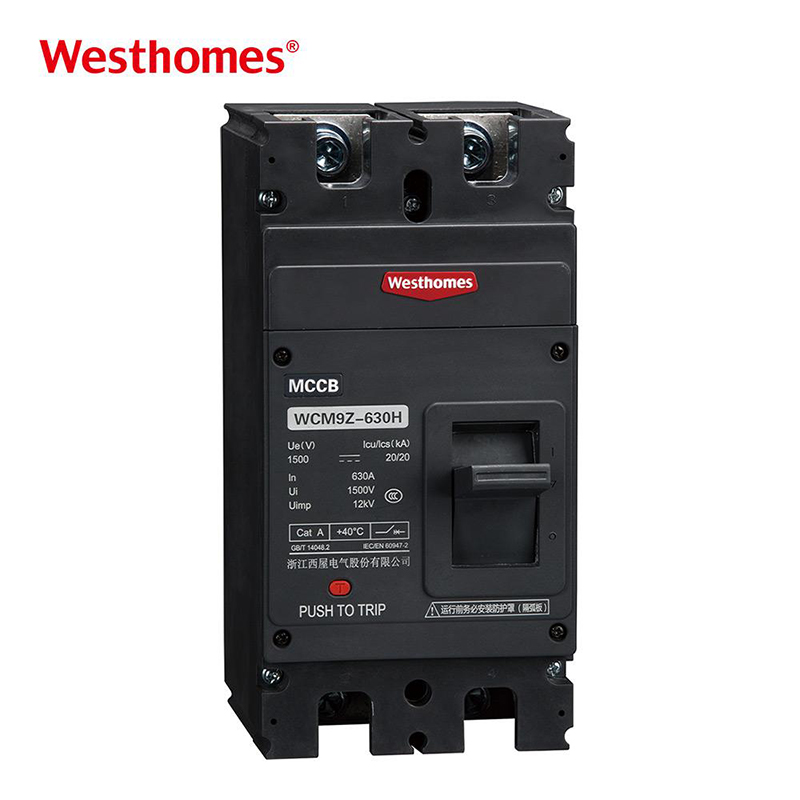
On a large battery rack or DC feeder, a DC MCCB takes over where a small DC MCB ends: higher current, larger breaking capacity, and a frame built for the bus voltage. The same logic applies at every level; the device must be rated for DC, not merely repurposed from an AC panel.
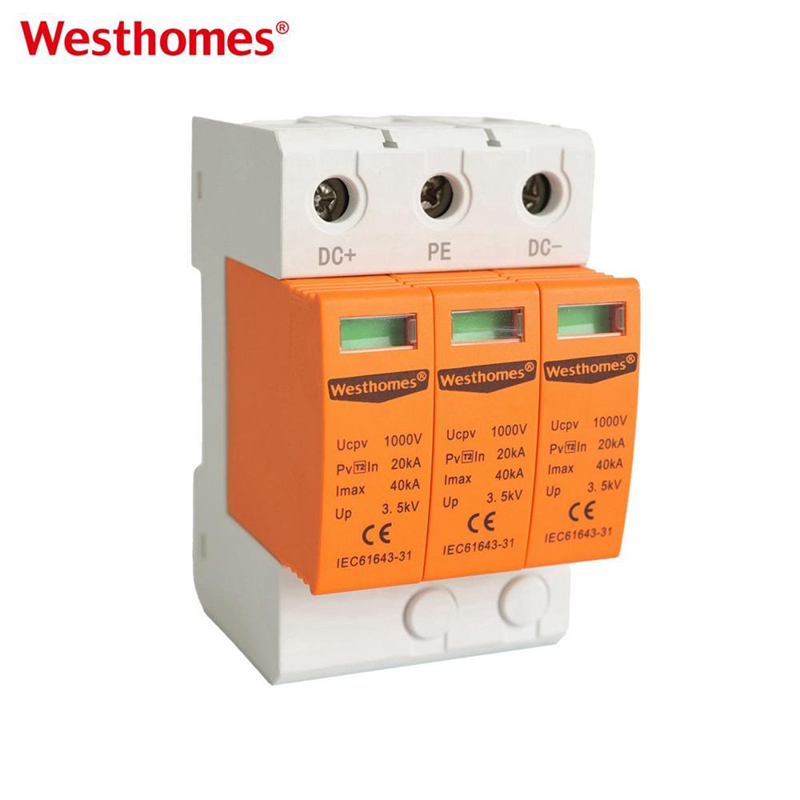
Surges on a PV string come from lightning and switching, and a DC SPD handles that transient before it reaches the inverter. It does not replace the overcurrent device or the arc detector; it protects a duty neither of them covers.
Where these gaps show up
PV strings
Series arcs at loose MC4-style connectors and combiner terminals; DC MCB for string overcurrent, DC SPD for surge mitigation.
Battery energy storage
High-voltage DC buses, massive fault energy, requiring a DC MCCB or DC-rated breaker on the rack and main feeder.
DC EV charging
Smooth-DC leakage originating from the power conversion system, requiring DC contactors and breakers across the charging circuit.
Telecom and data-center DC
Steady 48 V buses where sustained arcs still hold once initiated, despite the lower nominal voltage level.
Checks before specifying DC protection
Voltage type and level
Confirm Vdc (for example 600, 1000, or 1500 V) and never substitute an AC-rated device.
Polarity verification
Most DC breakers are polarized; install positive and negative terminals as marked or the magnetic blow-out fails.
Current and fault level
Match In to the string or bus, and breaking capacity to the available DC short-circuit current.
Leakage waveform analysis
Choose Type B or B+ on the AC side where inverter, charger, or VFD leakage may be smooth DC.
Surge protection duty
Add a DC SPD rated to the open-circuit string voltage, with the correct Ucpv and continuous operating voltage.
Local code adoption
PV arc detection, RCD type, and DC isolation requirements vary by market; confirm the adopted regional edition.
Frequently asked questions
Can I use an AC MCB on a PV string?
No. The AC breaker cannot extinguish the steady DC arc, and it may weld or burn on opening. Use a breaker rated for the actual DC voltage and current, with correct polarity.
What is a series arc, and why does the MCB not trip?
It is an arc across a loose connection in series with the load, limited by the panel or inverter current. It stays below the magnetic trip threshold while still producing enough heat to ignite insulation.
Does an AFDD replace the DC breaker?
No. An arc detector reads arc patterns; the breaker clears overload and short-circuit current. They complement each other, and the DC arc device must be approved for the DC application.
Why does a Type A RCD fail on a PV circuit?
Smooth DC leakage from a transformerless inverter can saturate the Type A sensing core and reduce its response. Evaluate Type B or B+ based on the connected electronics.
Do I need a DC SPD on the string?
Where lightning exposure or switching transients reach the inverter, a DC SPD rated to Ucpv above the open-circuit string voltage clamps the surge. It protects equipment but does not clear overcurrent.
Closing
The AC panel was built around zero crossings and sine-wave leakage. DC strings and battery buses have neither, so the breaker, RCD, and surge device must each be chosen for the DC world they actually serve. Pick DC-rated interruption, add arc and leakage detection where the load calls for it, and keep the chain documented rather than carrying over an AC bill of materials.
Ready to size your DC protection?
Send us the system voltage, string or bus current, available fault level, polarity, and application (PV, storage, or EV), and we will match a DC MCB, DC MCCB, or PV SPD with the ratings and a line-by-line quote.
Keep reading
Standards referenced (verify current editions for the project)

--- END ---
Related Products