Get quick appointment for technical support!

Get in Touch

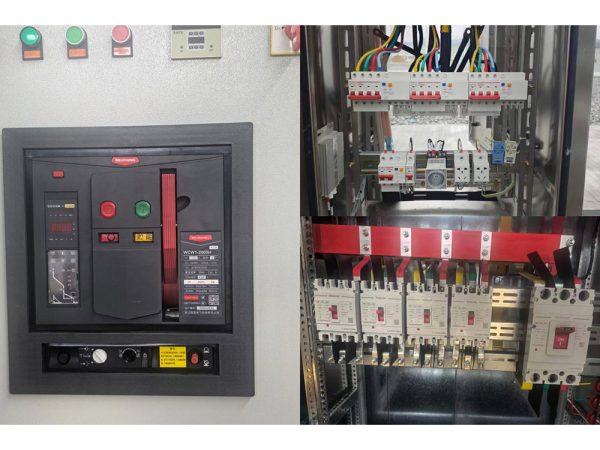
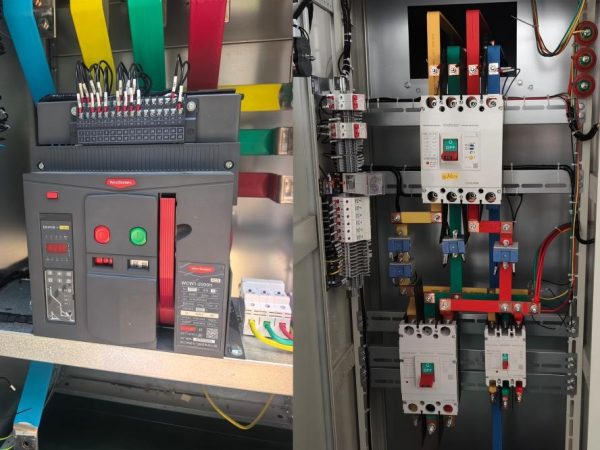
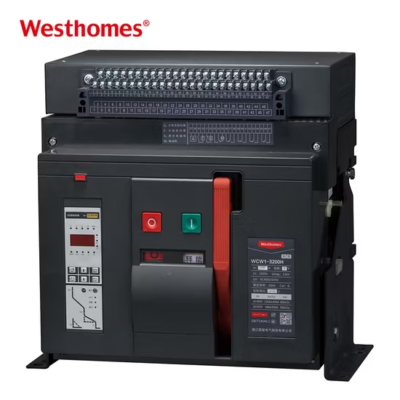
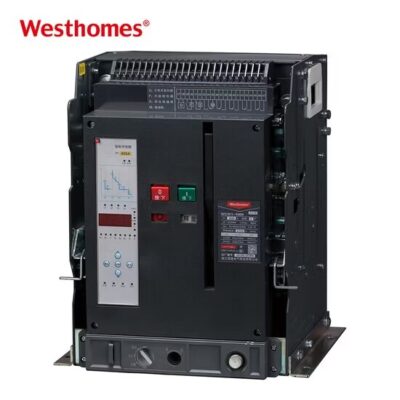
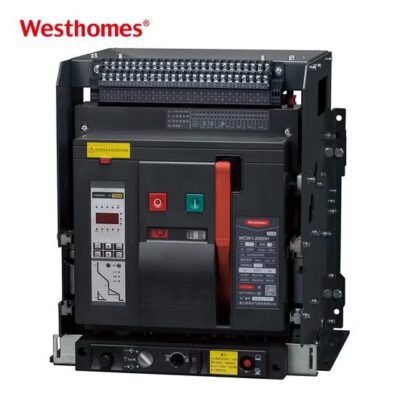
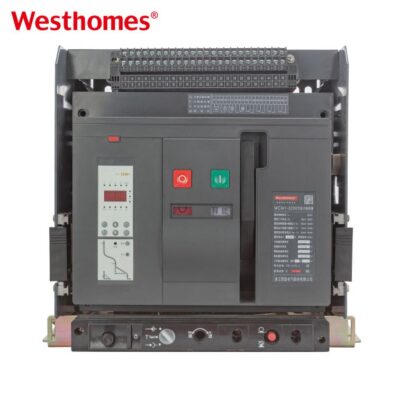
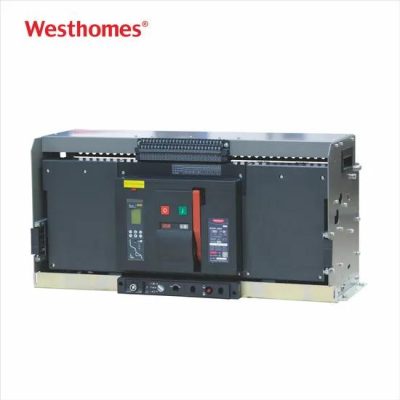
WCW1 Series 2000A 3P Air Circuit Breaker

The Westhomes WCW1 Series 2000A 3P Intelligent Air Circuit Breaker is a high-capacity protection device for AC 50Hz power distribution systems. Rated up to 690V and 2000A, it provides overload, short circuit, undervoltage, and single-phase ground fault protection in industrial, commercial, and infrastructure-grade applications.

Social focus:

WCW1 Series 2000A 3P Air Circuit Breaker | Intelligent ACB for AC 400V/690V Power Systems

Deployed in industrial automation, data centers, power substations, and renewable energy grids, the WCW1 2000A 3P ACB delivers reliable protection with global voltage compatibility at 400V and 690V for high-demand applications.

WCW1 Series Intelligent Circuit Breaker

With a rated voltage up to 600V (maximum 690V) and a rated current of 2000A, this three-pole (3P) air circuit breaker delivers consistent performance in industrial, commercial, and infrastructure-grade power networks.

Built to distribute power and protect electrical systems, the WCW1 2000A 3P ACB covers overload, undervoltage, short circuit, and single-phase ground fault protection. Its microprocessor trip unit delivers precise fault detection and selective tripping, maintaining operational continuity and reducing the risk of power interruptions.

The breaker supports four remote functions through its open communication interface: remote control, remote measurement, remote communication, and remote adjustment. These capabilities are suited for integration into SCADA systems, automated switchgear, and energy management platforms.

Tested for demanding environments, the WCW1 has an impulse withstand voltage of 8000V at 2000 meters altitude and complies with altitude-specific standards up to 12000V for stable operation at varying elevations.


KEY INFORMATION

Frame level rated current Inm (A) Rated current In (A)
1000 200, 400, 630, 800, 1000
2000 630, 800, 1000, 1250, 1600, 2000
3200 2000, 2500, 2900, 3200
4000 3200, 3600, 4000
6300 4000, 5000, 6300
Pole 1P, 2P, 3P, 4P
Voltage AC400V/690V
KA 10, 20, 30, 40, 60, 80, 100
Inm 1000A, 2000A, 3200A, 6300A
In 200A-6300A
Frame level rated current Inm (A) 1000 2000 3200 4000 6300
Rated ultimate short circuit breaking capacity Icu (kA) O-CO 400V 42 65 80 80 120
690V 25 50 65 65 85
Rated operation short circuit breaking capacity Ics (kA) O-CO-CO 400V 30 40 50 50 100
690V 20 40 50 50 75
Rated short-time withstand current Icw (kA) 1s, delay 0.4s, 0-CO 400V 30 40 65 65 100
690V 20 40 50 50 75
wcw1 parameter

Basic Info.

Model NO. WCW1
Arc-extinguishing Medium Air
Structure ACB
Type Circuit Breaker
Certification ISO9001-2000, CE, CB, CCC
Voltage AC400V/690V
Inm(a) 1000, 2000, 3200, 6300
Transport Package Wooden Case
Trademark Westhomes
HS Code 8536200000
Speed High-Speed Circuit Breaker
Installation Fixed
Poles Number 3p-4p
Function Conventional Circuit Breaker,
Circuit-Breaker Failure Protection,
Overcurrent Protection,
OVP(Overvoltage Protection)
Pole 3p4p
Ka 25-100ka
in(a) 200A–6300A
Specification IEC/EN 60947-2
Origin Prc
Production Capacity 15, 000, 000

Packaging & Delivery

Package Size 50.00cm * 50.00cm * 50.00cm
Package Gross Weight 35.000kg

FREQUENTLY ASKED QUESTION (FAQ)

What is an Air Circuit Breaker (ACB)? plus-square Created with Sketch Beta. minus-square Created with Sketch Beta.

An ACB is a low-voltage circuit breaker designed for very high currents (typically 630 A to 6300 A) used as the main incoming or tie breaker in low-voltage switchgear. It makes, carries, and breaks normal load currents as well as short-circuit currents, and quenches the resulting arc in open air using arc chutes and splitter plates. Because of its high breaking capacity and adjustable protection, it is the central switching and protective device in a power distribution system.

How is an ACB different from an MCCB? plus-square Created with Sketch Beta. minus-square Created with Sketch Beta.

An MCCB (Moulded Case Circuit Breaker) is typically rated up to about 1600 A in a sealed moulded enclosure with fixed or limited-adjustment protection, while an ACB is rated from 1600 A up to 6300 A or more, housed in an open metal frame, usually drawout, with a fully adjustable microprocessor trip unit, wide accessory range, and communication. ACBs also offer much higher short-time withstand and breaking capacity, easier maintenance, and downstream protection coordination (discrimination) that MCCBs cannot match at these current levels.

Why is air used as the arc quenching medium? plus-square Created with Sketch Beta. minus-square Created with Sketch Beta.

When the contacts open under short-circuit current, an electric arc forms between them; the ACB directs this arc into an arc chute made of parallel steel splitter plates, which cool, split, and stretch the arc so that it cannot re-strike at current zero. Atmospheric air is the quenching and insulating medium — no oil, vacuum bottle, or SF6 gas is required. This makes ACBs safe, maintenance-friendly, and suitable for indoor low-voltage switchgear up to around 1000 V.

What does the 2000A current rating mean? plus-square Created with Sketch Beta. minus-square Created with Sketch Beta.

The 2000 A is the rated current (In) of the breaker frame — the maximum continuous current the pole assembly can carry at rated ambient temperature without exceeding temperature rise limits. The actual trip setting can usually be adjusted down (e.g., 0.8 × In = 1600 A) via the electronic trip unit to match the installed load. The 2000 A frame size is a standard main-incoming rating for large commercial buildings, hospitals, and industrial plants.

What does "3P" mean on this WCW1 unit? plus-square Created with Sketch Beta. minus-square Created with Sketch Beta.

"3P" means the breaker has three poles, one for each phase (L1, L2, L3), and is used on a three-phase three-wire system where the neutral is not switched by the breaker. The neutral is earthed separately in the switchgear and does not pass through the ACB. For four-wire systems requiring switched neutral or neutral protection, a 4P version is specified.

What is the difference between drawout and fixed mounting? plus-square Created with Sketch Beta. minus-square Created with Sketch Beta.

A drawout ACB sits on a withdrawable cradle (truck) inside the switchgear compartment and can be moved between connected, test, and isolated positions using a racking mechanism. This lets maintenance crews withdraw the breaker while the busbars remain live, providing visible isolation. A fixed (also called stationary) ACB is bolted directly to the busbars; to remove it the busbars must be de-energized. The drawout design is standard for main incoming breakers where continuity of supply is critical.

What are the LSI protection functions? plus-square Created with Sketch Beta. minus-square Created with Sketch Beta.

LSI stands for Long-time, Short-time, and Instantaneous protection — the three standard time-current curves of an ACB trip unit. Long-time provides overload protection (inversely delayed, like a thermal relay); Short-time provides coordination for downstream faults (definite delay with adjustable pickup, allowing downstream breakers to clear first); Instantaneous trips with no delay for severe short circuits (magnetic protection). Pickup currents and time delays are all adjustable on the electronic trip unit.

How is the WCW1 2000A installed in main switchgear? plus-square Created with Sketch Beta. minus-square Created with Sketch Beta.

It is shipped as a drawout unit in a cradle bolted into a dedicated cubicle of a low-voltage switchboard (typically IP4X or higher), with the incoming busbars connected to the fixed contacts of the cradle and outgoing cables/bus ducts on the load side. Auxiliary power (typically 220 V or 110 V DC/AC) is connected for the closing spring motor, shunt trip, undervoltage release, and trip unit electronics. Installation, racking, and commissioning must be performed by trained switchgear technicians following the manufacturer's manual and local standards.

Which standard does it comply with? plus-square Created with Sketch Beta. minus-square Created with Sketch Beta.

Low-voltage ACBs are designed, manufactured, and tested to IEC 60947-2 ("Low-voltage switchgear and controlgear — Circuit-breakers"), which defines rated operational voltage, rated current, short-time withstand current (Icw), ultimate service short-circuit breaking capacity (Icu/Ics), impulse withstand, and trip characteristics. Additional type tests cover making/breaking capacity, temperature rise, dielectric behavior, and endurance. CE marking indicates conformity with EU LVD and EMC requirements.

What are typical applications for a 2000A 3P ACB? plus-square Created with Sketch Beta. minus-square Created with Sketch Beta.

A 2000 A 3P ACB is used as the main incoming breaker on the secondary side of a transformer in large commercial buildings, hospitals, airports, shopping malls, and data centers, and as a tie breaker between bus sections in an industrial switchboard. It is also the main feeder for heavy manufacturing plants, water treatment pumping stations, and mining installations. Its role is to safely carry the total plant load and to clear upstream faults while selectively coordinating with downstream MCCBs and MCBs.

RELATED PROJECTS

REQUEST
YOUR FREE QUOTE

* indicates a required field