Get quick appointment for technical support!

Get in Touch

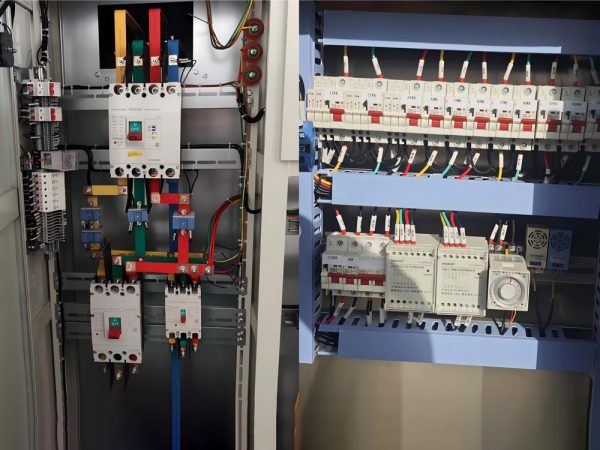
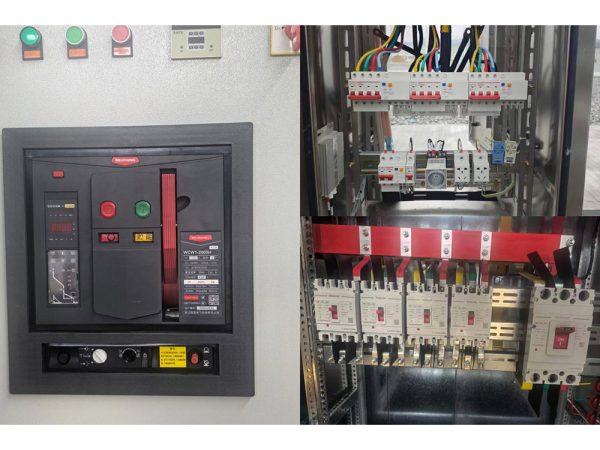
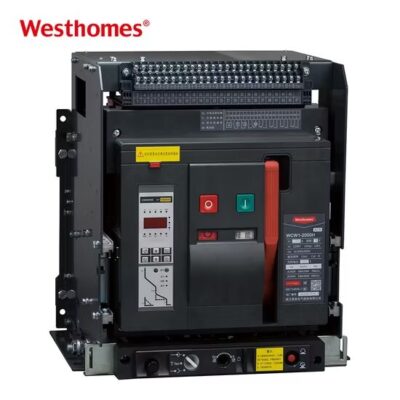
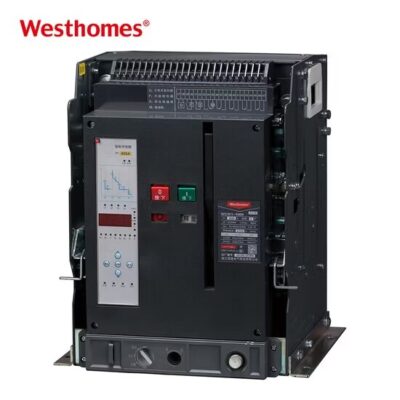
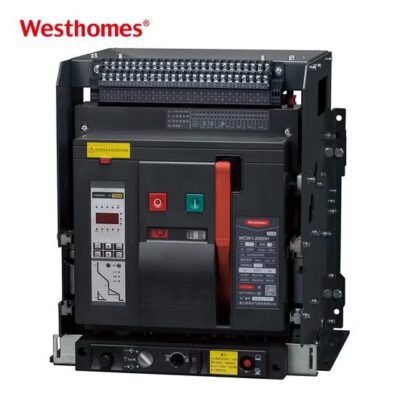
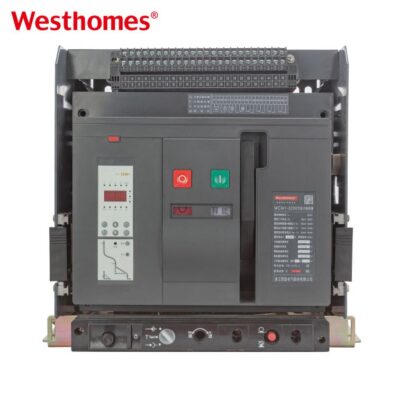
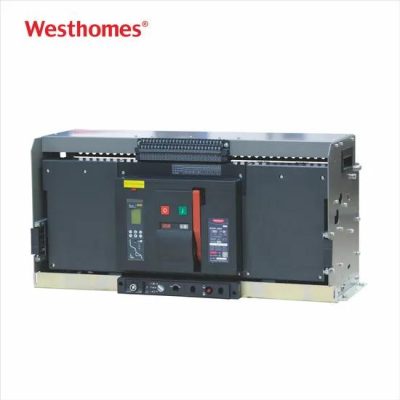
WCW1 Series 2000A Universal ACB

The WCW1 Series 2000A Intelligent Universal Air Circuit Breaker from Westhomes is a cutting-edge solution for AC 50Hz distribution networks, with rated voltage options of 400V and up to 690V.

Social focus:

WCW1 Series 2000A Universal ACB | Intelligent Air Circuit Breaker for AC 400V/690V Systems

Whether you’re managing complex energy distribution or seeking to upgrade your system with smart protection technology, the Westhomes WCW1 2000A Universal ACB offers the reliability, intelligence, and scalability your operations demand.

WCW1 Series Intelligent Circuit Breaker

With a robust rated current of 2000A, this advanced ACB (Air Circuit Breaker) delivers high-capacity performance for industrial, commercial, and infrastructure-grade power systems.

Built for reliable power distribution and fault protection, The WCW1 Series 2000A Intelligent Universal Air Circuit Breaker safeguards critical equipment against overload, Undervoltage, short circuit, and single-phase grounding faults. Its intelligent protection system ensures precise fault detection and rapid response, improving the stability and continuity of power supply while minimizing unnecessary interruptions.

Key features include an open communication interface that enables Four Remote Functions: remote control, remote monitoring, remote signalling, and remote setting. These features support seamless integration with SCADA systems, smart grid frameworks, and advanced energy automation platforms.

Engineered for high-stress environments, the WCW1 ACB delivers impulse withstand voltage of 8000V at 2000 meters altitude, with design standards supporting operation up to 12000V at higher altitudes. Its universal application flexibility, combined with global voltage compatibility (400V / 690V), makes it a preferred choice for large-scale industrial facilities, data centres, substations, and commercial power systems.


KEY INFORMATION

Frame level rated current Inm (A) Rated current In (A)
1000 200, 400, 630, 800, 1000
2000 630, 800, 1000, 1250, 1600, 2000
3200 2000, 2500, 2900, 3200
4000 3200, 3600, 4000
6300 4000, 5000, 6300
Pole 1P, 2P, 3P, 4P
Voltage AC400V/690V
KA 10, 20, 30, 40, 60, 80, 100
Inm 1000A, 2000A, 3200A, 6300A
In 200A-6300A
Frame level rated current Inm (A) 1000 2000 3200 4000 6300
Rated ultimate short circuit breaking capacity Icu (kA) O-CO 400V 42 65 80 80 120
690V 25 50 65 65 85
Rated operation short circuit breaking capacity Ics (kA) O-CO-CO 400V 30 40 50 50 100
690V 20 40 50 50 75
Rated short-time withstand current Icw (kA) 1s, delay 0.4s, 0-CO 400V 30 40 65 65 100
690V 20 40 50 50 75
wcw1 parameter

Basic Info.

Model NO. WCW1
Arc-extinguishing Medium Air
Structure ACB
Type Circuit Breaker
Certification ISO9001-2000, CE, CB, CCC
Voltage AC400V/690V
Inm(a) 1000, 2000, 3200, 6300
Transport Package Wooden Case
Trademark Westhomes
HS Code 8536200000
Speed High-Speed Circuit Breaker
Installation Fixed
Poles Number 3p-4p
Function Conventional Circuit Breaker,
Circuit-Breaker Failure Protection,
Overcurrent Protection,
OVP(Overvoltage Protection)
Pole 3p4p
Ka 25-100ka
in(a) 200A–6300A
Specification IEC/EN 60947-2
Origin Prc
Production Capacity 15, 000, 000

Packaging & Delivery

Package Size 50.00cm * 50.00cm * 50.00cm
Package Gross Weight 35.000kg

FREQUENTLY ASKED QUESTION (FAQ)

What does "universal" mean in the WCW1 Universal ACB designation? plus-square Created with Sketch Beta. minus-square Created with Sketch Beta.

"Universal" means the breaker uses a common modular platform that supports multiple rated currents (e.g., 1600 A / 2000 A / 2500 A / 3200 A) within the same frame, multiple pole configurations (3P or 4P), and a wide range of accessories and trip units, all on one mechanical chassis. This lets switchgear builders stock a single frame family and configure the breaker to the project by selecting the rating plug, trip unit, and accessories. It does not mean the breaker works on any voltage; it still must be applied within its rated operational voltage and frequency.

How does the Universal ACB compare with an MCCB? plus-square Created with Sketch Beta. minus-square Created with Sketch Beta.

Even in its universal configuration, the WCW1 ACB is a frame-type breaker rated up to 2000 A (and higher) with drawout capability, microprocessor LSI protection, and communication, while an MCCB is a sealed moulded-case device up to roughly 1600 A with limited adjustability and no drawout option. The ACB also offers higher Icw/Ics, longer electrical endurance, and selective coordination over a much wider range of downstream faults — the reason it is chosen as the main incomer where an MCCB would be undersized or unselective.

How does air arc quenching work in the Universal ACB? plus-square Created with Sketch Beta. minus-square Created with Sketch Beta.

When the contacts part under fault current, the arc is driven by magnetic blast into a stack of steel splitter plates in the arc chute. The plates cut the arc into many shorter arcs, cool it, and stretch it so that it cannot restrike at current zero. Atmospheric air provides the dielectric and cooling medium, eliminating the maintenance and leakage issues associated with oil or gas. The arc chute is designed to keep internal arc energy within the breaker enclosure so that busbar compartments remain safe.

What current ratings can the universal 2000A frame cover? plus-square Created with Sketch Beta. minus-square Created with Sketch Beta.

The 2000 A frame typically supports a rated current range of 1250 A to 2000 A via an electronic rating plug that sets In for the trip unit, while the pole conductors and contacts are sized for 2000 A continuous. The long-time pickup is adjustable from about 0.4 × In to 1.0 × In, and the short-time and instantaneous pickups are set independently. This flexibility means the same physical breaker can serve a 1250 A load today and be re-rated to 2000 A as the building load grows.

3P vs 4P — how do I choose for a universal application? plus-square Created with Sketch Beta. minus-square Created with Sketch Beta.

A 3P breaker switches only L1, L2, L3 and is used on three-phase three-wire systems where the neutral is solidly earthed and not switched. A 4P breaker adds a neutral pole that switches N (and may include a neutral CT for earth-fault or neutral-overcurrent protection). Specify 4P when the installation requires neutral isolation, when standby generators must be prevented from back-feeding a solidly earthed utility neutral, or when the trip unit must monitor neutral current.

What does the drawout design give me over a fixed breaker? plus-square Created with Sketch Beta. minus-square Created with Sketch Beta.

The drawout truck moves between CONNECTED, TEST, and ISOLATED positions: in CONNECTED the main contacts and auxiliary circuits are live; in TEST the auxiliary circuits remain connected but main contacts are isolated, so the breaker can be electrically tested without energizing the busbars; in ISOLATED the breaker is physically withdrawn, giving a visible isolation gap. This allows on-line maintenance, testing, and even breaker exchange without shutting down the main busbar — essential for mission-critical switchgear where shutdowns are costly.

What protection functions does the universal trip unit offer? plus-square Created with Sketch Beta. minus-square Created with Sketch Beta.

The standard electronic trip unit provides LSI protection (long-time overload, short-time definite-delay, and instantaneous overcurrent). Universal variants often add earth-fault (residual current) protection, neutral protection, undervoltage warning, and energy metering. Pickup values, time delays, and curve types (I2t on/off) are set via push-buttons or keypad on the trip unit front, with a display showing load current and fault records.

Does it support communication and Modbus? plus-square Created with Sketch Beta. minus-square Created with Sketch Beta.

Yes, the WCW1 universal ACB typically supports communication modules such as Modbus-RTU (RS-485) or Modbus-TCP, which report measured current, voltage, power, energy, trip state, fault records, and alarm flags to a building management or SCADA system. Remote closing, opening, and trip-unit parameter reading are also possible through these interfaces. This enables predictive maintenance and remote selective coordination in data centers and industrial plants.

What maintenance and testing does it require? plus-square Created with Sketch Beta. minus-square Created with Sketch Beta.

Per IEC 60364 and manufacturer guidance, perform a routine visual inspection annually, check the closing/opening mechanism, racking position, and auxiliary contacts, and tighten busbar connections to the prescribed torque. Carry out secondary injection testing of the trip unit every 1–3 years to verify LSI curves, and periodically operate the breaker to keep the spring-charging mechanism free. Keep the arc chute and contacts inspected at overhaul intervals (typically every few thousand operations or years, depending on duty).

Which standards apply, and where is the universal ACB typically used? plus-square Created with Sketch Beta. minus-square Created with Sketch Beta.

The WCW1 universal ACB is designed to IEC 60947-2, with CE declaration of conformity to LVD and EMC. It is used as the main incoming breaker and bus-tie breaker in low-voltage switchboards for commercial towers, hospitals, water treatment plants, factories, and data centers where a single frame must cover multiple project ratings. Its modularity and communication capability make it well suited to build-to-order switchgear packages and to retrofit upgrades of older air circuit breakers.

RELATED PROJECTS

REQUEST
YOUR FREE QUOTE

* indicates a required field