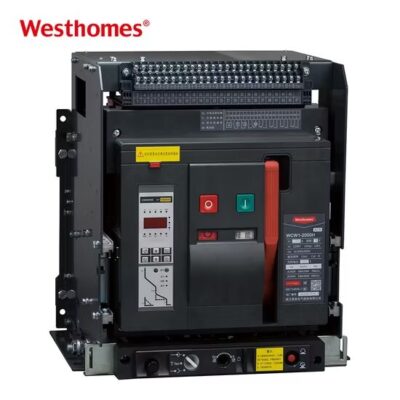
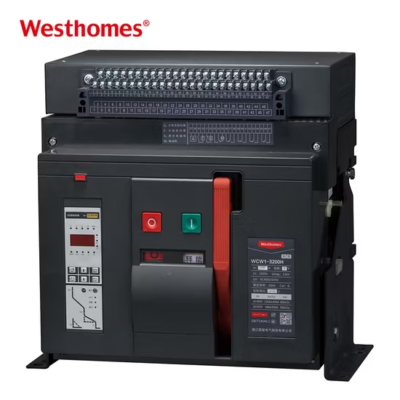
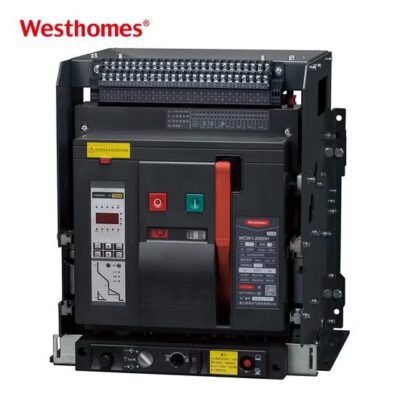
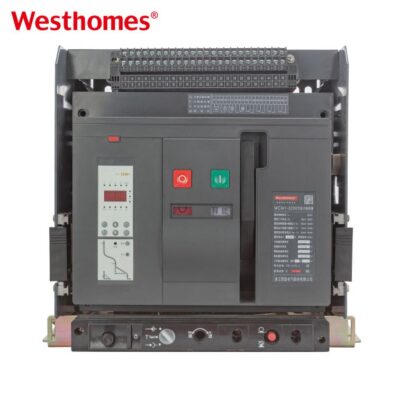
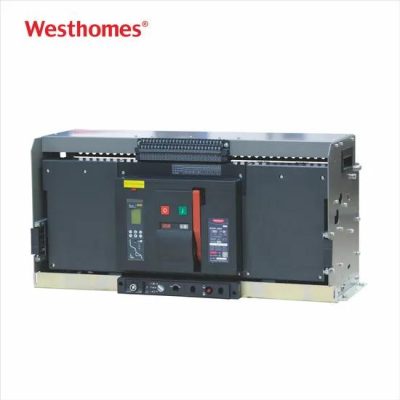
Westhomes WCW1 Series 1600A 4P Intelligent ACB Universal Air Circuit Breaker
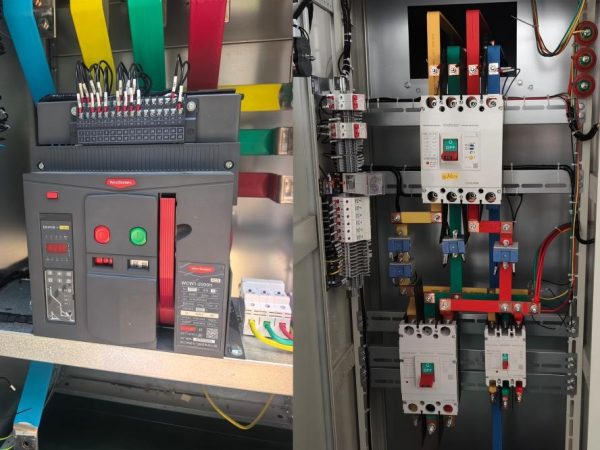
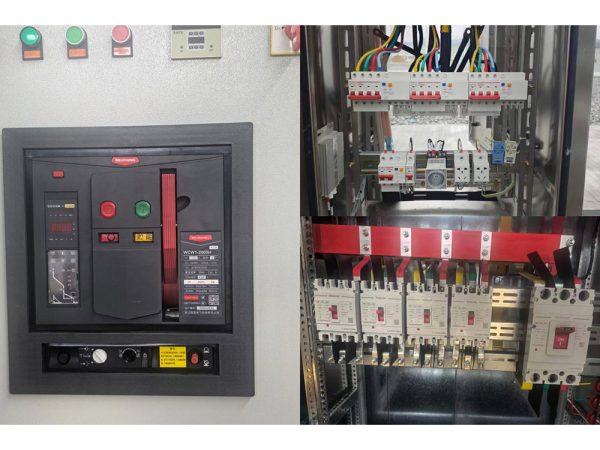
The Westhomes WCW1 Series 1600A 4P Intelligent Universal Air Circuit Breaker is a high-performance protection solution designed for AC 50Hz power distribution systems.
Get quick appointment for technical support!

Whether used in factories, commercial buildings, energy infrastructure or smart grid systems, the WCW1 series 1600A 4P air circuit breakers are accurate, durable, intelligently connected, and ideal for meeting modern electrical protection needs.



The Westhomes WCW1 Series 1600A 4P Intelligent Universal Air Circuit Breaker is a high-performance protection solution designed for AC 50Hz power distribution systems.

Rated up to 600V (up to 690V) and accurately rated to 1600A, this 4-pole (4P) air circuit breaker is designed to meet the needs of medium and large industrial and commercial power grids.
Ideal for power distribution, the Westhomes WCW1 Series 1600A 4P Intelligent Universal Air Circuit Breaker protects electrical systems from overloads, under voltages, short circuits, and single-phase ground faults. With intelligent protection, the WCW1 1600A 4P provides precise fault detection and selective tripping, significantly improving system stability while reducing the risk of unnecessary power outages.
The circuit breaker has been tested in harsh environments and can withstand 8000V impulse voltage at an altitude of 2000 meters and meet standards up to 12000V at different altitudes. The powerful performance ensures reliable operation in both standard and high-altitude environments.
| Frame level rated current Inm (A) | Rated current In (A) |
| 1000 | 200, 400, 630, 800, 1000 |
| 2000 | 630, 800, 1000, 1250, 1600, 2000 |
| 3200 | 2000, 2500, 2900, 3200 |
| 4000 | 3200, 3600, 4000 |
| 6300 | 4000, 5000, 6300 |
| Pole | 1P, 2P, 3P, 4P |
| Voltage | AC400V/690V |
| KA | 10, 20, 30, 40, 60, 80, 100 |
| Inm | 1000A, 2000A, 3200A, 6300A |
| In | 200A-6300A |
| Frame level rated current Inm (A) | 1000 | 2000 | 3200 | 4000 | 6300 | |
| Rated ultimate short circuit breaking capacity Icu (kA) O-CO | 400V | 42 | 65 | 80 | 80 | 120 |
| 690V | 25 | 50 | 65 | 65 | 85 | |
| Rated operation short circuit breaking capacity Ics (kA) O-CO-CO | 400V | 30 | 40 | 50 | 50 | 100 |
| 690V | 20 | 40 | 50 | 50 | 75 | |
| Rated short-time withstand current Icw (kA) 1s, delay 0.4s, 0-CO | 400V | 30 | 40 | 65 | 65 | 100 |
| 690V | 20 | 40 | 50 | 50 | 75 | |

| Model NO. | WCW1 |
| Arc-extinguishing Medium | Air |
| Structure | ACB |
| Type | Circuit Breaker |
| Certification | ISO9001-2000, CE, CB, CCC |
| Voltage | AC400V/690V |
| Inm(a) | 1000, 2000, 3200, 6300 |
| Transport Package | Wooden Case |
| Trademark | Westhomes |
| HS Code | 8536200000 |
| Speed | High-Speed Circuit Breaker |
| Installation | Fixed |
| Poles Number | 3p-4p |
| Function | Conventional Circuit Breaker, Circuit-Breaker Failure Protection, Overcurrent Protection, OVP(Overvoltage Protection) |
| Pole | 3p4p |
| Ka | 25-100ka |
| in(a) | 200A–6300A |
| Specification | IEC/EN 60947-2 |
| Origin | Prc |
| Production Capacity | 15, 000, 000 |
| Package Size | 50.00cm * 50.00cm * 50.00cm |
| Package Gross Weight | 35.000kg |
This topic is covered in more detail in The 3 Basic Types of Air Circuit Breakers (ACB) Explained.
This topic is covered in more detail in Air Circuit Breaker-WCW1 series.
An intelligent ACB is an air circuit breaker fitted with a microprocessor-based electronic trip unit that continuously measures current (and often voltage, power, and energy) and provides adjustable protection curves, fault recording, metering, alarms, and communication. Unlike an older thermal-magnetic ACB, it remembers faults, lets you read settings on a display, and can send data to a BMS or SCADA system. The "intelligent" label refers to this electronic, communicating trip and metering platform.
The microprocessor samples current from internal current transformers on each pole and applies the programmed protection algorithms — long-time (overload), short-time (delayed short-circuit), instantaneous (instant short-circuit), and often earth-fault and neutral-overcurrent — to decide when to trip. It also calculates RMS values, energy, and power factor; logs fault records (type, magnitude, time); and drives front-panel LEDs and a display. Settings are made via keypad or, on some versions, over a communication link.
The 1600 A is the rated current (In) of the frame — the maximum continuous current the pole assembly can carry at rated ambient temperature without overheating. The long-time pickup is typically adjustable from 0.4 × In to 1.0 × In (i.e., 640–1600 A), so the breaker can be down-rated to match the actual transformer or load. The 1600 A frame is a common choice for secondary feeders of medium-sized transformers (e.g., 1000 kVA / 1250 kVA) and for bus-tie applications.
A 4P ACB switches all three phases plus the neutral, which is required on three-phase four-wire systems where the neutral must be isolated or monitored. It is specified when standby generators or UPS systems must be prevented from back-feeding the utility neutral, when the installation uses multiple separately earthed neutrals, or when the trip unit must measure and protect neutral current (e.g., for harmonic-rich loads). On simple three-wire industrial systems a 3P unit is sufficient and cheaper.
During interruption, the arc is forced into an arc chute fitted with steel splitter plates that divide, cool, and stretch it so it cannot re-strike. Air serves as the insulating and cooling medium. Because the breaker is rated for low-voltage AC service (typically up to 690 V), air quenching is reliable, affordable, and maintenance-friendly compared with vacuum, SF6, or oil designs. The arc chute is replaceable during overhaul.
The WCW1 1600 A intelligent ACB is typically supplied as a drawout unit in a withdrawable cradle inside a metal-enclosed low-voltage switchboard. The cradle bolts to the incoming busbars, and the truck can be racked between CONNECTED, TEST, and ISOLATED positions. This allows the breaker to be withdrawn and tested without shutting down the main bus, which is the normal expectation for a main incoming or tie breaker in continuous-process plants.
Beyond LSI, the intelligent unit commonly adds earth-fault protection (adjustable pickup and delay for ground-fault coordination), neutral protection, over/undervoltage and over/under-frequency protection (if voltage inputs are connected), and phase-sequence or phase-balance alarms. It can also record the last several faults with current magnitude and time stamp, and provide pre-fault overload warning so operators can shed load before a trip.
Yes, the intelligent trip unit supports communication modules such as Modbus-RTU over RS-485 or Modbus-TCP over Ethernet, allowing the BMS/SCADA to read RMS currents, voltage, power, energy, power factor, breaker status, and fault records, and to change settings or trip the breaker remotely. Some models also offer PROFIBUS, DeviceNet, or BACnet interfaces. This is the foundation of predictive maintenance and energy management in modern switchgear.
The WCW1 intelligent ACB complies with IEC 60947-2 for low-voltage circuit breakers, with CE marking under the EU LVD and EMC directives. Maintenance consists of annual visual inspection, tightening of busbar and control wiring, periodic secondary injection testing of the trip unit (typically every 1–3 years), and periodic mechanical operation to keep the spring-charging mechanism free. The arc chute and main contacts should be inspected at overhaul intervals specified in the manual.
It is used as the main incoming breaker on 400 V four-wire systems in commercial buildings, hotels, hospitals, schools, and light industrial plants where neutral switching and communication are required. It is also chosen for UPS and standby-generator main switching, for critical bus-tie applications, and for buildings with high harmonic loads (LED, VFD, IT equipment) where neutral monitoring and earth-fault coordination are important. The "for AC protection" designation means it is applied on 50/60 Hz AC systems only, not on DC.
* indicates a required field


 155 MB