Get quick appointment for technical support!

When Arc Faults Happen and How Protection Works
Aug 20, 2026
Electricity is incredibly safe when properly contained, but when it escapes its intended path, the results can be catastrophic. An arc fault is a dangerous electrical discharge where current leaps through the air to complete a circuit. This creates a localized plasma event that generates extreme heat, bright light, and enough pressure to blast open metal enclosures.
Unlike a standard electrical overload that builds up slowly, an arc fault can spark a devastating fire in mere milliseconds. Understanding how these faults occur and why traditional breakers fail to catch them is the first step in upgrading your electrical safety.
An arc fault is only one of several ways a low-voltage system can start a fire. For a wider view of how breakers, RCDs and SPDs work together to prevent them, read How Modern Circuit Protection Prevents Electrical Fires.
Why Standard Breakers Are Not Enough
Many facility managers and homeowners assume a standard circuit breaker guarantees complete electrical safety. However, from an engineering and manufacturing standpoint, we know this is a dangerous misconception.
Standard breakers are explicitly designed to monitor thermal overloads and massive short circuits. Arc faults are entirely different. They are highly erratic, sputtering events that often draw current well below the physical tripping threshold of a standard breaker.
This means an arc can sit inside a wall, actively burning insulation, while the main panel reads the circuit as perfectly safe. Relying solely on traditional breakers leaves a massive blind spot in your infrastructure.
The Root Causes Behind Electrical Arcing
Arc faults do not happen spontaneously in healthy electrical systems. They are almost always the direct result of environmental degradation, aging components, or mechanical damage. The most frequent culprits include:
- Degraded Wire Insulation: Wires that have been compromised by excessive heat, prolonged UV exposure, or aggressive chemical environments.
- Thermal Loosening: Metal terminals expand and contract as they heat and cool. Over several years, this micro movement causes screws to loosen and creates tiny air gaps where electricity can jump.
- Hidden Physical Damage: Electrical cables that have been crushed by heavy equipment, pierced by hidden nails during construction, or damaged by pests.
- Contamination Paths: Heavy dust accumulation mixed with moisture creates a highly conductive film on insulating surfaces, practically inviting an electrical arc.
Series Arc Faults vs Parallel Arc Faults
To effectively stop an arc, you must understand how it behaves. Electrical engineers classify these hazards into two distinct categories based on their position in the circuit.
The Series Arc Fault
A series arc happens along one single wire when the conductor is severed or loose. The current is forced to jump across the small physical gap to keep flowing to the appliance.
Because this arc remains in line with the connected appliance, the electrical current never exceeds the normal operating limit of the circuit. Standard protection devices remain completely blind to a series arc, allowing it to generate intense localized heat until it ignites surrounding building materials.
The Parallel Arc Fault
A parallel arc is much more violent. It occurs when current jumps between two separate wires, completely bypassing the intended load.
This draws massive amounts of raw energy directly from the power source. While a highly elevated parallel fault will eventually trip a standard breaker, the response time is often too slow. If the current sits just below the instantaneous magnetic trip threshold, the breaker delays its response, giving the arc plenty of time to melt copper and start a major fire.
Choosing the Right Circuit Protection
Selecting the proper safety device requires matching the exact technology to the specific electrical hazard.
| Protection Device | Primary Function | Detects Arc Faults? | Ideal Application |
| Standard Circuit Breaker | Prevents wire melting from overloads and direct short circuits. | No | General overcurrent protection for all standard circuits. |
| Ground Fault Device | Prevents fatal electric shock by detecting current leaking to ground. | No | Wet locations like bathrooms, kitchens, and outdoor panels. |
| Arc Fault Device | Prevents electrical fires by analyzing waveforms for arcing signatures. | Yes | Bedrooms, living spaces, and aging commercial facilities. |
Advanced Detection Technology for Modern Systems
Because traditional thermal and magnetic trips cannot catch the erratic noise of an arc, the industry developed active microprocessor technology to solve the problem.
Residential and Commercial AFDDs
Modern Arc Fault Detection Devices use sophisticated internal computers to constantly monitor the electrical waveform of a circuit. An arc creates a very specific electrical signature that looks jagged and chaotic.
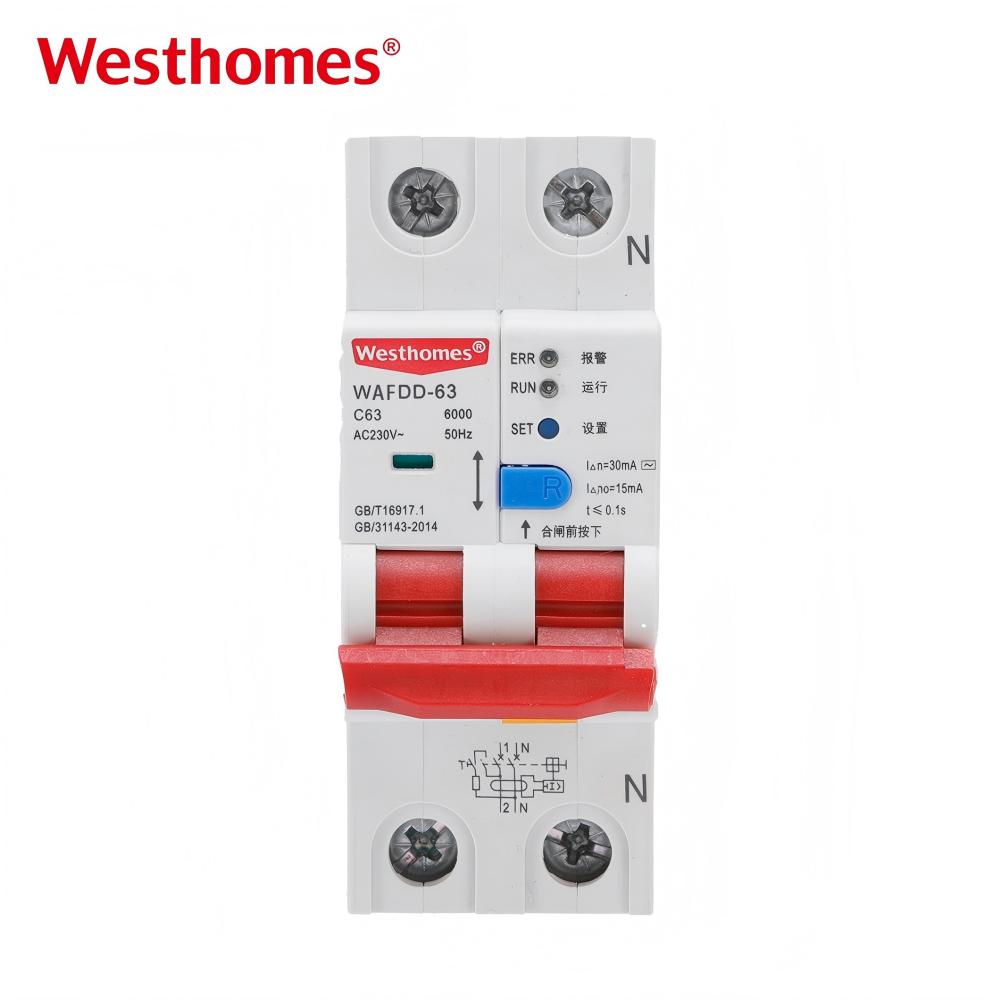
The processor recognizes this exact pattern while successfully ignoring the normal, smooth electrical noise generated by vacuum cleaners or heavy power tools. When an arc is verified, devices like our WAFDD 63 Arc Fault Detection Device instantly open the circuit, eliminating the fire hazard in a fraction of a second.
Industrial Switchgear Protection
In heavy industrial environments, the energy levels are too high for standard detection technology. Instead, engineers use optical arc flash detection. Sensors mounted inside the switchgear actively watch for the blinding burst of light that accompanies a high voltage arc.
When combined with a sudden current spike, these optical relays trigger the main facility breakers well before the explosive pressure wave can destroy the equipment.
Warning Signs You Should Never Ignore
While automated protection is the only guaranteed defense, your electrical system will occasionally give you subtle warning signs before a catastrophic arc fault fully develops:
- Distinct buzzing, crackling, or hissing noises originating from inside junction boxes.
- Wall outlets or light switches that feel uncomfortably warm to the touch.
- A faint odor of burning plastic or ozone lingering near electrical panels.
- Erratic flickering lights that do not correlate with heavy appliances turning on.
Frequently Asked Questions
Q What is the precise difference between an arc fault and a short circuit?
A short circuit happens when electricity takes an unintended direct physical path with very low resistance, causing a massive current spike. An arc fault is electricity jumping through the open air across a gap or loose connection. Standard breakers easily catch short circuits, but only specialized arc fault devices can catch the erratic sparking of an air gap arc.
Q How can I tell if my electrical panel already has arc fault protection?
Look closely at the breakers in your electrical panel. Arc fault breakers typically have a dedicated test button on the front face, very similar to ground fault devices. They may also be explicitly labeled with AFCI or AFDD. If your breakers only have a standard on and off toggle switch with no test button, they are likely standard breakers that offer no arc fault protection.
Q Why does my arc fault breaker trip when I run a vacuum cleaner?
Older generation arc fault devices sometimes misinterpret the natural brush noise from an electric motor as a dangerous arc signature. However, if a modern device keeps tripping, it usually means the device is doing its job and has detected a genuine hidden arc in your wiring or inside the appliance itself.
Q Why did my system pass inspection if I do not have arc fault protection?
Electrical codes evolve over time. If your building was constructed before active arc detection requirements became standard in your region, your panel is legally grandfathered in under the old codes. However, updating your panel is highly recommended by fire safety experts to meet modern protection standards.
Q Will an arc fault device completely replace my standard circuit breakers?
Yes. Modern combination units are brilliantly engineered to handle overloads, short circuits, and arc faults all inside a single device. Installing them completely replaces your older traditional breakers while upgrading your overall safety.
Secure Your Electrical Infrastructure Today
Arc faults are a silent and invisible threat that traditional safety equipment simply cannot handle. Relying on outdated protection puts your property, your equipment, and your personnel at unnecessary risk. Upgrading to active arc fault detection is the most effective way to future proof your electrical infrastructure against devastating fires.
As a dedicated manufacturer of premium circuit protection, we engineer robust solutions designed for ultimate safety and reliability.
Whether you are outfitting a new commercial build or upgrading an aging residential system, explore our complete catalog of reliable electrical protection components to find the exact devices your project requires. Reach out to our technical team today to discuss how we can secure your next electrical installation.

--- END ---
In this blog
Featured Articles
Get A Free Quote
Related Products