Get quick appointment for technical support!

How to Choose Circuit Protection for HVAC Equipment
Aug 10, 2026
Heating, ventilation, and air conditioning equipment presents a specific set of protection challenges. Motors start under load. Compressors draw locked rotor current for the first fraction of a second. Electric heating elements run continuously for hours. A single HVAC unit may combine all three load types, each requiring a different protection strategy.
The circuit protection must allow the equipment to start without nuisance tripping while still clearing faults fast enough to prevent damage. Getting the balance wrong causes either frequent callbacks for tripped breakers or expensive equipment failures that the protection should have prevented.
Understanding HVAC Load Types
Each load type draws current with a different profile. The protection must be matched to the profile.
Compressor Motors
A compressor motor draws locked rotor current, typically five to seven times the full load current, for the first few hundred milliseconds of startup. Once the rotor begins to turn, the current drops along the motor’s acceleration curve until it reaches the running current at full speed.
A circuit breaker with a magnetic trip set too close to the starting current will trip on every compressor start. A breaker with the magnetic trip set too far above the starting current may not clear a genuine fault fast enough.
The solution is an HVAC rated circuit breaker with a high magnetic trip threshold. These breakers are designed with a trip curve that allows the starting inrush to pass through while still providing short circuit protection at higher fault currents.
Fan Motors
Fan motors present a less extreme starting profile than compressors but operate continuously when the system is running. The continuous duty means the thermal protection must be set for the full load current without nuisance tripping during normal operation.
Direct drive fans start under relatively low torque. Belt drive fans start under higher torque as the belt tension and bearing friction must be overcome before the fan reaches speed. The starting current profile and duration differ between the two drive types, and the protection must account for the difference.
Electric Heating Elements
Resistive heating elements draw a steady current with no starting inrush. The current is predictable and constant, which makes protection straightforward in principle. A circuit breaker sized at one hundred and twenty five percent of the full load current provides adequate protection.
The complication arises when heating elements are staged. A three stage heater starts one stage at a time, with each stage adding its current to the total load. The circuit breaker must be sized for the total connected load, not the load of a single stage.
If the heater includes a blower motor, the motor load must be added to the heating load. A common mistake is to size the breaker for the heating current alone and then discover nuisance tripping when the blower motor starts while the elements are energized.
Protection Devices for HVAC Applications
| Load Type | Recommended Protection | Trip Curve |
| Compressor | HVAC rated MCB or MCCB with high magnetic trip | D curve or dedicated HVAC curve |
| Fan motor | MCB or MPCB with thermal overload | C curve or MPCB with adjustable thermal |
| Electric heat | MCB sized at 125% of FLA | B or C curve |
| Combined unit | MCCB with adjustable trip settings | Allows tuning for the specific load mix |
D Curve Circuit Breakers
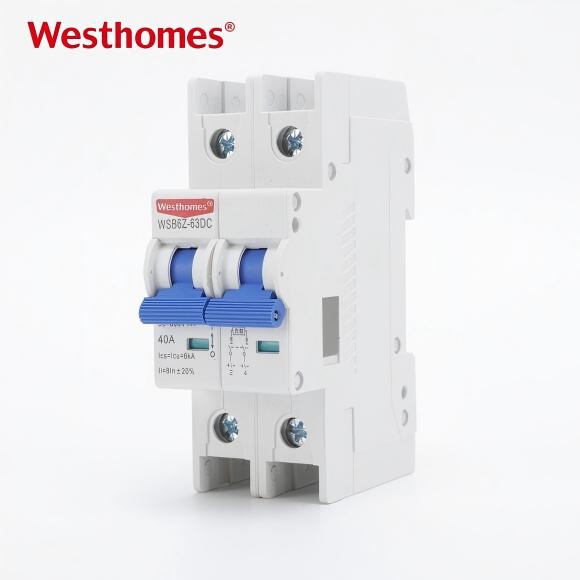
D curve MCBs have a magnetic trip threshold of ten to twenty times the rated current, compared to five to ten times for C curve breakers. The higher threshold allows compressor starting currents to pass without tripping while still providing short circuit protection.
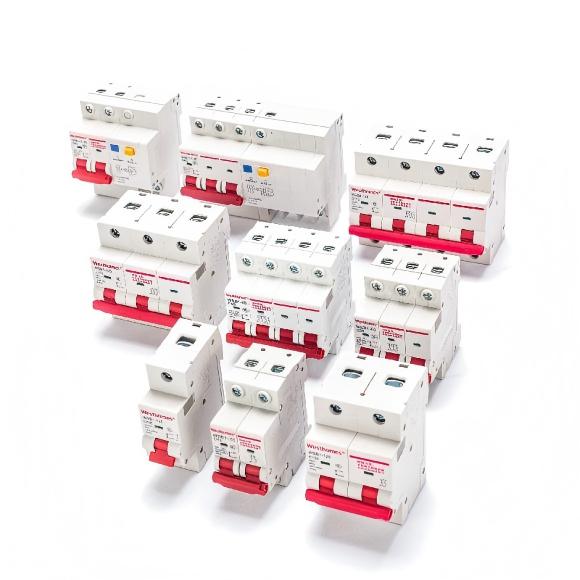
D curve breakers are the standard choice for compressor circuits in residential and light commercial HVAC applications. The main consideration is that the earth fault loop impedance must be low enough to ensure that a short circuit to ground produces enough current to trip the magnetic element.
A D curve breaker requires a lower loop impedance than a C curve breaker of the same rating because the trip threshold is higher.
Motor Protection Circuit Breakers for Fans
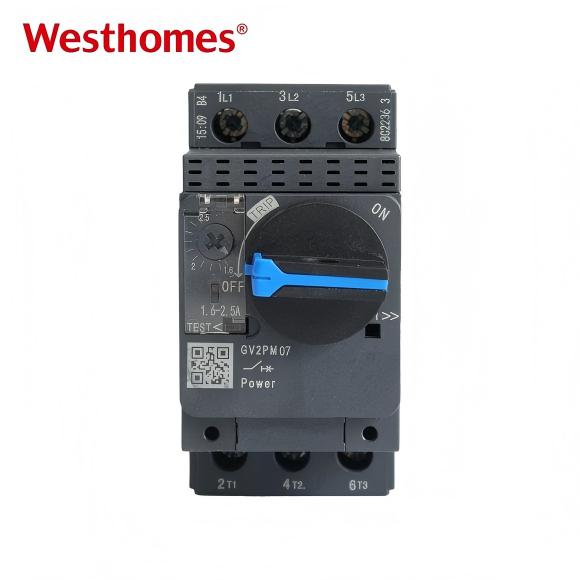
The adjustable MPCB frame provides more precise protection than a standard MCB because both settings can be dialled to the motor. The thermal setting is adjusted to match the full load current of the fan motor. The magnetic setting is adjusted to a value above the starting current but below the available fault current.
MPCBs also provide phase loss protection, which is particularly valuable for three phase fan motors. A phase loss on a running fan motor may go unnoticed because the motor continues to operate. The increased current in the remaining phases overheats the windings over time. The MPCB detects the phase imbalance and trips before the motor is damaged.
MCCBs for Large HVAC Units
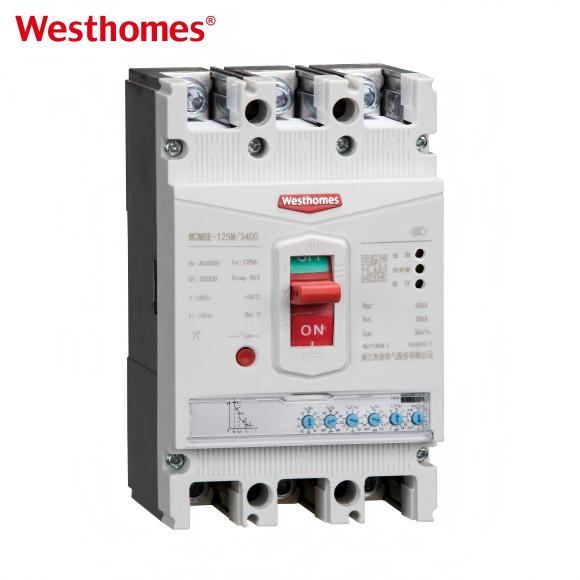
Large rooftop units and chiller systems with total loads above one hundred amperes call for molded case circuit breakers with adjustable trip settings. The adjustable thermal trip allows the breaker to be set to the calculated load current rather than a fixed rating.
The adjustable magnetic trip allows the instantaneous pickup to be set above the maximum inrush from the largest motor plus the running current of all other loads.
An MCCB with electronic trip provides the most flexibility. The long time pickup, long time delay, short time pickup, and instantaneous pickup are all adjustable over a wide range. This allows the protection to be tuned to the specific starting and running characteristics of the HVAC equipment.
Short Circuit Current Rating
HVAC equipment is installed at locations throughout a building, from the basement mechanical room to the rooftop. The available short circuit current at each location depends on the distance from the supply transformer and the impedance of the distribution wiring.
A rooftop unit at the end of a long cable run may have an available fault current of only a few thousand amperes. A basement chiller twenty feet from the main switchboard may have a fault current of tens of thousands of amperes. The circuit breaker must have a breaking capacity that exceeds the available fault current at the point of installation.
The breaking capacity of a standard MCB is typically six or ten kiloamperes. For locations with higher available fault current, a higher breaking capacity MCB or an MCCB is required. Installing a breaker with inadequate breaking capacity risks catastrophic failure of the breaker itself during a short circuit.
Avoiding Nuisance Tripping
Nuisance tripping is the most common complaint in HVAC circuit protection. The breaker trips for no apparent reason, the equipment is reset, and it operates normally until the next unexplained trip.
The most frequent cause is a breaker that is undersized for the starting current. A compressor draws locked rotor current every time it starts, and a breaker with a tight thermal trip or a low magnetic pickup will eventually trip on a cold morning when the compressor oil is thick and the starting current is highest.
Other causes of nuisance tripping:
- Loose connections at the breaker terminals create heat that conducts to the thermal element
- High ambient temperature in the electrical panel raises the effective trip point of the thermal element
- Harmonic currents from variable frequency drives add to the fundamental current without producing useful work
- Short cycling, where the compressor starts and stops more frequently than the design allows, causes cumulative heating of the thermal element
The professional fix is to measure the actual starting current profile of the equipment under worst case conditions and carefully select a breaker with a trip curve that accommodates the measured current with a safe margin. The protection should always be specified for the absolute worst case scenario, not just the average operating case.
Conclusion
Selecting the proper circuit protection for HVAC equipment requires a deep understanding of motor inrush currents, thermal loads, and environmental factors. Standard residential breakers are rarely equipped to handle the unique demands of heavy compressors and continuous duty fans.
By perfectly matching the load profile to the correct trip curve and ensuring adequate breaking capacity, you can eliminate frustrating nuisance trips and dramatically extend the lifespan of your critical climate control systems.
As a professional manufacturer of premium electrical components, Westhomes engineers robust circuit protection solutions designed to handle the harshest mechanical loads.
Whether you need specialized HVAC rated circuit breakers to manage massive compressor inrush currents or highly adjustable Motor Protection Circuit Breakers for critical fan systems, our factory direct components deliver unmatched reliability.
For a closer look at trip curve, read How to Choose the Right RCBO for Your Electrical Panel.

--- END ---
In this blog
Featured Articles
Get A Free Quote