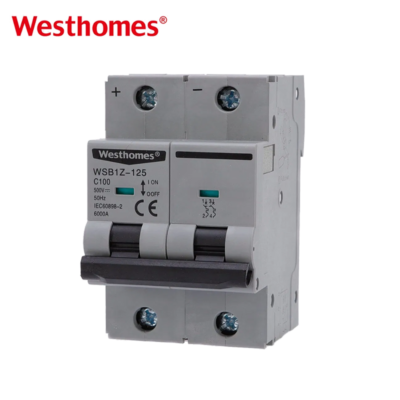
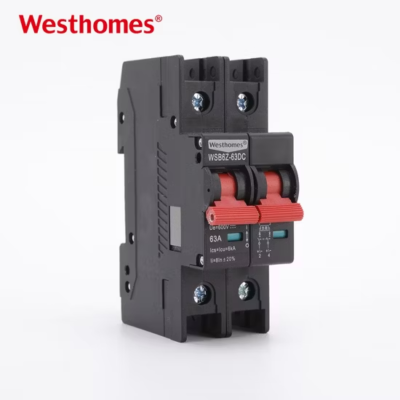
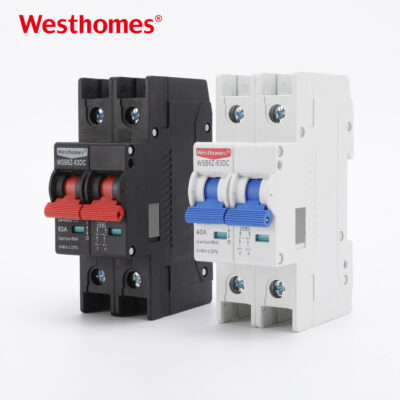
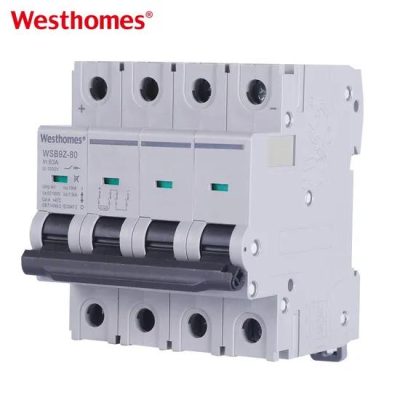
WSB9Z-80 Moulded case circuit breaker
WSB9Z-80 is one of updated type MCCBs researched and developed by the company by using advanced design and manufacture technology internationally.
Get quick appointment for technical support!

WSB9Z-80 series MCB is one of updated type MCCBs researched and developed by the company by using advanced design and manufacture technology internationally.

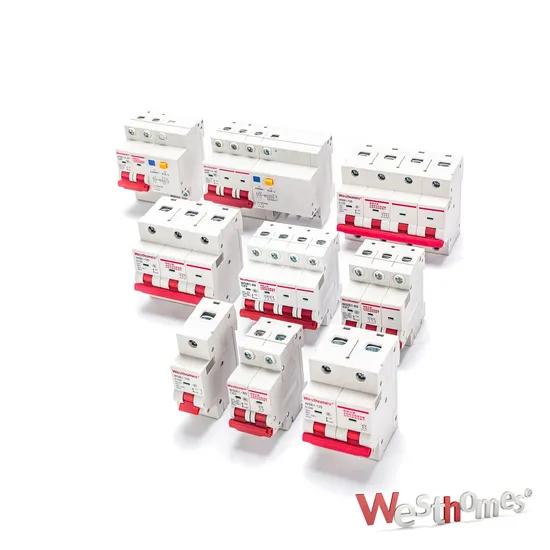


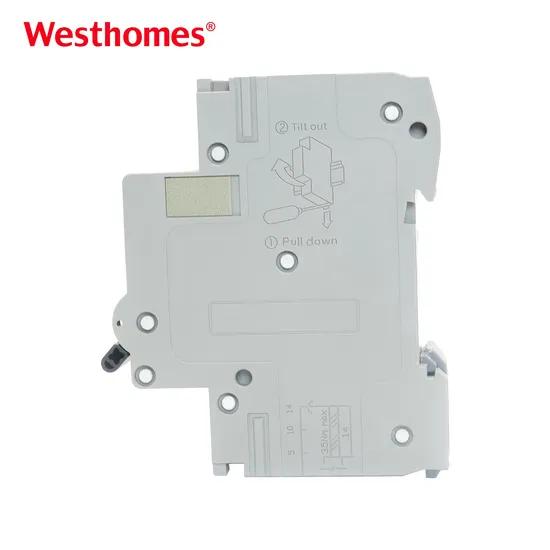
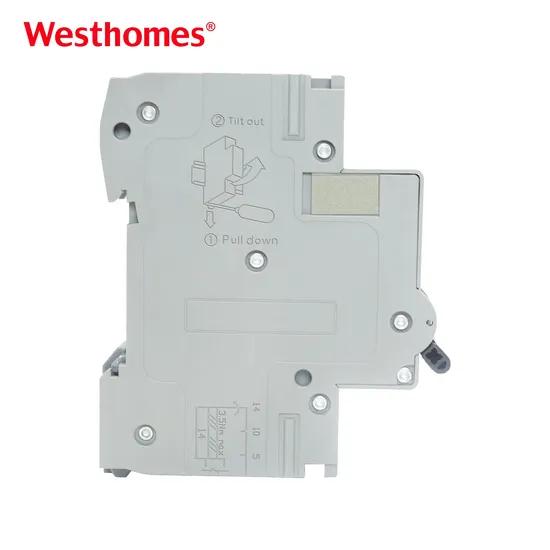



WSB9Z-80 is one of updated type MCCBs researched and developed by the company by using advanced design and manufacture technology internationally.
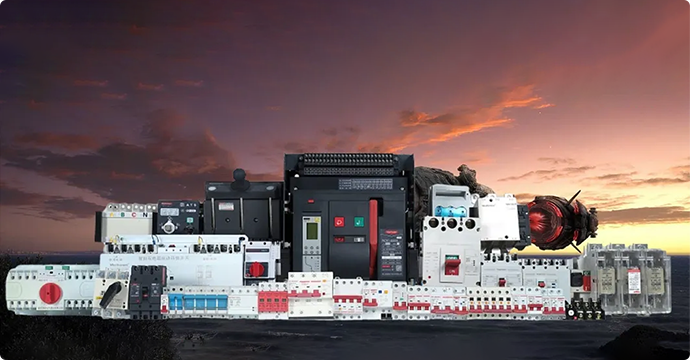
WSB9Z-80 circuit breaker is used for DC rated voltage to 1000V, rated current to 80A line, for overload and short circuit protection, and can also be used as an infrequent operation of the line.Circuit breakers are used in DC applications such as communications and photovoltaic system.
The product meets standards of GB/T14048.2 and IEC6947-2, at international advanced level.
| Frequency | 50Hz/60Hz |
| Pole | 1, 2, 3, 4 |
| Voltage | DC250V/500V/750V/1000V |
| kA | 10kA |
| Amps | 6-80A |
| Width | 18, 36, 54, 72mm |
| Mounting | Din rail |
| Item No. | WSB9Z-80 |
| Rated current In(A) | 6, 10, 16, 20, 25, 32, 40, 50, 63, 80 |
| Pole number | 1P, 2P, 3P, 4P |
| Trip characteristics | C type |
| Rated insulating voltage Ui(V) | 1000 |
| Rated operating voltage Ue(V) | DC 250V/500V/750V/1000V |
| Rated impulse voltage Uimp(kV) | 4 |
| Breaking capacity Icu/Ics(kA) | 10/7.5 |
| Mechanical life(times) | 20000 |
| Electrical life(times) | 4000 |
For a closer look at miniature circuit, read WSB1-125 MCB 63A to 125A Miniature Circuit Breaker.
For a closer look at miniature circuit, read High Performance MCB 6ka 10ka 6-63A 230V/400V/AC Miniature Circuit Breaker.
For a closer look at miniature circuit, read Manufacturer Low Voltage AC 50Hz/60Hz 2p Miniature Circuit Breaker.
For a closer look at miniature circuit, read Popular Design Structure Mini MCB Circuit Breaker 2p Miniature Circuit Breaker.
For a closer look at miniature circuit, read Chinese Factory Price MCB Low Voltage Electrical Miniature Circuit Breaker.
For a closer look at miniature circuit, read WSB5-40 1P+N Miniature Circuit Breaker MCB 1 Phase Nuetral.
For a closer look at miniature circuit, read WSB9-80 MCB 6kA 10kA Miniature Circuit Breaker.
For a closer look at miniature circuit, read Westhomes Factory Wsb9sz-125 Air AC Electrical Miniature Circuit Breaker 6-100A MCB 3p.
For a closer look at miniature circuit, read Westhomes Factory Price Wsb9sz-125 AC Electrical Miniature Circuit Breaker 6-100A MCB 1p.
For a closer look at miniature circuit, read OEM ODM 2p 50 60Hz Electric Protected MCB Miniature Circuit Breaker.
For a closer look at miniature circuit, read Professtional Factory Overload Overcurrent Protection MCB 4p 125A Miniature Circuit Breaker.
For a closer look at miniature circuit, read Westhomes Wsb9-125 Series 1p 125A MCB Air AC Miniature Circuit Breaker.
For a closer look at miniature circuit, read Factory Automatic Production Line Series Miniature Circuit Breaker Wsb7-63 MCB 2p.
For a closer look at miniature circuit, read New Design DIN Rail Series Miniature Circuit Breaker Wsb7-63 MCB 1p.
For a closer look at miniature circuit, read Westhomes Wsb5 (L) -40 Series Phase Nuetral Earth Leakage Miniature Circuit Breaker.
Related reading.
Related reading.
It uses a thermal-magnetic trip unit. The thermal element is a bimetal strip that heats up and bends under sustained overcurrent, opening the mechanism on a time-delay basis, while the magnetic solenoid trips instantly on large short-circuit currents. This dual-stage design protects both cables from prolonged overload and the installation from fast short-circuit faults.
Unlike AC, DC current has no natural zero-crossing, so an arc can keep burning once it is struck. DC-rated breakers use magnetically blown arc chutes and reinforced contacts to stretch and quench the arc, whereas AC MCBs rely on the current crossing zero every half-cycle and may weld or burn out on DC faults. Using an AC MCB on a PV array is a safety hazard.
A 1-pole DC MCB switches only one conductor, so it must be installed on the positive (+) PV string conductor as specified in the wiring diagram. The line (+) feeds the marked "Line" terminal and the load goes to the "Load" terminal; reversing polarity can degrade the magnetic blow-out field and reduce breaking performance. Always check the terminal marking and polarity label before energizing.
It is designed for low-voltage DC branch and string protection typical of off-grid and on-grid PV combiner boxes, battery banks, and DC distribution panels. The 1A–80A current range covers small to mid-size PV strings and battery circuits; confirm the actual DC voltage rating (commonly 250 VDC pole-rated) against your system open-circuit voltage before selection.
Follow the rating-selection rule Ib ≤ In ≤ Iz, where Ib is the design load current, In is the MCB current rating, and Iz is the cable current-carrying capacity. For a PV string, size In above the string short-circuit current (usually 1.25 × Isc per array guidance) but below the maximum current the cable can carry; undersizing causes nuisance trips, oversizing leaves the cable unprotected.
Yes, it snaps onto a standard 35 mm DIN rail (TS35) inside a DC distribution box or PV combiner enclosure. Hook the rear upper latch over the top rail edge, then push the bottom of the breaker until the lower latch clicks home. Remove it by pulling the bottom release latch down with a screwdriver while lifting the unit off the rail.
Miniature DC breakers are typically offered in B, C, or D magnetic trip bands. Curve B trips at 3–5 × In, Curve C at 5–10 × In, and Curve D at 10–20 × In; choose the lowest curve that does not nuisance-trip on your normal inrush. For pure-resistive PV and electronics, B or C is usual, while D is reserved for high-inrush inductive DC loads.
Time-delayed (thermal) trips point to a mild overload rather than a dead short. Measure the actual load current with a clamp meter and compare it to In: a mildly overloaded circuit, a damaged battery/inverter drawing excess current, or undersized cable causing heating are the usual culprits. If the measured current is below In but trips persist, have the breaker bench-tested for a defective bimetal.
Breaking capacity (declared on the datasheet, e.g. 6 kA DC) is the maximum fault current the breaker can safely interrupt without destruction. If the available prospective short-circuit current at the installation point is higher than this rating, the breaker may fail to extinguish the arc, causing enclosure rupture or fire. Always calculate the available fault current at the panel and upsize the protection if needed.
Under normal low-voltage conditions MCBs are virtually maintenance-free, but annually you should verify terminals are torqued to the listed value, check for overheating or discoloration, and manually operate the lever a few times to keep the mechanism free. Record any operation under fault; a breaker that has interrupted a heavy short circuit should be inspected by a qualified electrician even if it still functions.
* indicates a required field


 2 MB