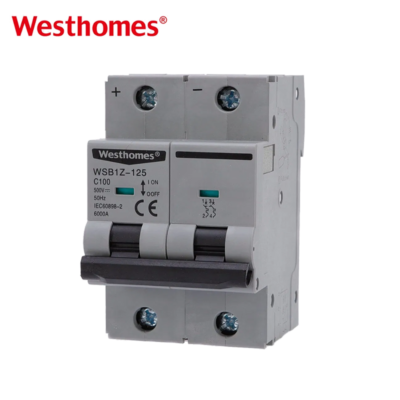
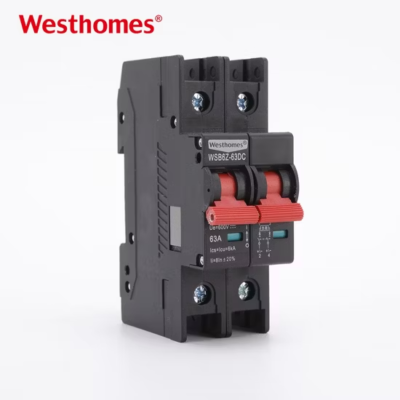
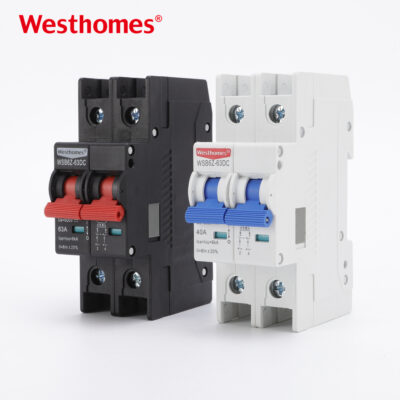
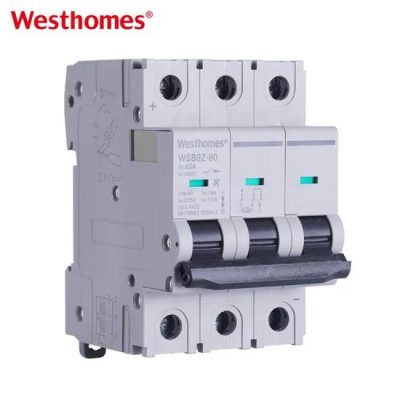
WSB9Z-80 Moulded case circuit breaker
WSB9Z-80 is one of updated type MCCBs researched and developed by the company by using advanced design and manufacture technology internationally.
Get quick appointment for technical support!

WSB9Z-80 series MCB is one of updated type MCCBs researched and developed by the company by using advanced design and manufacture technology internationally.


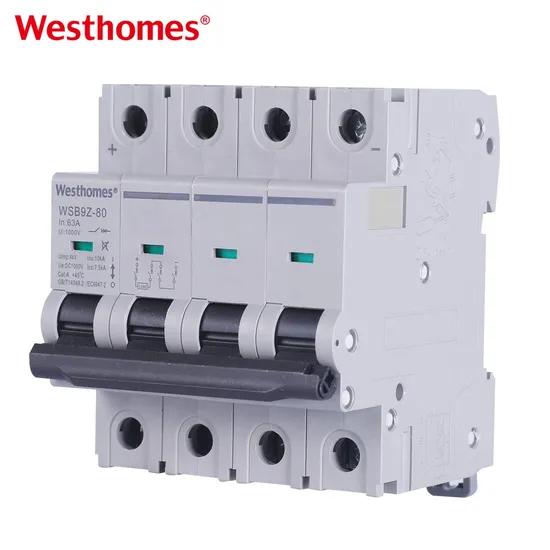



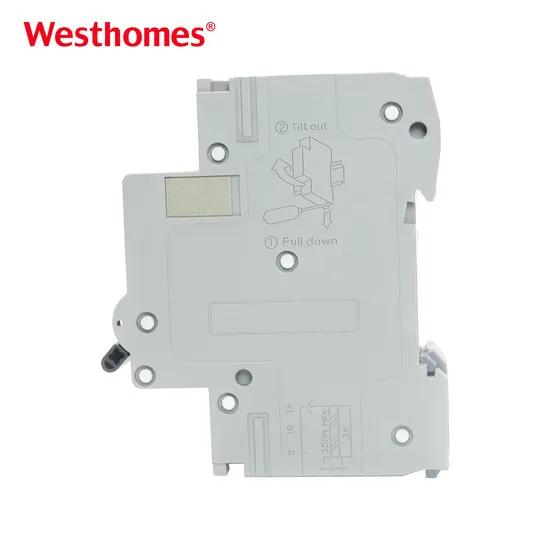
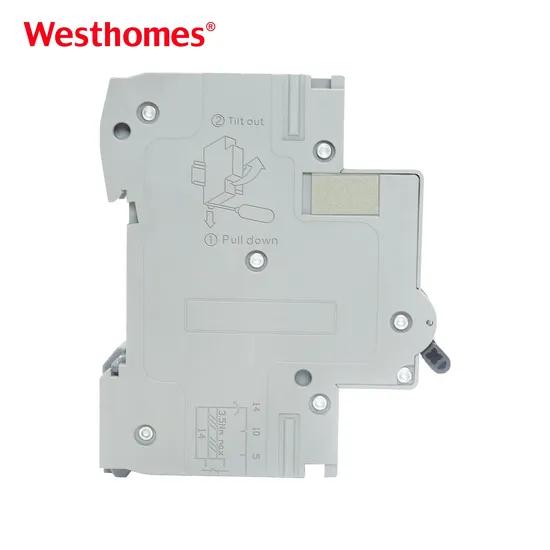
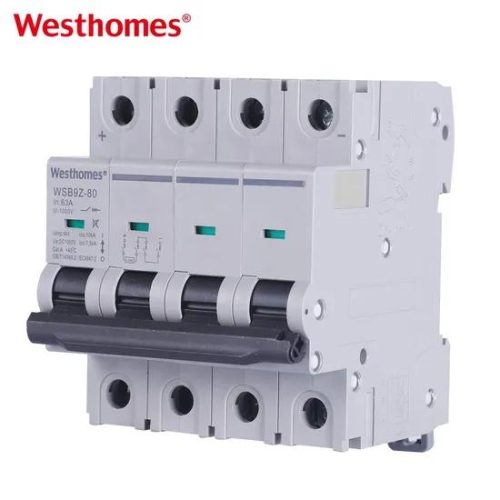



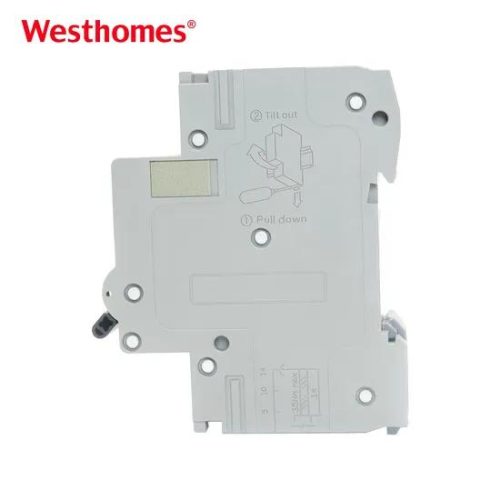
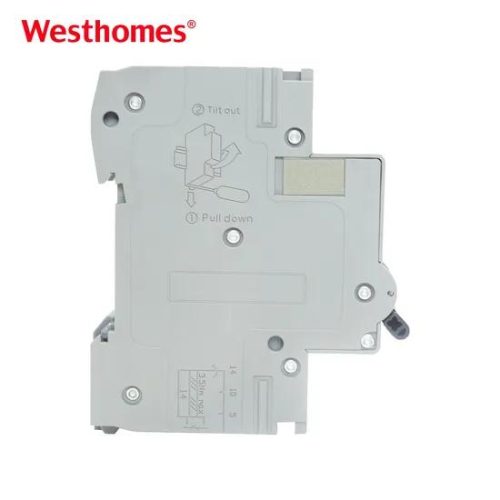
WSB9Z-80 is one of updated type MCCBs researched and developed by the company by using advanced design and manufacture technology internationally.
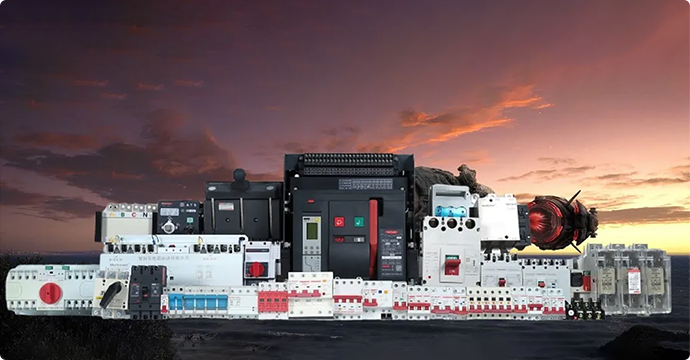
WSB9Z-80 circuit breaker is used for DC rated voltage to 1000V, rated current to 80A line, for overload and short circuit protection, and can also be used as an infrequent operation of the line.Circuit breakers are used in DC applications such as communications and photovoltaic system.
The product meets standards of GB/T14048.2 and IEC6947-2, at international advanced level.
| Frequency | 50Hz/60Hz |
| Pole | 1, 2, 3, 4 |
| Voltage | DC250V/500V/750V/1000V |
| kA | 10kA |
| Amps | 6-80A |
| Width | 18, 36, 54, 72mm |
| Mounting | Din rail |
| Item No. | WSB9Z-80 |
| Rated current In(A) | 6, 10, 16, 20, 25, 32, 40, 50, 63, 80 |
| Pole number | 1P, 2P, 3P, 4P |
| Trip characteristics | C type |
| Rated insulating voltage Ui(V) | 1000 |
| Rated operating voltage Ue(V) | DC 250V/500V/750V/1000V |
| Rated impulse voltage Uimp(kV) | 4 |
| Breaking capacity Icu/Ics(kA) | 10/7.5 |
| Mechanical life(times) | 20000 |
| Electrical life(times) | 4000 |
For a closer look at miniature circuit, read WSB1-125 MCB 63A to 125A Miniature Circuit Breaker.
For a closer look at circuit breaker, read Manufacturer AC 50Hz/60Hz Wsb5-40 Low Voltage MCB Circuit Breaker.
For a closer look at circuit breaker, read Chinese Factory AC 50Hz/60Hz 3p MCB Wsb1-125 Mini Circuit Breaker.
For a closer look at circuit breaker, read Wsb1-80 Westhomes Miniature Low Voltage Circuit Breaker 6ka/10ka 6-80A 4p MCB.
For a closer look at circuit breaker, read Wsb1-80 Westhomes Miniature Low Voltage Circuit Breaker 3p 6-80A 230/400V/AC MCB.
For a closer look at circuit breaker, read Hot Sale AC 50Hz/60Hz 2p Wsb1-80 Series Mini Circuit Breaker.
For a closer look at miniature circuit, read High Performance MCB 6ka 10ka 6-63A 230V/400V/AC Miniature Circuit Breaker.
For a closer look at miniature circuit, read Manufacturer Low Voltage AC 50Hz/60Hz 2p Miniature Circuit Breaker.
For a closer look at miniature circuit, read Popular Design Structure Mini MCB Circuit Breaker 2p Miniature Circuit Breaker.
For a closer look at miniature circuit, read Chinese Factory Price MCB Low Voltage Electrical Miniature Circuit Breaker.
For a closer look at miniature circuit, read WSB5-40 1P+N Miniature Circuit Breaker MCB 1 Phase Nuetral.
For a closer look at miniature circuit, read WSB9-80 MCB 6kA 10kA Miniature Circuit Breaker.
For a closer look at miniature circuit, read OEM ODM RCCB Breaker-Protector 63A 240V Residual Current Operated Circuit Breaker.
For a closer look at circuit breaker, read Factory MCB Price Wsb9sz-125II Series Moulded Case AC Mini Circuit Breaker 3p+N.
For a closer look at miniature circuit, read Westhomes Factory Wsb9sz-125 Air AC Electrical Miniature Circuit Breaker 6-100A MCB 3p.
For a closer look at miniature circuit, read Westhomes Factory Price Wsb9sz-125 AC Electrical Miniature Circuit Breaker 6-100A MCB 1p.
For a closer look at miniature circuit, read OEM ODM 2p 50 60Hz Electric Protected MCB Miniature Circuit Breaker.
For a closer look at circuit breaker, read Westhomes Low Voltage AC 230V/400V 3p MCB Mini Circuit Breaker.
For a closer look at miniature circuit, read Professtional Factory Overload Overcurrent Protection MCB 4p 125A Miniature Circuit Breaker.
For a closer look at miniature circuit, read Westhomes Wsb9-125 Series 1p 125A MCB Air AC Miniature Circuit Breaker.
For a closer look at miniature circuit, read Factory Automatic Production Line Series Miniature Circuit Breaker Wsb7-63 MCB 2p.
For a closer look at miniature circuit, read High Breaking MCB AC Electrical Miniature Circuit Breaker Wsb7-63 MCB 3p.
For a closer look at miniature circuit, read New Design DIN Rail Series Miniature Circuit Breaker Wsb7-63 MCB 1p.
For a closer look at miniature circuit, read Westhomes Wsb5 (L) -40 Series Phase Nuetral Earth Leakage Miniature Circuit Breaker.
For a closer look at circuit breaker, read Factory Smart Intelligent AC Circuit Breaker Wsb5 (L) -40 MCB ODM OEM.
Related reading.
A DC MCB is an electromechanical protective device that automatically opens a direct-current circuit when it detects overload or short-circuit current, while also allowing manual switching of the circuit. It combines thermal overload protection (a bimetal strip that heats and bends on sustained overcurrent) and magnetic short-circuit protection (a solenoid that trips instantly on a large current spike). This solar-rated version is specifically engineered for the direct-current side of photovoltaic systems rather than for ordinary AC mains.
Alternating current naturally crosses zero volts 100–120 times per second, which helps the arc cool and extinguish between cycles; direct current never crosses zero, so the arc keeps burning once contacts separate. A DC-rated breaker therefore uses a magnetic blowout coil that drives the arc into a splitter-plate arc chute, where the arc is stretched, cooled and split into small segments until it can no longer sustain itself. This dedicated arc-interruption design is why a standard AC MCB cannot be safely substituted on a DC PV circuit.
The 1000V DC rating is the maximum system (open-circuit) voltage this breaker is certified to interrupt and withstand on the direct-current side. It must be at least equal to the maximum PV array open-circuit voltage (Voc) at the lowest expected ambient temperature, since cold panels produce higher Voc. Choosing a 1000V-rated device lets it be used on modern residential and commercial solar arrays that run at or below 1000 V DC between strings and the inverter.
"4P" means the breaker has four switching poles that open together in one operation. In photovoltaic systems this is typically used to break both the positive (+) and negative (−) conductors of two separate strings, or to provide double-pole protection per string in a combiner arrangement. Opening both poles on each string is important in DC because there is no natural neutral reference; breaking only one pole can leave the other conductor live and make work on the system unsafe.
The ampere rating (for example 63 A or 80 A variants of this solar series) sets the continuous current the breaker can carry without tripping on normal load, while the trip curve (commonly C-curve for general loads or D-curve for high inrush) defines how much overcurrent causes the magnetic instant trip. Solar strings have defined short-circuit currents, so the breaker rating must be coordinated above the string operating current but below the fault current it must interrupt, and derated for ambient temperature inside the combiner box.
In a PV installation, one breaker is typically placed between each solar string and the combiner box or between the combiner output and the inverter input, giving overcurrent and short-circuit protection on the DC side. It also serves as a means of disconnecting a string for service and allows defective strings to be isolated without shutting down the entire array. The breaker must be selected for the array's maximum voltage and for the sum of string short-circuit currents present at its location.
Connect the positive (+) and negative (−) PV conductors to the corresponding marked line and load terminals, observing polarity, because DC devices are polarity-sensitive and reversing them can prevent proper operation or safe interruption. Terminals should be torqued to the manufacturer's specification with appropriately rated PV cable and lugs, and the breaker snaps onto a standard 35 mm DIN rail inside the combiner or DC distribution enclosure. The correct conductor cross-section must be used so that voltage drop and heat stay within limits under full load.
The DC MCB sits upstream of the inverter's DC input and must be rated to carry the inverter's maximum input current and to interrupt fault currents that can come from the PV array, which continues to supply current whenever the sun shines. Its breaking capacity must exceed the available PV short-circuit current at that point, and it should be selected so it trips before the inverter's own protection is damaged — a form of selectivity between the string protection and the inverter. It does not replace a dedicated DC isolator or rapid-shutdown device where those are required by code.
Nuisance trips can be caused by high inrush when the inverter starts up in bright cold sun, an undersized trip curve for the inverter's start-up current, high ambient temperature in a sealed combiner derating the breaker, or undersized conductors causing voltage drop and extra current. Troubleshooting involves checking the actual operating and fault current against the breaker rating, verifying the trip curve type, measuring the enclosure temperature, and confirming cable size and tight connections. If trips persist at fault levels, a true overload or short circuit must be located before resetting.
Solar DC MCBs are evaluated to IEC 60947-2 for low-voltage circuit breakers, and installed in accordance with IEC 60364-7-712, which covers the special requirements for photovoltaic power supply systems. Westhomes typically offers OEM and ODM service, so the rating, pole arrangement, logo and packaging can be tailored to a brand or project. Typical applications are residential rooftop, commercial rooftop and ground-mount PV plants. Maintenance is periodic: inspect terminals for tightness and overheating, check operation after an outage, and replace the breaker if contacts show arcing damage or repeated trips.
* indicates a required field


 2 MB
2 MB